

How Close Is the World to Nuclear War?
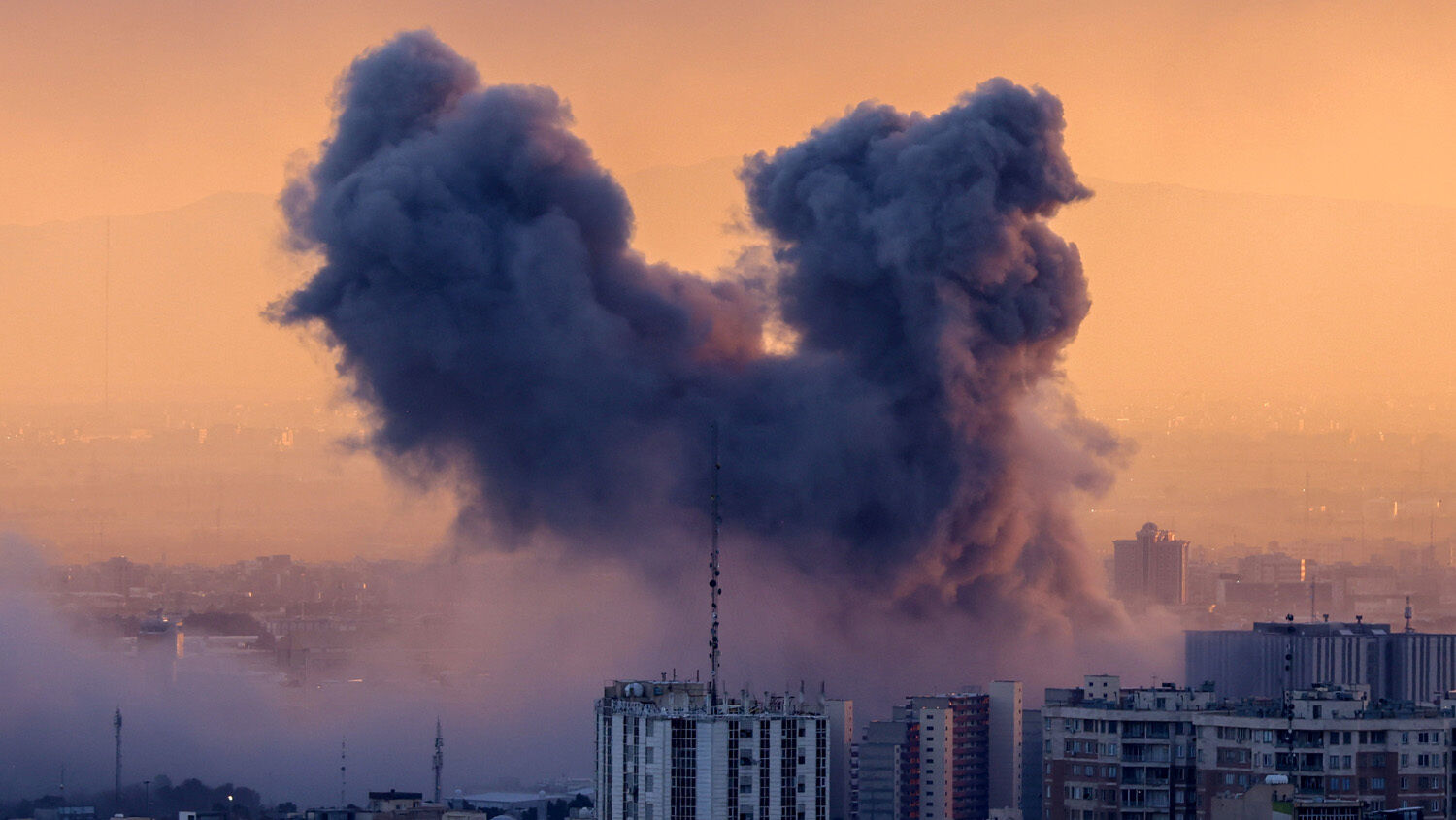
“Could this be the start of World War iii?” historian Niall Ferguson asked in a March 5 Free Press column. “It is not a foolish question. … We have seen war break out in Eastern Europe in 2022 and then in the Middle East in 2023. The most recent U.S.-Israeli onslaught on Iran may look to future historians like a staging post to a global conflagration.”
The Trumpet recently wrote that “the current war is not the start of World War iii.” Bible prophecy states more world events must occur before the start of a global conflict the Bible calls the “great tribulation” (Matthew 24:21).
But war between world powers should still serve as a powerful wake-up call regarding the state of the world. Do you realize just how close we are to nuclear war?
A Nuclear Near Miss?
The United States and Israel attacked Iran on February 28. For the U.S., one of the principal reasons was Iran’s refusal to negotiate a nuclear deal. “They don’t want to say the key words, ‘We are not going to have a nuclear weapon,’” U.S. President Donald Trump told Axios the day before the attack. “They can’t get there. They want to enrich a little bit. You don’t have to enrich when you have that much oil.” In a post-attack interview with Fox News, U.S. Special Envoy to the Middle East Steve Witkoff claimed Iranian negotiators “were proud that they had evaded all sorts of oversight protocols to get to a place where they could deliver 11 nuclear bombs.”
Israel, meanwhile, has always seen a nuclear Iran as an existential threat. Israeli Prime Minister Benjamin Netanyahu told media the day the war started that “this murderous terrorist regime must never be allowed to arm itself with nuclear weapons that would enable it to threaten our existence and the peace of all humanity. We have gone to battle to change this situation fundamentally, to put an end to the threat.”
Both the U.S. and Israel have nuclear weapons. Reportedly, Iran had decided to construct a nuclear weapon. It appears the U.S.-Israeli attack has at least stalled this progress. But what would have happened if Iran had acquired the bomb before two other nuclear powers attacked it?
There are rumblings that President Trump may call off his campaign prematurely. If Iran’s regime remains intact—with its uranium stockpiles intact—will it believe a nuclear weapon is the only way to protect itself?
Involving Others
Along with attacking the U.S. and Israel, Iran also bombed Middle Eastern allies of America, including Turkey. On March 4, Iran launched a missile that appeared to be aimed at Turkey’s Incirlik Air Base. Although a U.S. destroyer under nato obligations intercepted it, the possibility of Iran targeting Incirlik is terrifying.
Incirlik hosts nuclear weapons under joint U.S.-Turkish control. It may host up to 50 bombs. Experts speculate the U.S. alone holds operational control of those bombs. But Turkey has the experience and technology necessary to deliver them. If Iran’s missile had hit its target, how would the U.S. or Turkey have responded?
Iran also attacked Saudi Arabia, striking its largest oil refinery. Threats of such attacks, combined with Iran halting oil trade through the Strait of Hormuz, could wreck Saudi Arabia’s economy. The oil trade is the only factor keeping Saudi Arabia functioning. Iran attacking Saudi Arabia’s oil trade would be an existential crisis.
Regarding Iran’s nuclear program, Saudi Crown Prince Mohammed bin Salman told Fox News in 2023: “If they get one, we have to get one—for security reasons, for balancing power in the Middle East.” The U.S. is negotiating to help establish a Saudi nuclear program without weaponization safeguards. If Iran survives this war, is Saudi Arabia supposed to lose interest in a nuclear deterrent?
The ‘Other’ World Crises
Another war involving a regional nuclear power exploded on February 22. Pakistan invaded Taliban-run Afghanistan, claiming the Taliban were sponsoring Pakistani jihadis against the military. The two sides, thus far, had engaged in border skirmishes. But now Pakistan’s air force has struck targets like Kabul and Bagram Air Base. While the Iran crisis holds the attention of most international observers, the Afghanistan-Pakistan war shows little sign of slowing down.
Pakistan has nuclear weapons. The Taliban is the same organization that helped launch the 9/11 terror attacks in 2001. There is no indication this conflict could become global, but given the circumstances, the chances of something terrible happening are high.
Meanwhile, France announced on March 2 a change in its nuclear doctrine. For the first time in decades, it will expand its nuclear weapons stockpile. Even more consequential, France announced it would expand its “nuclear umbrella” to the rest of Europe, similar to America’s nuclear umbrella over nato.
Poland, Norway, Finland and others have expressed interest in allowing French nuclear weapons on their soil for various circumstances. But the main prod is Germany, which is going through its own massive military buildup.
These are all events just in 2026. The past two years have had even more perilous moments. Pakistan warred against its archrival India, another nuclear-armed nation. South Korea’s president reportedly planned to provoke a conflict with nuclear North Korea. Russia, which is still fighting in Ukraine, deployed nuclear weapons to its autocratic ally Belarus. Even Japan, the only country thus far to have nuclear weapons used against it, is openly discussing getting its own bomb.
Today, we live in arguably humanity’s most dangerous age.
The Meaning of World Events
As Ferguson said, asking if the Iran crisis—or really any of the crises around the world—could morph into a nuclear catastrophe “is not a foolish question.” This is the world we live in. Feeling powerless amid escalating crises and global power struggles, it can be tempting to figuratively bury one’s head in the sand and go about day-to-day business as if nothing were wrong.
Jesus Christ’s prophecy in Matthew 24 says our time will be filled with “wars and rumours of wars …. For nation shall rise against nation, and kingdom against kingdom: and there shall be famines, and pestilences, and earthquakes, in divers places. All these are the beginning of sorrows” (verses 6-8). This will culminate in “great tribulation, such as was not since the beginning of the world to this time, no, nor ever shall be. And except those days should be shortened, there should no flesh be saved: but for the elect’s sake those days shall be shortened” (verses 21-22).
This coming catastrophe has everything to do with this worldwide nuclear madness.
The current war in Iran may not be the spark to light the fuse of nuclear war, but it is dangerously close to being so. The Bible says it won’t be long before the world’s nuclear weapons are used.
The Bible also promises protection to those who trust in God and obey His word (e.g. Revelation 3:10). God allows these events to happen to lead people to Him. Matthew 24 lists the world’s troubles as a sign that Christ is about to return.
But there is an even deeper meaning to the world’s current troubles.
March 11
The Trumpet and its predecessor organization, the Plain Truth, have been proclaiming the Bible’s warnings about nuclear war for decades. This message may be summarized with what Herbert W. Armstrong, theologian and Plain Truth founder, wrote in the first sentences of the introduction of his last major book, Mystery of the Ages:
The world’s number one concern today is the question of human survival! Science and technology have produced the weapons of mass destruction that could blast all human life off this Earth!
So many nations now possess nuclear weapons that one madman could ignite the nuclear World War iii that could erase all human life from this planet.
Yet the truth of God, if known and acted on, could have saved humanity from this threat and all its evils!
Mr. Armstrong delivered this message for decades to nations and their leaders. He considered himself obligated to warn the world of what was coming and how the world’s problems would be solved. (You can read more about Mr. Armstrong and his legacy by requesting a free copy of our booklet Ambassador for World Peace.)
Mr. Armstrong died in 1986. The leadership that took over the Plain Truth and the other institutions Mr. Armstrong ran stamped out his messages of prophecy and warning. Even as world events became more chaotic—as the Berlin Wall fell, as war returned to Europe in Yugoslavia, as the war on terror erupted—the new leadership silenced the Plain Truth’s message until it became nonexistent.
Trumpet editor in chief Gerald Flurry saw what was happening and stood against it. He started the Philadelphia Trumpet to continue the Plain Truth’s message.
He also wrote a book titled Malachi’s Message to God’s Church Today, which explains what happened to Mr. Armstrong’s legacy and how it was restored. Malachi’s Message directly addresses the new leadership’s failure to warn the world. “The whole chapter of Matthew 24 is about God’s coming Kingdom—and the terrible nuclear holocaust that precedes it,” Mr. Flurry writes. “Without a strong end-time warning, the Church fails to fulfill this commission. … The warning must be strong in order to adequately get the message across!”
The leader who took over after Mr. Armstrong died wrote in 1989: “Think about this: What would you do if there were another world war and Jesus still didn’t come? Would you give up the faith?”
Mr. Flurry responds to this in Malachi’s Message: “[This man] says a world war (it would surely be a nuclear war) could come, and it still may not signal the end of this age. He could be in the Great Tribulation—which will be a nuclear holocaust—and presumably still not be certain that Christ was about to come! Those are not the words of God’s watchman who is supposed to warn the world! Any watchman with views like this is ‘blind’! (Ezekiel 33:6-7; Revelation 3:17). And brethren, if you follow him, nuclear holocaust awaits you!”
March 11, 1989, was when Mr. Flurry felt inspired to write what became Malachi’s Message. Today is the 37th anniversary of that beginning. The Plain Truth itself became silent years ago, but the warning message still continues. Malachi’s Message shows how and why. Today’s world crises show this message is more relevant than ever. It is obvious for everyone to see.
If you were ever part of Mr. Armstrong’s work and wonder what happened to it, please order Malachi’s Message to God’s Church Today. (All of our literature is free.) It not only provides the scriptural context of what happened in the 1980s, it also shows where God is working today. Even if you do not have a history with Mr. Armstrong’s work, Malachi’s Message helps show why the Philadelphia Trumpet exists and what the near future holds. With the state of the world, there has never been a more important time to be familiar with this message and act on it.


