
How to Build Patriotism
How to Build Patriotism
Good morning!
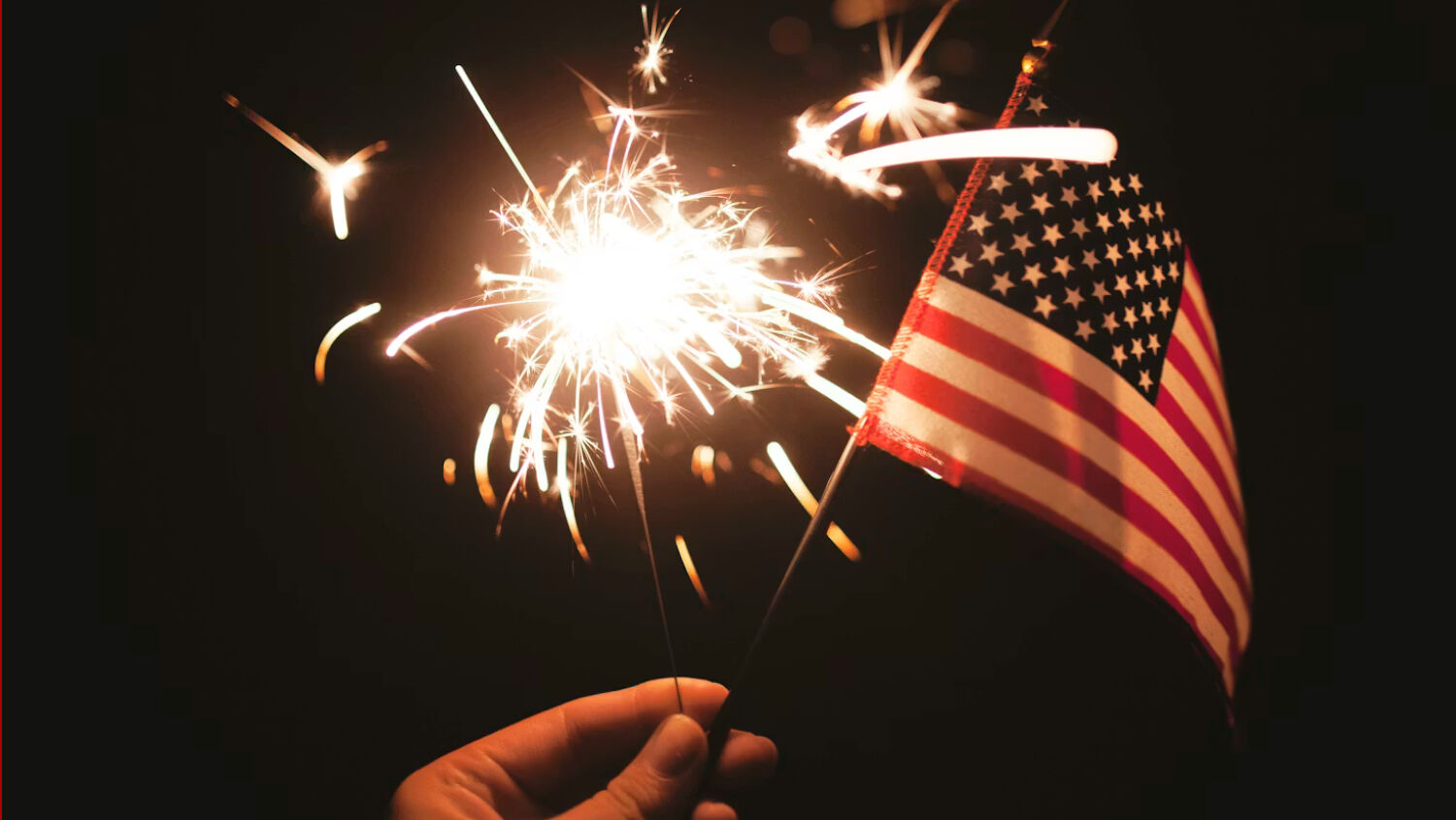
America turns 250 on Saturday, and sadly, a new poll shows that national pride has never been lower. But there is so much about America worth celebrating, including an inspiring spiritual dimension of which most people are unaware.

Gallup’s Independence Day poll, released this week, found only a third of Americans are “extremely proud” to be American—the lowest number in the survey’s 25-year history, down eight points from last year.
- Combine “extremely” and “very” proud, and just over half the country clears the bar. As recently as 2003, that combined figure was 90 percent.
There is a yawning gulf between political parties: Whereas 70 percent of Republicans call themselves extremely proud, among Democrats, it’s a miserable 14 percent—a record 56-point gap.
- You may think this means Democrats don’t hate America, just the current president. But this isn’t a Trump-era blip: It’s a 20-year slide that predates even his first term and now spans genders, age groups and races—not just party lines.
Something deeper than one man in the Oval Office is eroding national pride.
- One explanation lies in the rising popularity of democratic socialism in America, as recent election victories and polling data show. This reflects a total rejection of America’s founding principles. How can you have pride in a country built on ideas you oppose?
A true understanding of what has made America uniquely great is essential to stimulate the right kind of national pride.
- Our July Trumpet issue gives that understanding, including many truths unknown to most Americans. You will truly enjoy and profit from reading it.
For an overview of its surprises, read these “7 Things You Didn’t Know About American Greatness.” This Trumpet includes eye-opening truths about:
- The singular geographical advantages God gave that made America “the inevitable superpower”
- The blessing America has been to the rest of the world—a crucial read amid surging anti-Americanism
- The biblical principles that informed the authorship of what is now the world’s oldest continuously functioning written national constitution
- The history of miracles that traces back long before the American Revolution—all the way to the first book in the Bible
It’s true that America is doing many things for which we rightfully feel, not pride, but shame. This Trumpet looks squarely at this as well in our article “Is This America’s Golden Age?” Even that, you will find, discusses a different set of sins than those commonly debated today.
But to boost your national pride in the right way, you have to see beyond the deeds of man. Our “How America became great” issue shows God’s hand shaping this nation from even before its founding. Read it, and you won’t just feel proud of America—you’ll feel thankful to the God who built it.
Liberals Outraged at Texas Bible Requirement
Passages from the Bible were included in a mandatory statewide reading list adopted by Texas last week, and a surprising number of people aren’t happy about it.
“The Texas State Board of Education is misusing public schools to impose one narrow set of religious beliefs and indoctrinate a new generation of Americans in the lie that America is a Christian country.”
—Americans United for Separation of Church and State
Protesters held up signs saying “RIP: Religious Freedom.” Kasey Meehan, director of pen America’s Freedom to Read program, complained that the list “excludes a lot of diverse voices.”
Many Americans are allergic to almost any mention of the Bible in education. Yet a familiarity with the Bible is required to understand almost any great work of literature—let alone the invaluable moral instruction.
Erasing the Bible from public life was not the intent of America’s Founding Fathers. Indeed, the Bible informed the very establishment of the new country.
As America celebrates its 250th anniversary this week, this is critical history to remember. Our article “Is the U.S. Constitution Based on the Bible?” shows how essential the Bible was and is to the American nation.
AI Spending Could Be a $2.5 Trillion Bubble
The huge excitement around artificial intelligence could fade soon, the Bank for International Settlements is warning. In its annual report released Sunday, the Swiss-based central bank for central banks cautions that the current AI-spending boom—forecast to reach $2.5 trillion worldwide in 2026—may prove unsustainable.
- Supply shortages, intense competition and complex financing deals could lead to over-investment and a sharp pullback if expected payoffs disappoint.
AI is clearly a world-changing technology. However, the massive demand for electricity to run data centers is already pushing up power prices and straining grids. Building new data centers also faces bottlenecks in land, materials, labor and permitting.
- Many businesses are still investing in AI without clear ways to measure financial returns, making these supply shortages especially risky.
The bis warns this could mirror past bubbles, like the dot-com bubble, which inflated Internet-related stocks to resemble a $3 trillion valuation by March 2000, then lost 78 percent of its value.
- Of the hundreds of Internet companies that went public in the late 1990s, about half were out of business or delisted by the end of 2002. The Internet did indeed change the world, but the investing frenzy produced catastrophic financial losses, clearing the way for survivors like Amazon and Google to dominate.
If this history repeats itself with AI businesses, U.S. gdp could drop 1 to 3 percent, and higher unemployment could last a couple of years.
Most technological revolutions create an initial bubble that wise investors anticipate. Yet the bis is warning of three other economic risks—inflation, fragile bond markets and soaring government debt—that could make the bursting of an AI bubble in 2026 especially painful.
- The U.S. national debt is more than seven times bigger than it was during the dot-com bust.
The late Herbert W. Armstrong predicted that a financial crisis in America would likely catalyze Europe to unite. Specifically, he warned in 1984 that a massive banking crisis in America “could suddenly result in triggering European nations to unite as a new world power larger than either the Soviet Union or the U.S.” The Bank for International Settlements is predicting that such a massive banking crisis may be imminent.
Germans Want to Make American Weapons in House
Germany is “very interested” in building more U.S. weapons systems or their components under license in Germany, Defense Minister Boris Pistorius said at a joint press conference Wednesday.
Germany wants to arm itself fast, Pistorius explained, which means it doesn’t have time to develop its own version of key American weapons systems.
- Producing American weapons under license gives Germany the best of both worlds: It benefits from the Americans’ research, development and design but isn’t dependent upon them for deliveries.
“Germany leads, and Germany delivers,” said nato Secretary General Mark Rutte at the same conference. He praised Germany’s “extraordinary achievement” in ramping up defense spending, and delivered a message to German industry:
Be ready, speed up, work together. Open new production. Expand supply chains. And deliver quickly what we need for our security.
The first F-35 production facility outside of America is already operated by Germany. Rheinmetall is working with Lockheed Martin and Northrop Grumman to build mid-fuselage components for the fifth-generation stealth jet fighter.
America continues to help Germany rearm quickly. It may make some money in licensing deals, but it means entrusting and empowering a nation that it has fought two world wars against and that is speedily turning against Donald Trump’s America.
“America and Britain are creating the Frankenstein that shall destroy them!” wrote Herbert W. Armstrong in 1951. For more, read “Decades of Warnings About Germany.”
IN OTHER NEWS
Russia rages against Ukraine: Russia carried out massive missile and drone strikes on Kyiv and other Ukrainian cities in the early hours of the morning, targeting mainly residential buildings, killing 28 civilians, and injuring at least 90 others, including children. As Ukraine’s strikes on Russia’s oil infrastructure cause painful fuel shortages at home, Russian President Vladimir Putin is escalating his campaign to break Ukraine’s will and force it into submission.
German military reservists to become less reserved: German reservists must report for training outside of crises and military exercises regardless of employer approval, according to the Reserve Strengthening Act approved by the German cabinet yesterday, which also triples reserve troop goals to 200,000 by 2035. Defense Minister Boris Pistorius stated that a “modern democracy must be able to defend its freedom. To do that, we need a reserve force that is rapidly deployable, well trained and closely linked to the active-duty troops.”
Vatican officially excommunicates ultra-conservative group: The Vatican officially issued a decree of excommunication of all six bishops of the ultra-conservative Society of Saint Pius X today. Early this week, the group’s two bishops consecrated four new bishops in defiance of the pope. The Catholic Church also warned clergy and laymen that they would be excommunicated if they “adhere to the schism of the Society of St. Pius X.”
The Philadelphia Trumpet is a monthly newsmagazine. Unlike any other publication currently in circulation, it doesn’t just report the news—it explains why the news happens. It goes beyond analyzing current events, and dares to forecast what will happen in the months and years ahead. Articles address the meaning behind geopolitical shifts, economic trends and social conditions, showing where all these events are heading. How? The Trumpet uses the Holy Bible as its foundational resource: It is able to see sharply into the future, because it brings focus to information about world events through the dual lenses of biblical history and prophecy.


