Should You Paint Jesus?
Should You Paint Jesus?

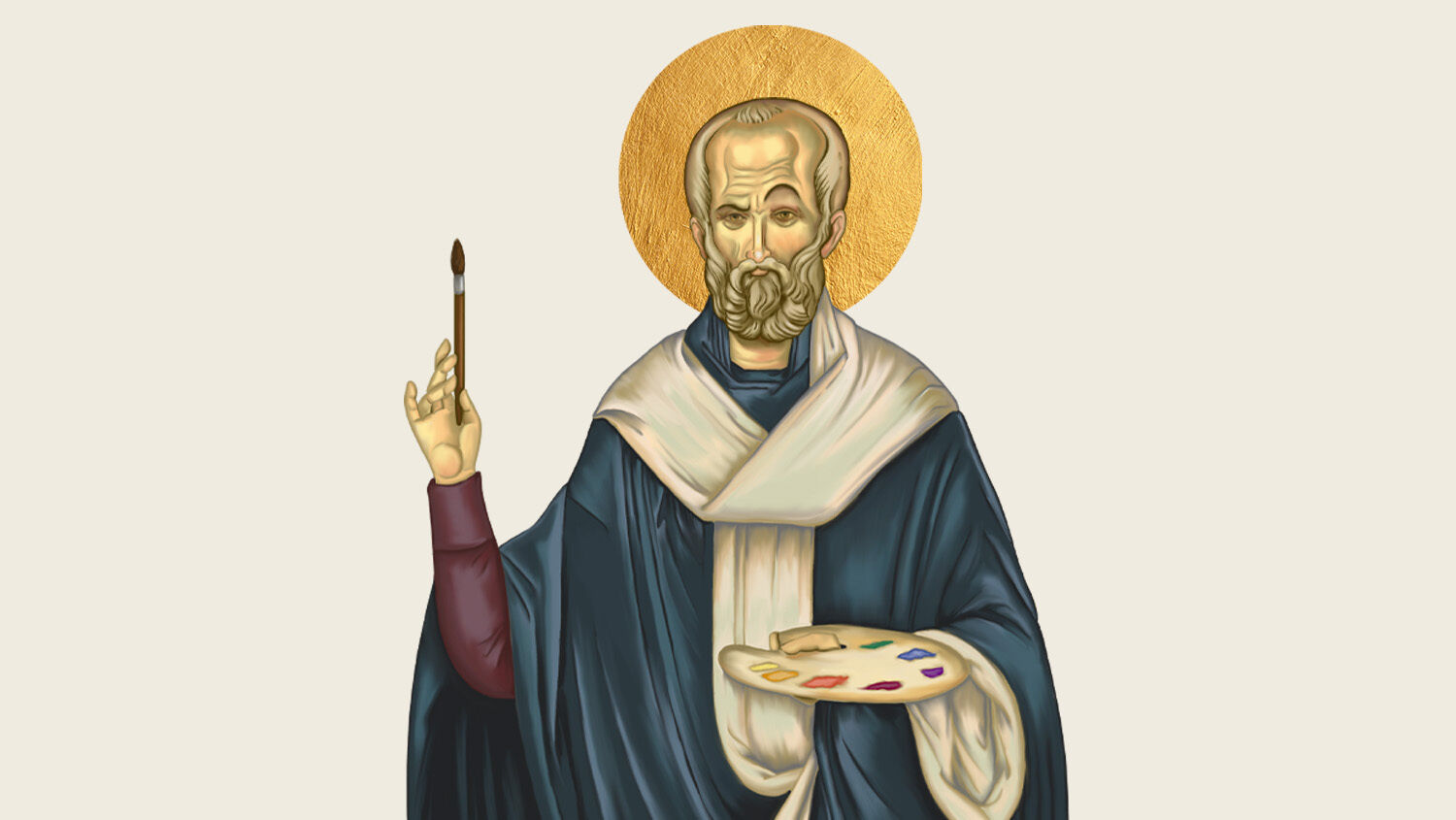
When I was a teenager, one of my relatives had an image of Saint Michael, our family’s patron saint, hanging on the wall with an incense burner. Growing up in an Eastern Orthodox household, I knew little about spirituality but recognized the icon as something sacred in our religion. In church services, congregants queued up to bow down to and kiss similar images. When I passed by that icon, I stopped and made a little bow.
By doing so, was I worshiping God?
The Eastern Orthodox, Roman Catholic and Anglican churches, along with many Lutheran sects, venerate images in their worship. Many in other denominations also pay special respect to sacred artwork.
Revelation 12:7-9 record Michael as the archangel who defeated the devil in battle. When I was a little older, I read in the same book of Revelation the Apostle John’s record of his encounter with an angel: “And I fell at his feet to worship him. And he said unto me, See thou do it not …” (Revelation 19:10).
Worship here is translated from the Greek proskyneō. Unlike the modern English meaning of worship, proskyneō has no connotation of accepting someone or something as God. Strong’s Concordance defines it as “to kiss, like a dog licking his master’s hand” as well as “to fawn or crouch to.” Thayer’s Greek Lexicon says it’s a kiss of the hand “in token of reverence.” These descriptions are similar to my memories of the practices of the Orthodox congregants in my youth.
Exodus 20:4-6 (New King James Version) record God giving the Second Commandment: “You shall not make for yourself a carved image—any likeness of anything that is in heaven above, or that is in the earth beneath, or that is in the water under the earth; you shall not bow down to them nor serve them. For I, the Lord your God, am a jealous God, visiting the iniquity of the fathers upon the children to the third and fourth generations of those who hate Me, but showing mercy to thousands, to those who love Me and keep My commandments.”
Does God want us to honor “sacred art”?
Old Testament examples provide precedents of art being used in worship.
Following is a list of commonly given explanations for the role of sacred art in mainstream Christianity, along with comparisons to what the Bible actually states, with additional commentary.
Exodus 31:1-5 describe God calling the artisan Bezaleel “[t]o devise cunning works, to work in gold, and in silver, and in brass, And in cutting of stones, to set them, and in carving of timber, to work in all manner of workmanship.” The ark of the covenant was made with two representations of angels on either side of the mercy seat (Exodus 25:18). The walls of Solomon’s temple likewise were carved with images of angels (1 Kings 6:29).
The Bible describes paying homage to an image in reverence being an act of worship. The Second Commandment forbids us to make images for the purpose of worship, to “bow down thyself to them, [or] serve them.”
One day, before Israel entered the Promised Land, God sent venomous snakes to punish the nation for sin. After the Israelites cried out to God for help, God commanded Moses to make a bronze snake and set it up on a pole. When an infected person looked at it (not bowed down to it or worshiped it), he was miraculously healed (Numbers 21:4-9).
Centuries later, ancient Judah venerated this bronze snake in remembrance of the healing and burned incense to it. King Hezekiah, whom God commends for his righteousness (2 Kings 18:3), destroyed the bronze snake in his purge of idolatry (verse 4). Hezekiah dismissed the statue as “merely a piece of bronze” (verse 4; Living Bible).
In other words, the moment people began shifting their focus from the God who healed them to the object itself, God’s righteousness demanded the destruction of what was “merely a piece of bronze.” Again, the commandment says that men must never make any aid, picture or physical object to worship God.
The depictions of angels in Solomon’s temple were wall decorations. People did not bow down to them or serve them. In addition, many of the Bible’s descriptions of angels are too fantastical for human imagination to accurately render (e.g. Ezekiel 1). The common portrayal of angels in art today looks nothing like what the Bible describes. Nevertheless, even accurate images made for the purpose of worship still break the Second Commandment.
Honoring sacred art doesn’t worship the object; only what it represents.
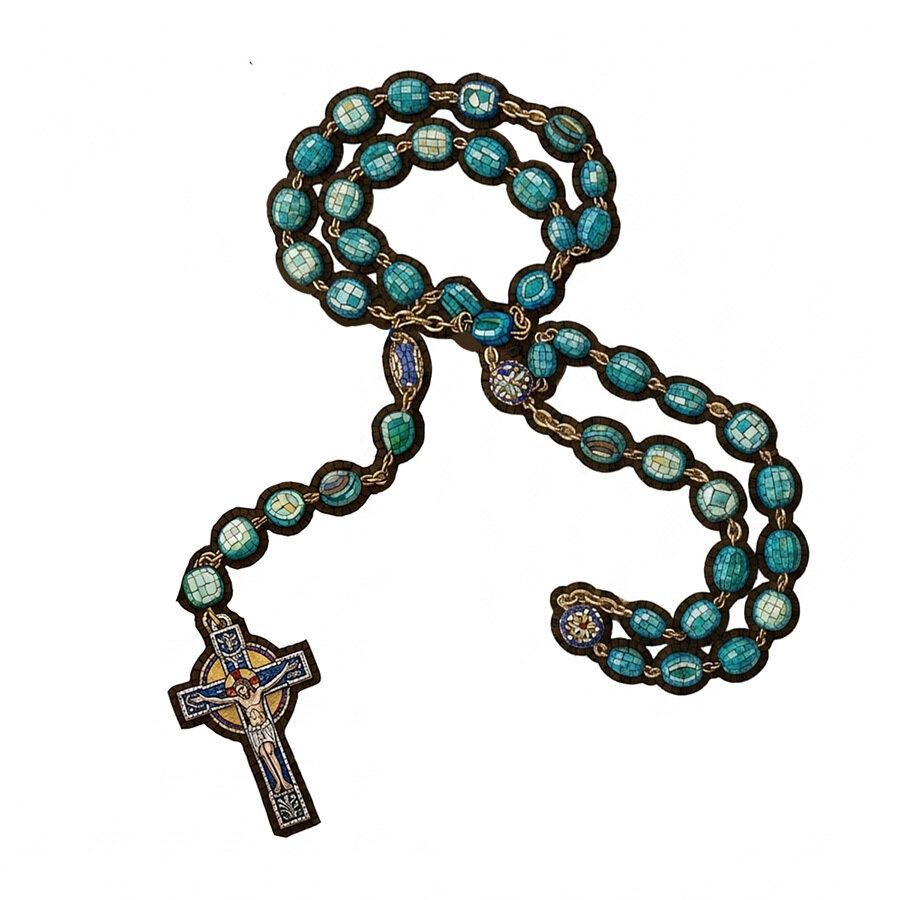
Exodus 32 recalls the day when the high priest Aaron constructed a golden calf for the Israelites. He used the calf in worship during “a feast to the Lord” (verse 5)—a worship aid for the God who freed Israel from Egypt.
Herbert W. Armstrong cited this example in his book The United States and Britain in Prophecy regarding sacred images: “Go into an Anglican church or a Roman Catholic church today and ask the priest or official whether the images of ‘Christ’ and of ‘Mary’ are idols …. They will indignantly say, ‘No! We don’t worship idols. We don’t worship the images. We don’t claim the images actually are Christ or Mary—only that they represent, or picture to us, what Christ or Mary looks like!’
“Well, that is precisely the way all pagans always worshiped idols! But God’s wrath waxed hot at this (Exodus 32:7-10). God will not accept such worship!”
Throughout the Bible, God condemns men comparing Him to the works of men’s hands in worship services (e.g. Isaiah 46:5-7; Jeremiah 10:1-6; Habakkuk 2:18-20). In Acts 17, the Apostle Paul, shaken by ancient Greece’s idolatrous customs (verse 16), taught the Athenians: “God, who made the world and everything in it, since He is Lord of heaven and earth, does not dwell in temples made with hands. Nor is He worshiped with men’s hands, as though He needed anything, since He gives to all life, breath, and all things” (verses 24-25; nkjv).
Furthermore, venerating depictions of personages is strictly banned by God’s law. We have already looked at Revelation 19:10, which forbids angel worship. So does Colossians 2:18: “Let no man beguile you of your reward in a voluntary humility and worshipping of angels ….” The word rendered “worshipping” in this case is the Greek thrēskeia, which Strong’s defines as “ceremonial observance.”
What about Mary? The official Catholic distinction is that men are to “worship” God (from the Latin latria) while they “honor” or “venerate” Mary (from the Latin dulia). This distinction isn’t even made in the Latin Vulgate, the Bible translation used by the Catholic Church. It comes primarily from St. Augustine’s book City of God. Both words are Latinizations of Greek words used in the New Testament to describe “service.” Latria is usually used in reference to service to God. Dulia comes from the ancient Greek word for “slave.”
Nowhere in the New Testament is latria used to describe ritual ceremony for any “lesser beings” than God. The context of the use of latria—like describing the ancient temple service (e.g. Romans 9:4; Hebrews 9:1, 9)—clearly includes the type of ceremonial rituals many perform to Mary and others. The modern Latin differentiation between latria and dulia in Roman Catholic services doesn’t have any connection to the meaning of the original Greek words.
Using the Latin definition moves the goalposts regarding what God forbids. And the Roman Catholic Church subtly recognizes there isn’t much of a distinction. In some places, the church openly states it worships Mary. For example, the Notre Dame Cathedral’s museum in Paris has an entire display of relics dedicated to “Marian worship” and its place in Catholic theology.
In Revelation 19:10, after the angel told John not to worship him, he said: “[W]orship God ….” When Satan tempted Christ to bow down before him, Christ answered: “Get thee hence, Satan: for it is written, Thou shalt worship the Lord thy God, and him only shalt thou serve” (Matthew 4:10).
For those who claim that religious tradition supersedes “old interpretations,” Christ refuted this argument to the religious authorities of His day: “Full well ye reject the commandment of God, that ye may keep your own tradition” (Mark 7:9).
The God of the Old Testament was invisible, but we know what Jesus Christ looked like.
It is an easily provable fact that the traditional image of Jesus is far from what He looked like.
Nowhere does the Bible describe Christ as a long-haired, bearded figure in a toga. Paul wrote that “even nature itself teach[es] you, that, if a man have long hair, it is a shame unto him” (1 Corinthians 11:14). Christ looked like an average Jew of His day. He was so “generic looking” that Judas had to point Him out to the authorities with a kiss (Matthew 26:48). (Incidentally, early Roman iconographers depict Christ as youthful, without a beard and with short hair. Images like those so common today only became mainstream hundreds of years after the last eyewitnesses of Christ’s ministry were dead.)
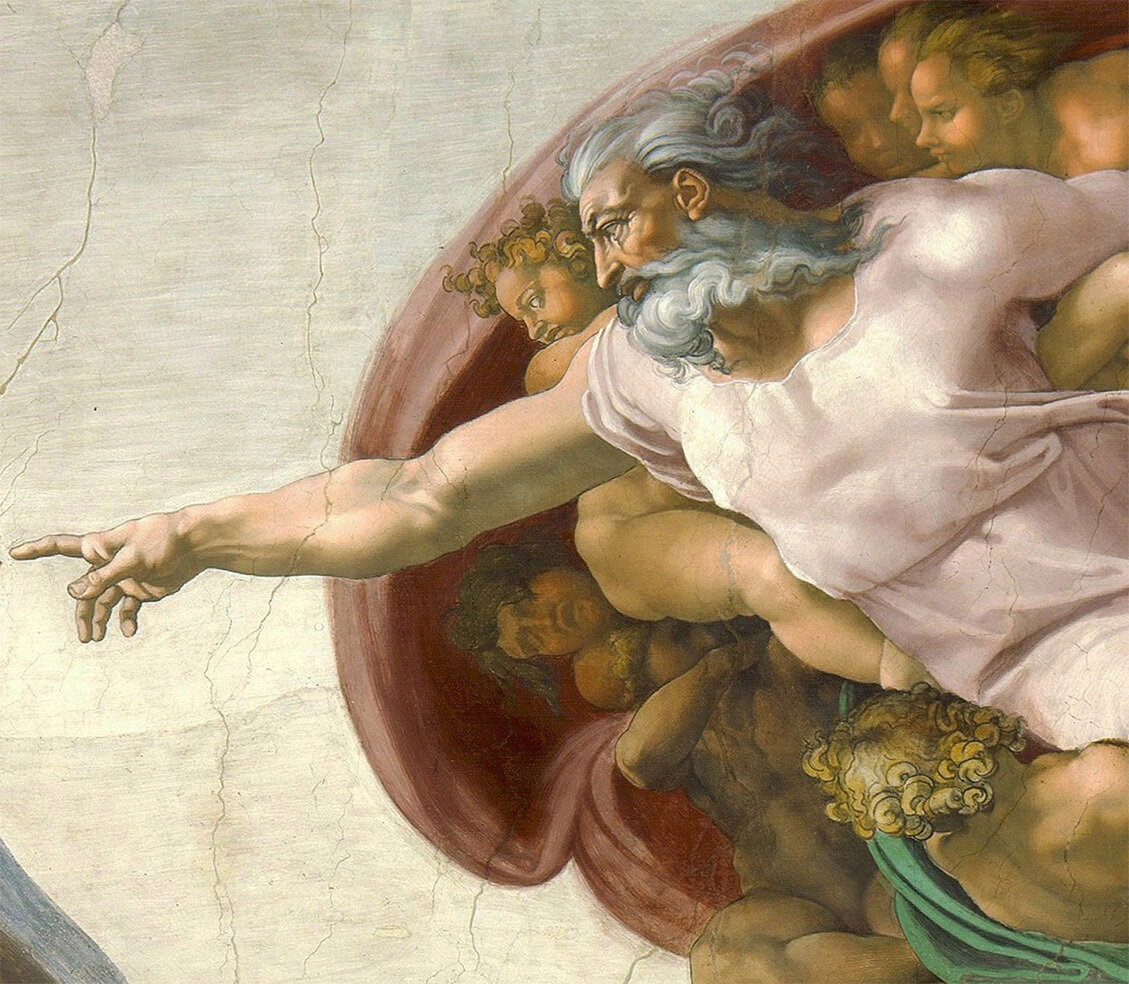
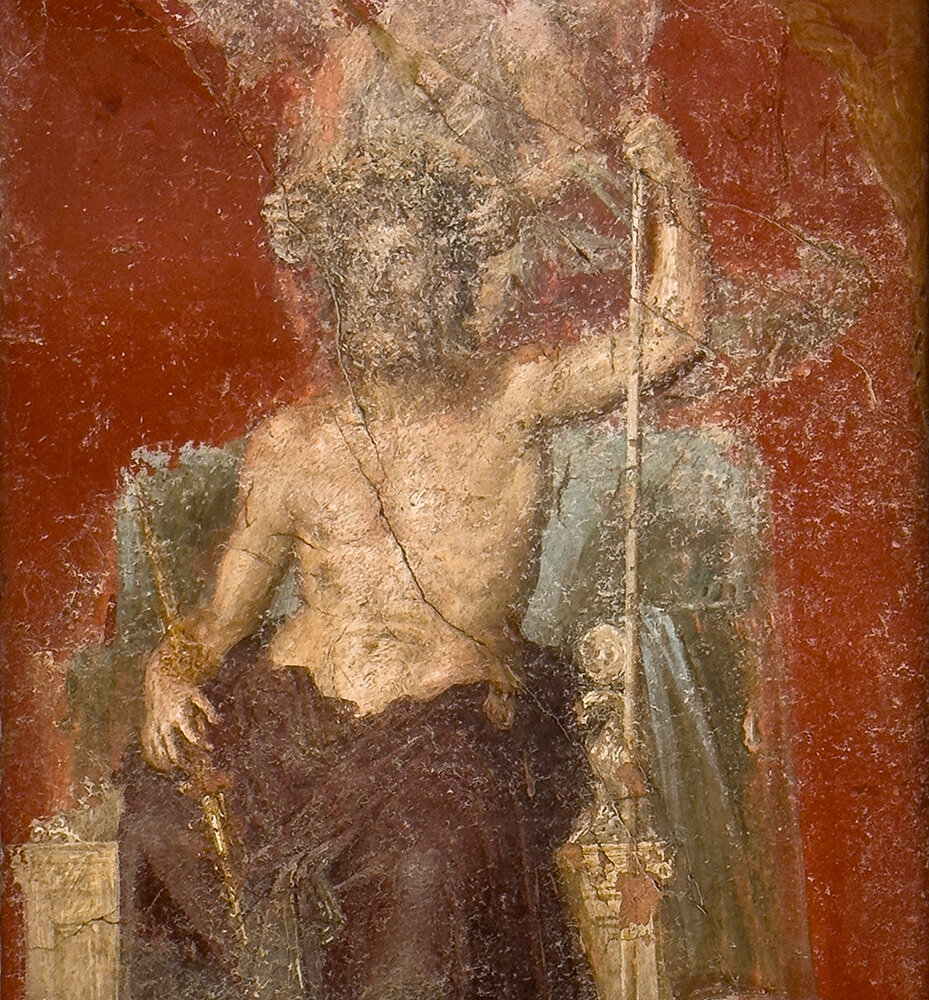
Some depictions of “God” have blatant pagan influence. Have you ever noticed Michelangelo’s depiction of God in the Sistine Chapel bears a remarkable resemblance to Greco-Roman depictions of Zeus?
The Christian world has unanimously accepted image veneration for 2,000 years.
Even in the late Roman world, the veneration of icons was never universally accepted. Starting with the Eastern Roman Emperor Leo iii in a.d. 726, various emperors—sometimes with the church’s backing—recognized icons as idolatry and banned them throughout the empire. This continued on and off until a.d. 843. This was centuries before the Schism of 1054 split the Catholic and Orthodox worlds.
This was also heavily debated in the early Protestant world. Andreas Karlstadt, a 16th-century German reformer and colleague of Martin Luther, wrote in “On the Removal of Idols” that having “images in churches and houses of God is wrong and contrary to the First [more specifically the Second] Commandment. … Therefore it is good, necessary, praiseworthy and pious that we remove them and give Scripture its due and in so doing accept its judgment.”
John Calvin, who founded the religious traditions of countries like Switzerland, Scotland, the Netherlands and much of early America, wrote that “a true image of God is not to be found in all the world; and hence that His glory is defiled, and His truth corrupted by the lie, whenever He is set before our eyes in a visible form.”
These critics were correct on this point.
The Ten Commandments don’t actually ban graven images.
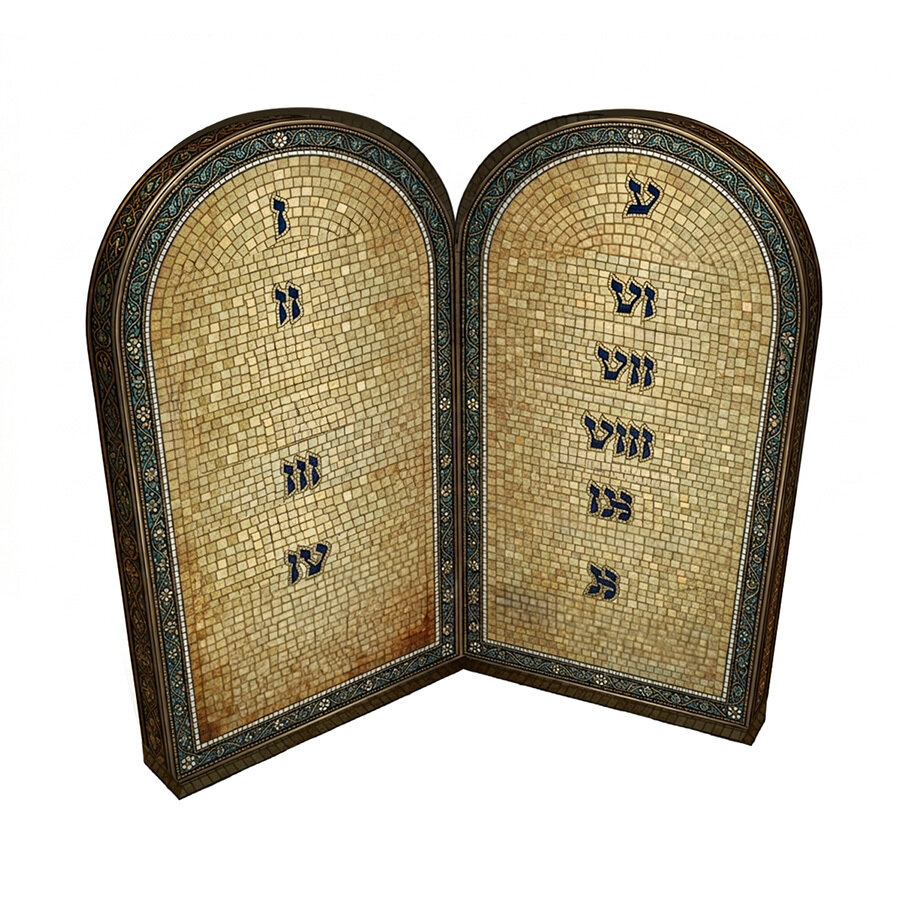
The Catholic summary of the Ten Commandments jumps from “Thou shalt have no other gods before me” to “Thou shalt not take the name of the Lord thy God in vain.” “Thou shall not make unto thee any graven image” is folded into the First Commandment.
The Catholic Church works around this to still get 10 commandments by splitting Exodus 20:17, separating “Thou shalt not covet thy neighbour’s wife” from “Thou shalt not covet any thing that is thy neighbour’s.” That is preposterous. The Seventh Commandment already forbids adultery, and Jesus said in Matthew 5:27-28 that lust and adultery are equivalent. In Exodus 20:17, coveting your neighbor’s wife is listed between coveting his house and his manservant. It isn’t listed as a commandment by itself.
What is the difference between the first two commandments? “The First Commandment forbids putting anything or anyone in the place of the true God,” we write in our booklet The Ten Commandments. “… The Second Commandment shows us how to worship the true God. … Images and pictures give us a false concept of the true God.”
The Catholic Church skips the Second Commandment because it is breaking it and doesn’t want people to know.
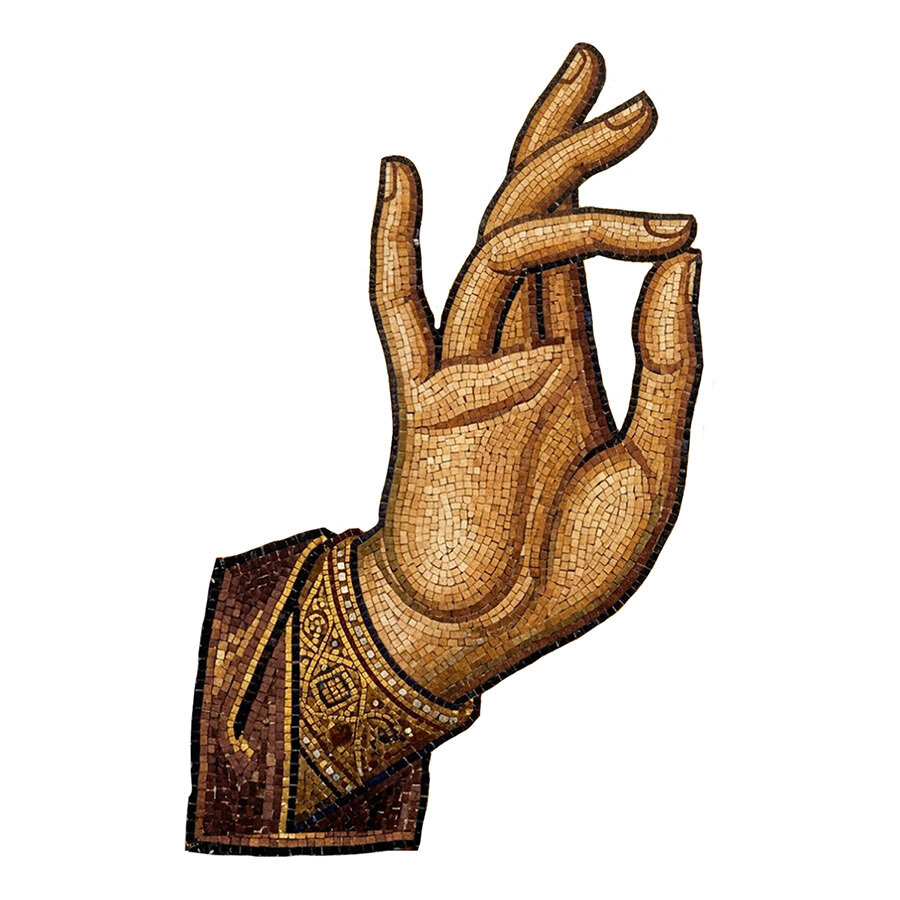
Why the fuss over images?
God specifically forbids creating “any likeness of any thing that is in heaven above.” That obviously includes God Himself. God’s temple anciently was decorated with beautiful artwork. God is not against beauty. But the art itself holds no inherent sacred authority or power. Treating it as such points people away from God and toward the work of men’s hands.
“True spirituality must be measured against the Bible,” Richard Palmer wrote in our November-December 2025 Trumpet. “Don’t just look to ancient tradition. An organization can be ancient without the teachings of Jesus Christ as its foundation. Every individual has the responsibility to prove what he or she believes.”
There are few questions more fundamental to true religion than the nature of God. Yet it is this question that so many churches disagree on. It is also this question that sacred art tries to answer—and fails miserably. As The Ten Commandments states: “Anyone who needs a picture or statue to worship God simply does not know the true God.”
God’s law reveals God’s mind—how He thinks. The more we think like God (Philippians 2:5), the more we see God for who He really is.
Worshiping an object supposedly representing God limits the concept of God to what man can imagine. But God is far greater than what man can imagine. Getting to know the true God by obeying His commands is the real way to “[see] him who is invisible (Hebrews 11:27). God commands that we worship Him, as Christ said, “in spirit and in truth” (John 4:23). It is impossible to worship either in spirit or in truth when you break God’s command against worshiping Him with images, which are false and actually create obstacles in our relationship with Him. Obey that command and develop a true, intimate, spirit-level relationship with the one true God!