
Why Does Everyone Have Allergies Now?
Why Does Everyone Have Allergies Now?

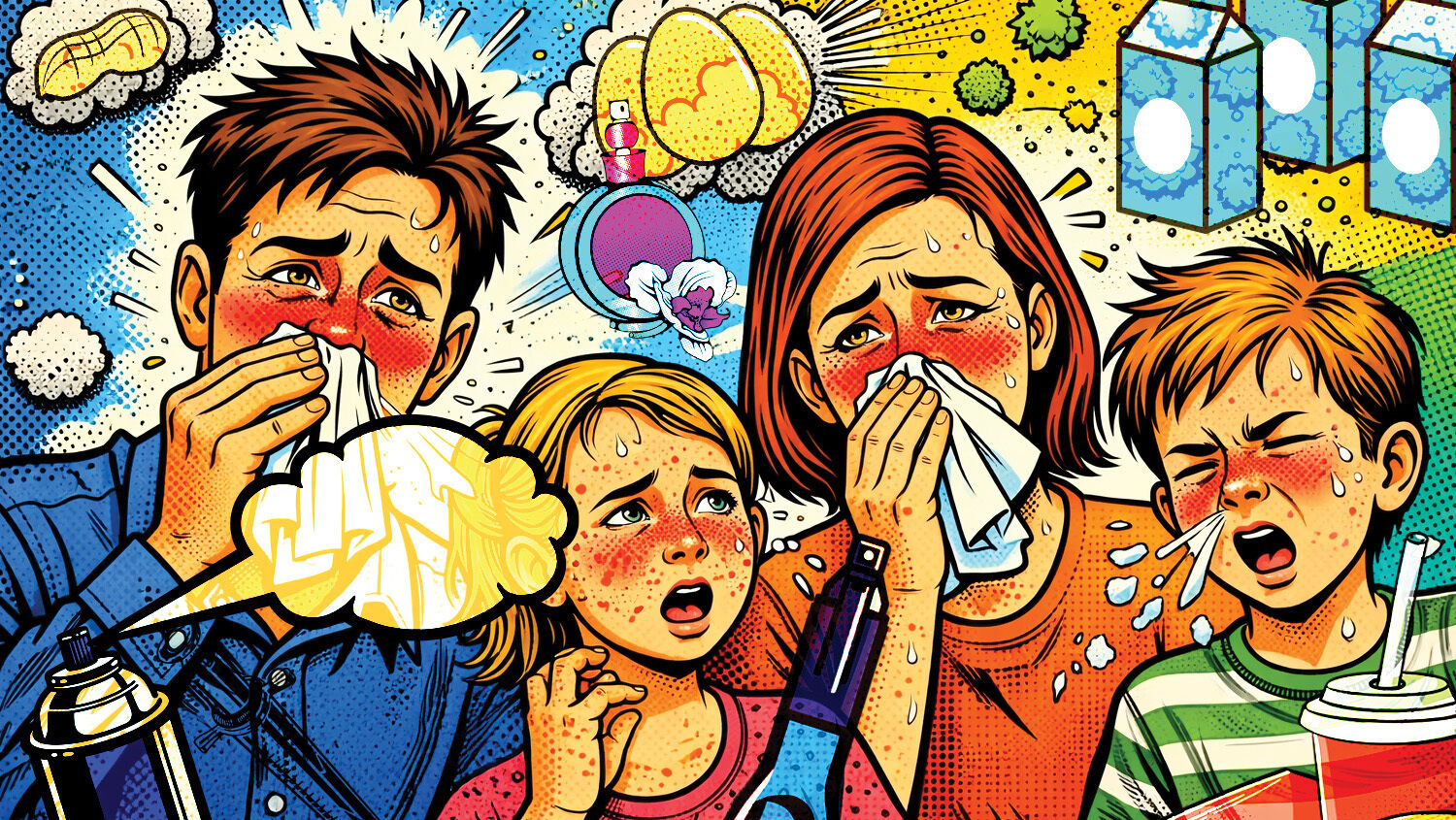
The trend is unmistakable: In a single generation, allergies have exploded from a minor nuisance to an epidemic. In the United States, nearly 1 in 3 adults and more than 1 in 4 children now have a seasonal allergy, food allergy or eczema. Over 100 million Americans are affected by immunity problems.
Emergency treatment for food-induced anaphylaxis rose 377 percent between 2007 and 2016. More recent figures estimate that there are now 3.4 million food allergy-related emergency visits in America each year—roughly one every 10 seconds.
What makes this surge so striking is how quickly it emerged. Before 1960, asthma was rarely mentioned in pediatric textbooks; by 1990, it had reached epidemic levels. The World Allergy Organization Journal projects that by 2050, 4 billion people worldwide will suffer from allergic disease, concentrated almost entirely in developed and rapidly developing nations.
Even so, modern allergy care remains centered on symptom control through medications, combined with avoidance of known triggers. We aren’t getting answers about why millions of people have developed allergies in the first place.
Why Are We All Allergic?
Many people say allergies are caused by genetics. This shifts the blame to a mystery shrouded in the mists of the past and away from real causes and real effects—and the people responsible.
If dna were the cause, allergies would have shown up much more consistently throughout history, with gradual increases and decreases. They didn’t. The recent spike has happened over a 60-to-70-year period. Human dna itself does not change; only gene expression does. Genes can basically be turned on or off within a lifetime due to environmental triggers.
Simple scientific logic keeps coming back to the basic question about this rapid spike in allergies that many are avoiding: What is the cause?
The evidence points to significant changes in our environment over the past 60 to 70 years—a cluster of modern environmental, dietary, infectious, chemical and medical stresses. Each carries its own risks, but combined, they are driving a massive surge in allergies.
The first major immunity-shaping event of life happens during birth. One of the miracles of natural birth is the establishment of an infant’s microbiome. Births by cesarean section interfere with this process. C-section rates have climbed sharply and now in some countries exceed half of all births. Sadly these are necessary at times, but estimates suggest that 10 to 15 percent of them are medically unnecessary. In any case, these deliveries are associated with increased risk of asthma, allergic rhinitis, atopic dermatitis and food allergies.
Another disruption has come from broad-spectrum antibiotics. Widely available since 1965, their usage has climbed steadily. These are obliterating protective gut bacteria. A 2025 Rutgers Health study found that repeated use of antibiotics before age 2 is associated with higher risk of allergies later in life.
Allergic reactions might also be connected to vaccines. The mrna covid-19 variety, which is still in use today, contains polyethylene glycol, a compound that is known to trigger anaphylaxis in some people.
The immune system might also be nudged toward allergic reactions by vaccine adjuvants such as aluminum compounds. Other adjuvants—including monophosphoryl lipid A, CpG 1018 and MF59—are not classified as allergy-causing, but they are biologically active substances that the body would not normally encounter through natural exposure. In susceptible individuals, these adjuvants could add to immune stress and influence gut balance.
Modern Lifestyles
The hygiene hypothesis is often cited as a cause of allergies. Research now shows the real problem is that we lack natural microbial exposure early in life, the kind of exposure that helps train our immune systems.
Now renamed the “old friends” hypothesis, the idea is that children need regular contact with harmless microbes in everyday life—family interaction, outdoor play, animals and shared environments—to train the immune system’s response.
That training has been disrupted. Modern childhood has moved largely indoors; children spend more than seven hours a day in front of screens and far less time outside than previous generations. Meanwhile, roughly half of Western populations are vitamin D deficient, a result of limited sunlight that is also strongly linked to higher rates of asthma, allergic disease and immune dysfunction.
Household chemicals also disrupt immunity. Cleaning products, air fresheners and personal care items contain synthetic compounds that act as endocrine disruptors and immune modulators.
Research shows that children in homes using high levels of cleaning products have elevated rates of asthma and allergic sensitization. Constant exposure to irritants keeps the immune system chronically activated, priming it to overreact to benign triggers.
The modern food supply reinforces the same pattern. Processed foods are packed with preservatives, emulsifiers, artificial sweeteners and chemical stabilizers that alter gut microbiota and intestinal barrier integrity. Ultra-processed foods are one of the largest drivers, with the highest intake linked to 1.76 times higher odds of asthma.
Conventional produce carries poisons in the form of pesticide residues that damage beneficial gut bacteria. Meat and dairy from industrial farming contain antibiotic and hormone residues that further disturb the microbiome and immunity signaling.
A Systemic Failure
The allergy epidemic is the cumulative result of multiple modern causes acting on developing immune systems. Large population studies show that when this happens, the risk of allergic disease rises sharply across a person’s lifespan.
Yet recovery remains possible. Diets centered on whole foods, abundant fiber and fermented foods help restore microbial diversity and strengthen immune regulation. Regular outdoor exposure, contact with soil and animals, and avoidance of antibiotics and vaccines in early childhood further support the development of immune tolerance.
This leaves us with a choice. We can accept the allergy epidemic as a cost of modern living, or we can recognize it for what it is: a largely preventable outcome. To avoid being on the wrong side of allergy statistics, live “the clean life.”


