

Egypt’s Modern Plague of Darkness
One country is bearing the brunt of Iran’s attacks on American allies in the Middle East. Although it has not faced a single Iranian drone or missile, it is being hit economically. Its shaky economy has been weathering crises for years—barely. The disruption of the global economic system by Iran will soon bring massive changes to Egypt.
Darkness Over Egypt
Iran has closed the Strait of Hormuz, the narrow waterway connecting the Persian Gulf to the wider world, through indiscriminate attacks against civilian vessels exporting fossil fuels from the Gulf Arab states. This has caused the world’s oil prices to skyrocket, leading to price increases for fuel and other basic commodities for the average global consumer.
This is affecting the entire world, but it hits Egypt in a particularly vulnerable place. On March 5, Egyptian President Abdel Fattah al-Sisi said the war has brought Egypt to a “state of near-emergency.”
Egypt imports most of its natural gas from two countries: Israel and Qatar. Iran’s blockade prevents Qatar from exporting anything. Soon after the war started, Israel suspended the vast majority of its gas exports to Egypt. Gas flow has only returned to prewar levels recently, according to an April 6 Bloomberg article. Egyptian Prime Minister Mostafa Madbouly claimed Egypt’s monthly expenses for importing energy doubled between January and March, to $2.5 billion as of last month.
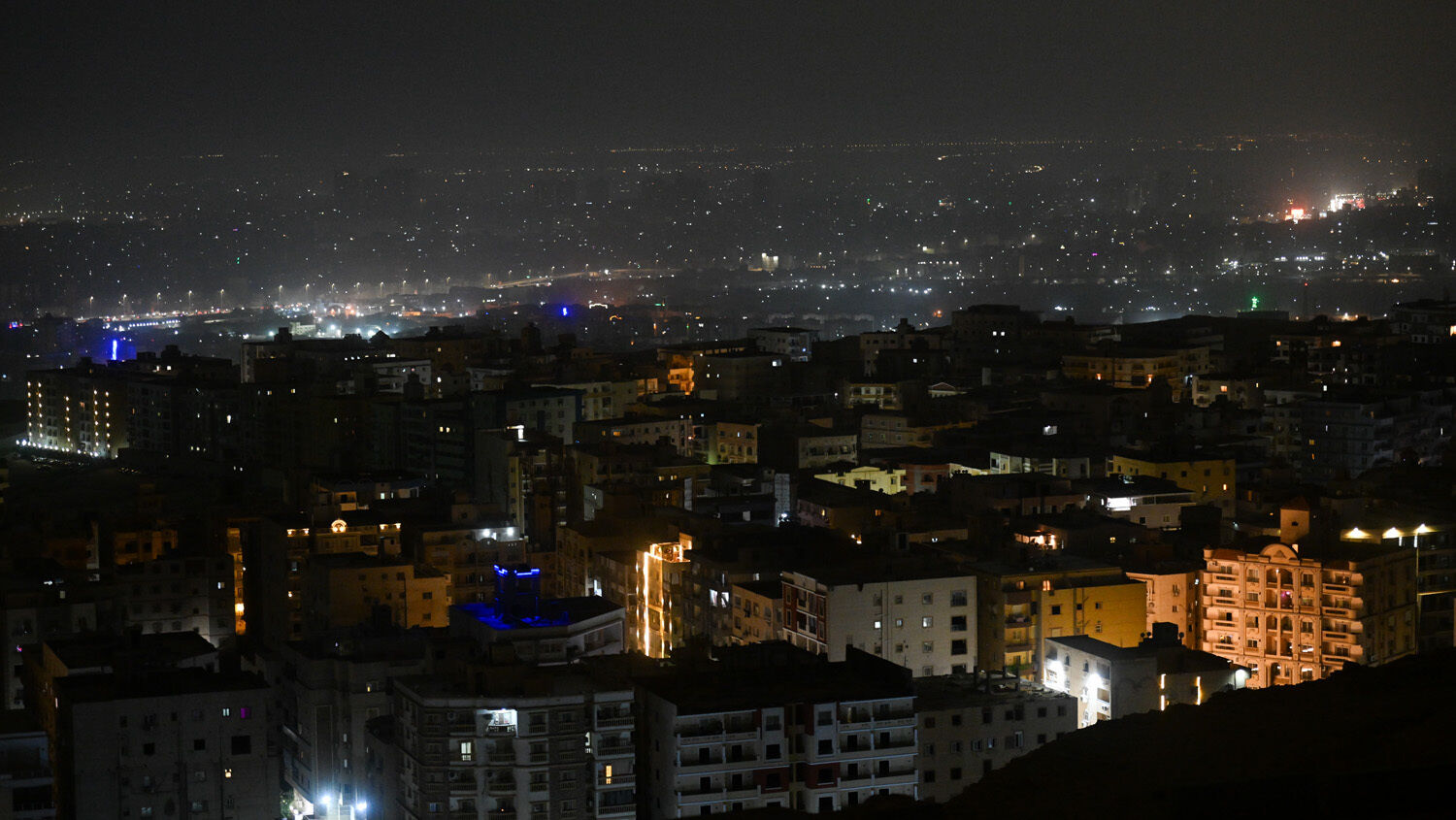
The energy shock led the Egyptian government last week to enforce a monthlong curfew, forcing businesses to close at 9 p.m. on weekdays and 10 p.m. on weekends. Most economic sectors will require employees to work one day from home. One commentator with the National Post likened the night scene of the formerly bustling Cairo to Egypt’s plague of darkness in the book of Exodus.
Egypt hosted its annual energy conference on March 31. Sisi turned to the news cameras and made a plea to United States President Donald Trump: “I appeal to you, in the name of humanity and all peace lovers, to stop this war.” He claimed President Trump was the only man who could.
The Other Plagues
Over 90 percent of Egyptian territory is desert and mostly uninhabitable. Most of the nation’s 110 to 120 million people live along the Nile River. An estimated third live below the poverty line, with another third economically vulnerable.
Egypt has very few economic lifelines and more people than those lifelines can support long-term. That makes it vulnerable to economic shocks, which it has been getting for years now.
- One of Egypt’s biggest sources of revenue is international tourism. The covid-19 lockdown in 2020 and 2021 killed that.
- Egypt is one of the world’s biggest importers of wheat; most Egyptians rely on government-subsidized bread. Two of the biggest wheat exporters are Russia and Ukraine. Russia’s 2022 invasion of Ukraine severely disrupted supply lines.
- After Yemen’s Houthi terrorist group attacked merchant shipping in the Red Sea to support Hamas’s 2023 invasion of Israel, transit revenue from the Suez Canal dried up. Many major shipping companies still avoid the Suez Canal-Red Sea corridor.
- Last year, Ethiopia dammed the Nile River’s largest tributary while refusing to make a water-sharing agreement with Egypt. If anything jeopardizes the Nile’s flow, Egyptian society would collapse.
Egypt has thus far weathered all of these crises. Partly because of economic bailouts from such countries as Saudi Arabia and the United Arab Emirates. But these countries are now mired in the Iran war. These countries’ own economies are now suffering from the Hormuz closure. And these countries, for the most part, are physically unable to send Egypt energy.
A country as vulnerable as Egypt can only take so many major shocks before the entire system collapses. What will replace it?
‘Thus Says the Lord’
Daniel 11 contains a prophecy for the Middle East of today: “And at the time of the end shall the king of the south push at him: and the king of the north shall come against him like a whirlwind, with chariots, and with horsemen, and with many ships; and he shall enter into the countries, and shall overflow and pass over. … He shall stretch forth his hand also upon the countries: and the land of Egypt shall not escape. But he shall have power over the treasures of gold and of silver, and over all the precious things of Egypt: and the Libyans and the Ethiopians shall be at his steps” (verses 40, 42-43).
As Trumpet editor in chief Gerald Flurry elaborates in his booklet The King of the South, this is speaking of a modern-day clash between Iran and its allies (“the king of the south”) versus a united Europe (“the king of the north”). Verses 42 and 43 show Egypt is attacked along with the king of the south, implying that Egypt belongs to Iran’s alliance.
Egypt-Iran relations blossomed briefly under Egypt’s Muslim Brotherhood government from 2011 to 2013. Since then, Egypt’s military has retaken control and drawn closer to the West. But the Bible says this will change. An economic collapse followed by a popular Islamist revolution seems the most likely way.
“Egypt today is facing an even worse economic crisis than it did in 2011,” Mr. Flurry writes. “In circumstances like these, radicalism grows even more popular. Many in Israel and the West underestimate the influence of the Muslim Brotherhood and the popular support for anti-Israel policies. Muslim movements organized by the Muslim Brotherhood have received support throughout Egypt. No new leader could ever get the power to resist such strong beliefs of the Egyptian people. This all plays into the hands of Iran.”
Big changes are coming to Egypt. As the country is hit by stronger and stronger crises, expect Iran and radical Islam to take advantage.
To learn more, request a free copy of The King of the South.


