

Is Iran Uniting the Arab World by Attacking It?
After Israel and the United States bombed Iran, Iran retaliated—by bombing U.S. partners in the Arab world. The United Arab Emirates, Bahrain, Saudi Arabia, Kuwait, Qatar, Jordan, Oman and Iraqi Kurdistan have all been recipients of Iranian missile or drone attacks. The decision to attack its Arab neighbors may work in Iran’s favor for the short term. More significantly, it could lead to the fulfillment of one of the Bible’s most important prophecies regarding the Middle East.
Who Was Attacked?
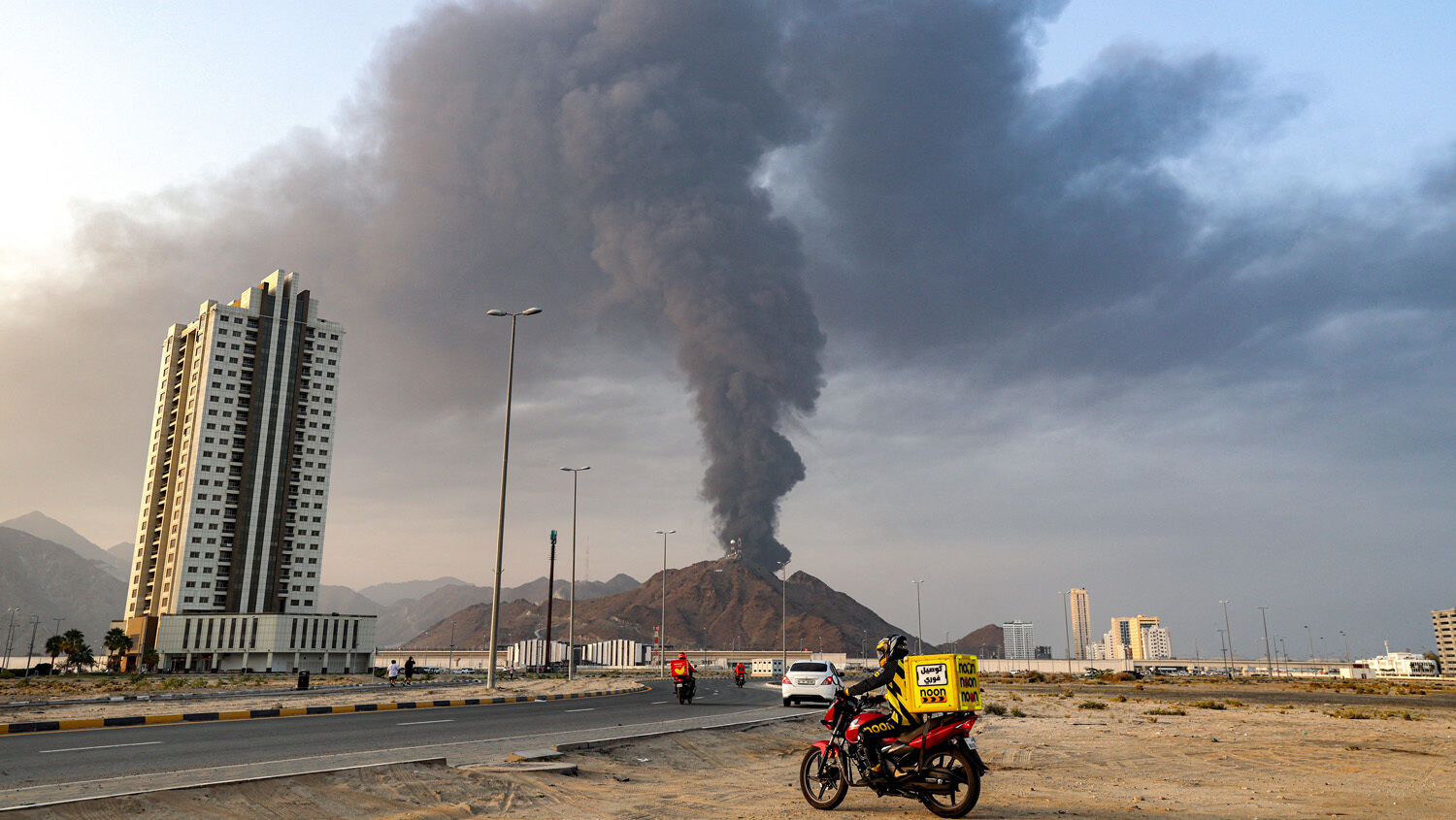
The U.A.E. has received the most attention from Iran among the Arab states. As of March 3, over 1,000 projectiles, most of them drones, had bombarded the country. The U.A.E. has confirmed at least three deaths. Damaged targets include the main airports of Dubai and Abu Dhabi, the famed Palm Jumeirah artificial island, and Etihad Towers, which houses the Israeli Embassy.
Kuwait has received fewer projectiles, but it is the location of the first American casualties on March 1. Six servicemen died when an Iranian munition hit a military facility.
In Saudi Arabia, Iran hit the kingdom’s largest oil refinery. Oman is considered a neutral mediator, so its being targeted is surprising.
Perhaps the most surprising target so far is Qatar. Iranian drones have targeted Qatar’s energy infrastructure. Qatar’s state-owned liquefied natural gas company, one of the largest in the world, said it would halt production. The nation claims it has shot down two Iranian bombers over its airspace.
Qatar is a major sponsor of the same terrorist groups as Iran, like Hamas and the Muslim Brotherhood. It has used its connections with the West to protect these groups, often financially. It has used diplomatic and cultural clout to dissuade the U.S. from harming Iran. In the war’s opening hours, Qatar appeared to be trying to de-escalate the war. But after one barrage, Majed al-Ansari, adviser to Qatar’s prime minister, said: “This cannot go unanswered. A price has to be paid for this attack on our people. … We are ready to defend our country for as long as it takes.” The New York Times commented that Iran sending bombers to a country with friendly relations like Qatar “raises questions about how far the Islamic Republic would go in its attacks on its neighbors.”
Qatar may have already answered this question.
Arabs Attacking Iran?
Citing “senior Western diplomatic sources,” the Jerusalem Post claimed Qatar launched air strikes on Iranian soil in retaliation. A report by Israel’s Channel 12 claimed the same thing. Ansari denied on X that Qatar had “been part of the campaign targeting Iran.” But Channel 12 claims Ansari told them: “We did not receive advance warning from Iran about the missile attacks. The target is not only military facilities. It includes the entire territory of the state. Attacks like these will not pass without a response.”
Also, a “source familiar with Emirati policy discussions” told Axios: “The U.A.E. is considering taking active defensive measures against Iran. Although it has not been involved in the war in any way, it has still endured 800 projectiles.” This could include striking Iranian missile sites.
This is unprecedented. Even if these countries’ involvement is exaggerated, even suggesting such action against Iran shows that any metaphorical bridges still surviving have been burned. Not only that, it shows that these smaller countries feel confident about pushing back on Iran without encouraging greater escalation. Iran’s veneer as the untouchable bully has been broken.
On Sunday, Bahrain, Jordan, Kuwait, Qatar, Saudi Arabia and the U.A.E., together with the U.S., released a statement saying they “strongly condemn the Islamic Republic of Iran’s indiscriminate and reckless missile and drone attacks against sovereign territories across the region. … The Islamic Republic’s actions represent a dangerous escalation that violates the sovereignty of multiple states and threatens regional stability. The targeting of civilians and of countries not engaged in hostilities is reckless and destabilizing behavior. We stand united in defense of our citizens, sovereignty and territory, and reaffirm our right to self-defense in the face of these attacks.”
It is notoriously hard to get the Arab world united on any subject, unless that subject happens to be Israel. In this case, the Arab world is uniting against Israel’s enemy. Iran’s pushiness is achieving the impossible.
Iran knew it was provoking the Gulf Arabs to react. So why did it do so in the first place?
What Is Iran’s Strategy?
U.S. President Donald Trump has close connections with the Gulf Arabs. Saudi Arabia was the first country he visited during his first term. Qatar is gifting him the latest iteration of Air Force One. Trump trusts Qatar enough to keep the country as a mediator between Israel and Hamas, despite Israel’s objections over Qatar sponsoring the group. The Gulf Arabs have previously influenced Trump not to attack Iran. They were trying to do so this time around. Perhaps Iran is trying to pressure them to pressure Trump.
Iran also knows that one of America’s weak points is public opinion. President Trump’s attack on Iran is extremely unpopular with part of his base, which claims he is betraying his promise to keep the U.S. out of “forever wars.” The attacks on the Gulf Arabs’ energy trade—including and especially closing the Strait of Hormuz to commercial traffic—means energy prices worldwide are climbing. Many voters elected Trump on the platform of lowering the cost of living; this could seem like another broken promise. With congressional midterm elections in November, Iran may be banking on a domestic outcry to get Trump to pull back.
Finally, Iran may feel the need to “punish” the Gulf Arabs for cooperating with America and Israel. The U.A.E. is Israel’s closest partner in the Middle East. It is the only Arab country not to downgrade ties during the Israel-Hamas War. It is probably not a coincidence that Iran fired more projectiles at the U.A.E. than at Israel.
Will the Arabs Stay United?
Very few causes can unite a bloc as divided and quarrelsome as the Arab world. Fear and hatred of Iran is one of them. The Bible shows where this shared animosity will lead.
Psalm 83 records an alliance of various Middle Eastern peoples never recorded in biblical or secular history. Trumpet editor in chief Gerald Flurry has explained that it is a prophecy for what will happen in the modern day. The alliance is comprised of “the tabernacles of Edom, and the Ishmaelites; of Moab, and the Hagarenes; Gebal, and Ammon, and Amalek; the Philistines with the inhabitants of Tyre; Assur also is joined with them …” (verses 6-8).
Mr. Flurry wrote in a January 2021 article about Psalm 83:
The key to unlocking this prophecy is to know the modern descendants of these peoples. And God in this end time has supplied this key. Based on biblical and historical research and with God’s inspiration, Herbert W. Armstrong gave a good general idea of which nations these peoples correspond to today, equating the Ishmaelites with Saudi Arabia and the Gulf states, the Hagarenes with Syria, the Philistines with the Palestinians, Gebal and Tyre with Lebanon, Moab and Ammon with Jordan, and Edom and Amalek with Turkey.
Many of these are countries that Iran is attacking right now.
Assur, or Assyria, is Germany. Other prophecies show that Germany will lead a pan-European bloc, which Daniel 11:40 calls the “king of the north,” against Iran. (Our relevant Trends article explains.) This implies the Psalm 83 alliance is also against Iran.
Mr. Flurry writes in The King of the South:
The context of this prophecy shows that this won’t be totally fulfilled until after Germany and its European allies conquer the king of the south in the “whirlwind” described in Daniel 11:40. Thus, we can infer that these Islamic countries will not be part of that king of the south alliance.
If you watch Germany closely, you can see that it is already positioning itself for its “whirlwind” attack on Iran. And some of these preparations are laying the groundwork for this future alliance with Arab states.
Mr. Flurry summarizes how Iran’s proxy empire and the Psalm 83 alliance relate: “These two confederations are opposed to one another.”
At the moment, Germany is not Iran’s main enemy. But Iran is becoming the Arab world’s main enemy. In that sense, Iran’s attack is laying the foundation for creating this alliance.
Turning the Middle East against the world’s biggest sponsor of Islamic terrorism may seem like a good thing. But the Psalm 83 alliance isn’t about spreading peace and freedom around the world. Mr. Flurry writes: “This alliance is primarily and ultimately concerned not with countering Iran but with destroying Israel.”
Verse 4 reads: “They have said, Come, and let us cut them off from being a nation; that the nation of Israel may be no more in remembrance.” This “name of Israel” is not limited to the State of Israel today; it also includes the United States and Britain. (Herbert W. Armstrong’s The United States and Britain in Prophecy explains.)
Iran is attacking the Gulf Arabs because of their relationships with the U.S. and the State of Israel, but the Arabs won’t remain friends with the U.S. and Israel. The more they unite according to the Psalm 83 pattern, the closer the U.S. and Israel are to a monstrous betrayal.
To learn more, request a free copy of The King of the South.


