

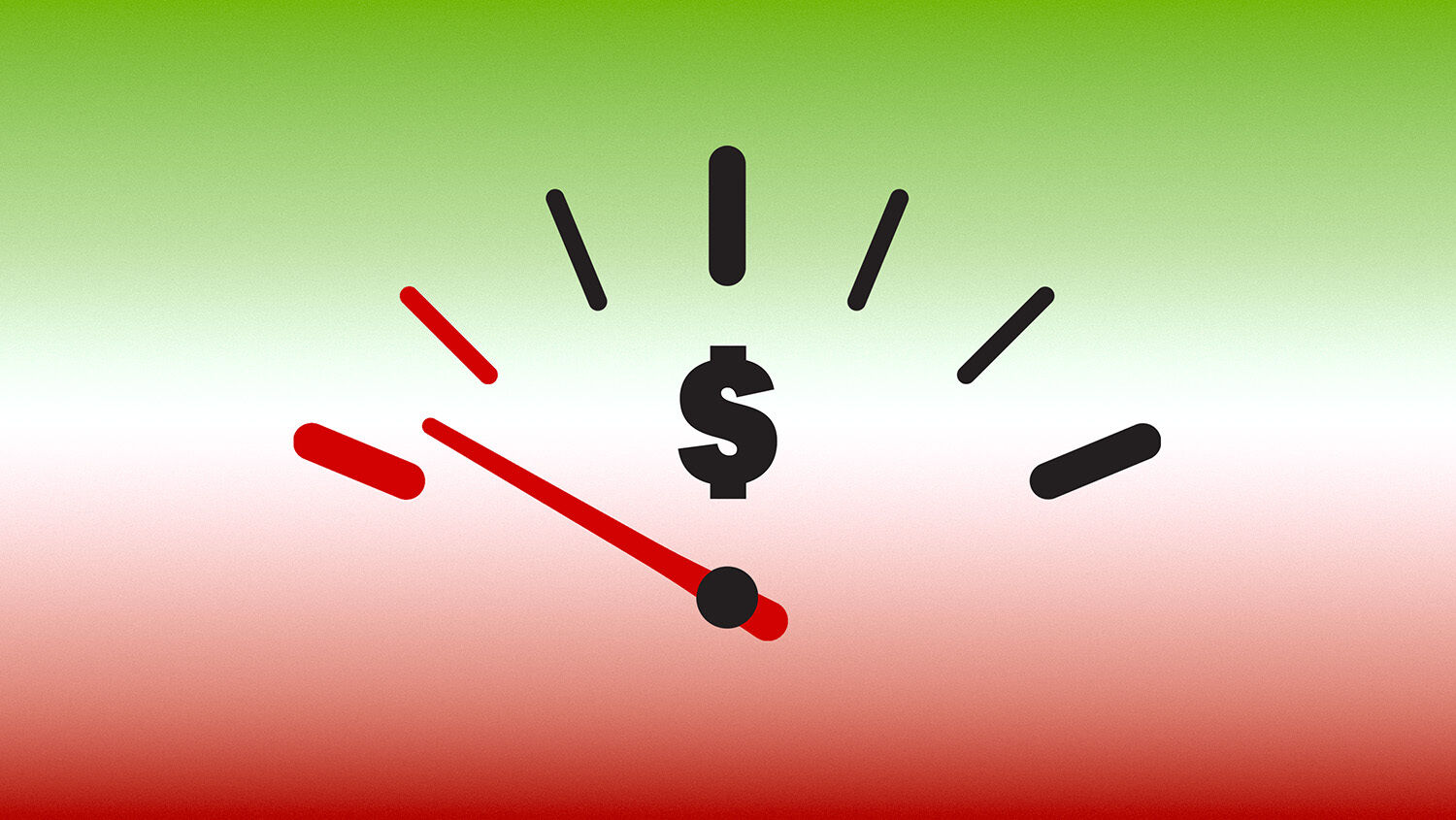
Will Iran Sink the Petrodollar?
The ongoing conflict with Iran threatens United States’ and Israeli forces, commercial shipping and civilians—and also the petrodollar system that underpins much of America’s economic power.
Iran is not seeking direct military victory over the U.S. Instead, it is relying on asymmetric warfare: targeting civilian infrastructure, airports, hotels, oil facilities and commercial vessels. Its most potent lever may be disrupting tanker traffic through the narrow Strait of Hormuz.
This is not just about higher shipping costs or insurance premiums. Iran is deliberately stressing the dollar at its weakest point—the global oil trade.
Iran’s Islamic Revolutionary Guard Corps has effectively shut down most commercial transit through the Strait of Hormuz by threatening and attacking vessels linked to the U.S., Israel and their supporters. This selective blockade has triggered one of the largest global oil supply disruptions in modern history.
Petroleum flows that averaged 20 million barrels per day have slowed to a trickle, prompting Arab Gulf producers to slash combined output by at least 10 million barrels per day as onshore storage tanks are full and tankers remain unable to load. This is a huge problem for the Arab Gulf monarchies, whose economies are about 30 percent dependent on oil, and for the rest of the world’s economies, since those nations produce as much as 25 percent of all global oil production.
Oil is tightly linked to the dollar. Much of the dollar’s enduring global strength stems from the fact that international oil trade is overwhelmingly priced and settled in U.S. dollars. Countries worldwide must hold large dollar reserves to buy oil, sustaining constant demand for the currency.
This petrodollar system originated more than 50 years ago. As U.S. President Richard Nixon ended the last of the dollar’s convertibility to gold in 1971, his administration, led by Secretary of State Henry Kissinger, deepened ties with Saudi Arabia. In exchange for U.S. security guarantees, the Saudis agreed to price and sell their oil in U.S. dollars and recycle the resulting surpluses into American assets, particularly U.S. treasuries. Other major oil exporters soon followed, creating the “petrodollar” system that has created global demand for the dollar ever since.
The current war has thrown U.S. security guarantees into question.
Saudi Arabia’s de facto ruler, Crown Prince Mohammed bin Salman al-Saud, has urged President Donald Trump to take decisive action to reopen the Strait of Hormuz and press toward regime change in Iran, viewing the war as a historic opportunity to reshape the region. Yet Trump faces growing domestic political resistance to deeper involvement in the war, raising doubts about whether the U.S. has the resolve to restore secure oil flows through the strait and deliver on broader strategic objectives.
Adding to the pressure, Iran has reportedly allowed limited tanker passage—particularly for cargoes headed to China—when payments are made in Chinese yuan rather than dollars. On March 24, Mallika Sachdeva, a strategist at Deutsche Bank, highlighted media reports of this development and warned: “The conflict could be the catalyst for erosion in petrodollar dominance and the beginnings of the petroyuan.”
Such statements show that the world is watching how President Trump handles this crisis. If the disruption drags on, Arab Gulf producers may question the reliability of U.S. protection. That could accelerate efforts to diversify away from dollar-denominated oil trade, eroding a primary pillar that has supported the dollar.
If the Saudis decide they can no longer rely on America to protect the Strait of Hormuz and begin to “dump the dollar,” allowing nations to use other currencies and reducing their purchases of U.S. treasuries, the consequences for the dollar will be significant. The dollar would likely lose some of its reserve currency dominance, contributing to higher inflation and pushing interest rates on the U.S. national debt higher. The U.S. government already spends nearly 20 percent of its tax revenue servicing the interest on the national debt, so interest rates don’t have to rise much further before the entire economy faces a severe fiscal crisis.
The late Herbert W. Armstrong anticipated a major financial crisis in America would serve as a catalyst for the nations of Europe to unite into a pan-European superpower. In a July 22, 1984, co-worker letter, he warned that a massive banking crisis in America “could suddenly result in triggering European nations to unite as a new world power larger than either the Soviet Union or the U.S.”
It is still too early to know whether the current Hormuz crisis will spark that moment. But if America proves unwilling or unable to protect the vital oil artery, the Saudis will surely look for a new protector. Could a European “Henry Kissinger” soon negotiate a deal in which the Gulf states receive security guarantees from the European Union in exchange for pricing their oil in euros and recycling petrodollars into European assets?
Such a reversal would be astonishing. Yet a prophecy recorded in Psalm 83 indicates that the Gulf states will soon form an alliance with Germany (biblical Assyria) against Israel. (For a detailed explanation, read “A Mysterious Prophecy,” by Trumpet editor in chief Gerald Flurry.)
This is no ordinary regional conflict. The showdown over Hormuz is laying bare—and may dramatically speed up—the collapse of the monetary foundation that has sustained America’s superpower status for decades. Bible prophecy makes plain where these trends are headed.
America’s addiction to deficit spending drove it off the gold standard and into a risky alliance with Arab oil states that do not ultimately share its interests. Crown Prince Mohammed may continue supporting Washington for now if President Trump demonstrates real strength in the Strait of Hormuz. But ultimately, the Saudis and their neighbors will align with America’s enemies as the petrodollar system dies and a new global financial order rises to take its place.
The clock is ticking. The events now unfolding in the waters of Hormuz could mark the beginning of the end for the dollar’s supremacy and the start of a radically different world order.


