

Iran’s Winter of Blood
Less than a month ago, an estimated several million Iranians began protesting against Supreme Leader Ayatollah Ali Khamenei. Over 600 individual protests took place in all of Iran’s 31 provinces, according to human rights activists.
The Iranian rial has collapsed in hyperinflation, with 1.4 million rials trading to $1. Inflation is at 40 percent. A severe drought forced authorities to consider abandoning Tehran for lack of water. In addition, the government was humiliated after losing a war against Israel and the United States in June.
The government response was brutal.
Blood Touches Blood
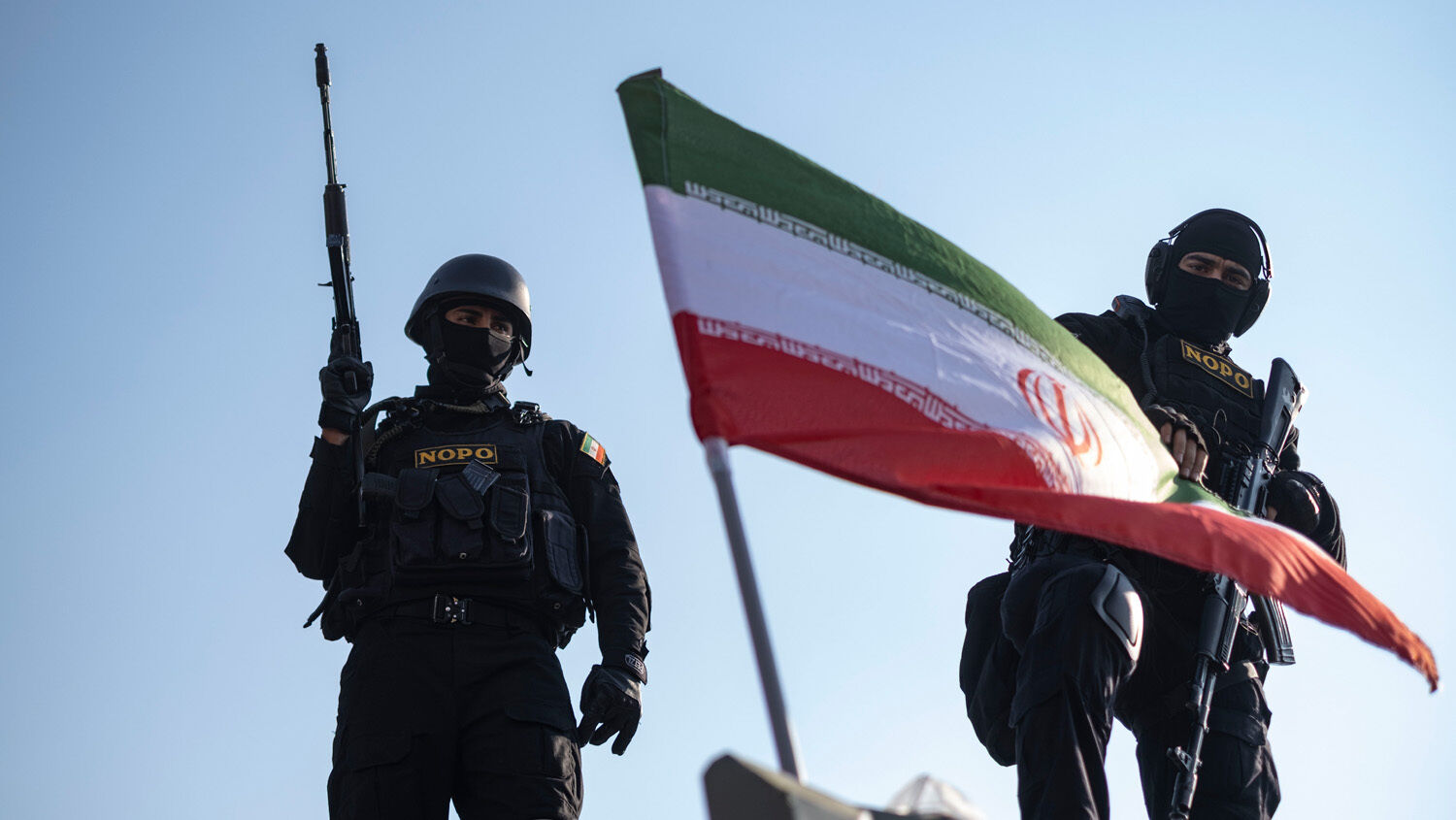
The Iranian regime arrested over 10,000 people, cut the Internet nationwide, and shot demonstrators with live ammunition. It deployed the Islamic Revolutionary Guard Corps (irgc), which is reserved for emergencies.
Dissident group Iran International released a bombshell headline on January 13: “At Least 12,000 Killed in Iran Crackdown as Blackout Deepens.” Gathering information from sources within the Iranian government, the irgc, medical reports and firsthand testimonies, it concluded:
In the largest killing in Iran’s contemporary history—carried out largely over two consecutive nights, Thursday and Friday, January 8 and 9—at least 12,000 people were killed.
In terms of geographic scope, intensity of violence and the number of deaths in a short time span, this killing is unprecedented in Iran’s history. …
This killing was fully organized, not the result of “sporadic” and “unplanned” clashes.
Information received from the Supreme National Security Council and the presidential office indicates that the killing was carried out on the direct order of Ali Khamenei, with the explicit knowledge and approval of the heads of all three branches of government, and with an order for live fire issued by the Supreme National Security Council.
The Sunday Times published a report claiming “at least 16,500 protesters have died and 330,000 have been injured, most of them in two days of utter slaughter,” probably the same two days referenced by Iran International. This is from statistics “compiled by staff in eight major eye hospitals and 16 emergency departments across the country.”
Eyewitness accounts obtained by the Sunday Times claimed the irgc and other government forces fired from motorbikes with Kalashnikovs and from machine guns mounted on pickup trucks. Iran International’s latest figures include people who were injured in the clashes and went to the hospital, only to be tracked down by security forces and murdered.
On January 25, Iran International concluded its 12,000 estimate was, if anything, too low. Government authorities were underestimating the dead, it said. “Two informed sources from the Supreme National Security Council” informed Iran International that “in two recent reports by the irgc Intelligence Organization … the number of those killed was listed as more than 33,000 and more than 36,500 respectively.”
Thousands more have been left horribly injured. Security forces shot protesters in the eyes with pellets. One estimate puts the number blinded this way at 8,000.
The number of people murdered would dwarf the populations of some countries. It is over 10 times the number of people killed in the Sept. 11, 2001, terrorist attacks. It is far more than the estimated casualties of the Yom Kippur War, the Kosovo War and other recent harrowing conflicts. This number in two days is close to the number of casualties of the Dachau concentration camp in 12 years. And the casualties are all Khamenei’s own people.
This is the projected death toll for only two days of violence. And the man overseeing this under the supreme leader, President Masoud Pezeshkian, is no raving cleric but a former heart surgeon selected to put a “moderate,” secular face on the government.
Heart of a Beast
The Bible reveals that after Adam and Eve ate of the tree of the knowledge of good and evil, God cut mankind off from Himself (Genesis 3:22-24). Since then, this world has been ruled by Satan the devil (Luke 4:5-6). It is easy to generalize this truth away, to think that “living in Satan’s world” equates to scary beggars on the streets, lying politicians and other more “benign” problems closer to home. The Iran International report provides a graphic demonstration of what Satan’s rule is actually like.
Daniel 7 is a prophecy of the successive Gentile empires that ruled the Middle East: Babylon, Persia, Greece and Rome. These empires are symbolized as wild beasts. One of these beasts, a bear (verse 5), represents Persia, or ancient Iran. This is explained in our free booklet Daniel Unlocks Revelation.
“[W]e can view the leaders of those kingdoms as representatives of and prophetically interchangeable with the kingdoms themselves,” Trumpet editor in chief Gerald Flurry wrote in our October 2023 Trumpet issue. “And these world-ruling leaders had the heart of a beast! Their minds and their passions were fixed on world conquest. It bothered them not at all to oppress and even kill millions of people in pursuit of that goal!”
He continued: “The leaders of these great powers no longer had the minds of human beings. They had the hearts of wild, raving beasts! That is why these empires are called beasts: They were ruled by men who took on the mind of a beast!”
We are seeing this beastly spirit in Iran today.
What Is Next?
Iran goes through this cycle every few years: Conditions become too dire for much of the population to take. The people take to the streets and are hit with intense crackdowns by the authorities. The protesters scatter and keep their heads down until the next crisis stirs unrest. This is what happened in 2009 with the so-called Green Revolution and the 2022 Mahsa Amini protests.
This time, things are different.
Even before these massacres, the brutality of Iran’s government wasn’t lost on the protesters. They took to the streets because they felt they had nothing left to lose but their chains. Possibly over 35,000 murdered in a matter of days is a glaring admission from the regime that it does not have the people’s best interests at heart. It is not prepared to change. This reinforces the belief that the Islamic Republic is Iranian society’s chief villain.
“The regime’s response to the decrease in protests indicates that the regime has no intention of solving the root causes of the protest movement,” the Institute for the Study of War think tank wrote. It estimated this “will make the next round of protests almost a certainty.”
Amir Parasta, a German-Iranian doctor who helped create the network for the Sunday Times report, stated: “I still have 40 patients we got out here to Germany in the last protests who I have operated on and they want to go back, even though they would be detained at the airport. And the doctors on the ground I speak to say the wounded they treat want to go back.”
“The fear is gone,” London-based activist Omid Shams said. “Partly because of the 12-day war with Israel last June when people saw the regime is not invincible, and partly because people have no hope. It’s either go to the streets and die or stay home and die slowly.”
Tensions in Iran have reached a crisis point. The two sides are adamant that the other side represents the devil. One side has to give.
Iran’s Bonaparte?
The prophecy the Trumpet uses time and again to analyze events in Iran is found in Daniel 11:40: “And at the time of the end shall the king of the south push at him: and the king of the north shall come against him like a whirlwind, with chariots, and with horsemen, and with many ships; and he shall enter into the countries, and shall overflow and pass over.” The rest of the passage, continuing into chapter 12, shows “the king of the south” will wage war over controlling the Holy Land. It will command a vast proxy army in the Middle East and Africa. This conflict will turn into a worldwide cataclysm that affects everybody. For decades, Mr. Flurry has identified the king of the south as the Islamic Republic of Iran.
Iran’s Islamist identity is critical in fulfilling its prophetic role. It already controls a massive proxy empire, and Daniel 11 shows it will expand. (Mr. Flurry’s booklet The King of the South elaborates.)
Whatever happens, do not imagine any fundamental change in Iran’s direction. Freedom and a Western orientation will not prevail in Iran anytime soon. This is not Iran’s Berlin Wall moment.
But that doesn’t mean Iran can’t change in other ways.
Earlier in the protests, Euronews spoke to Saeed Laylaz, adviser to former Iranian President Mohammed Khatami. Laylaz claimed if the government didn’t change course, there would be “a political shift” in Iran “within the next one or two months.” He defined this shift: “Since we don’t have an opposition capable of taking control and because the Islamic Republic’s security structure remains intact, I believe a Bonapartist figure will emerge from within the system.” According to Laylaz, this didn’t have to be the result of a successful coup. It could be part of the government’s reform process. Asked if this meant the resignation of President Pezeshkian, he responded: “No, I see Bonaparte to be on the level of supreme leader.”
Khamenei doesn’t have to be the man to lead Iran as the king of the south. He is 86 years old and has already been planning his succession. When Iran was still reeling from its war with Israel and the U.S., Trumpet managing editor Joel Hilliker commented that if Khamenei does fall, “we can expect his successor to walk in his footsteps. In fact, it may require a fresh face to redirect and to advance Iran’s cause in the way prophecy outlines.”
Iran is at a crucial moment in its history. But don’t expect any change in its character. Expect Iran and its leadership to emerge stronger than ever.
To learn more, request a free copy of The King of the South.


