
Is the Destruction of Iran Really ‘Mission Accomplished’?
Is the Destruction of Iran Really ‘Mission Accomplished’?
Canada’s Parliament failed to defend the nation from an oppressive government. Read our feature story this morning, “Canada’s Isaiah 3 Parliament,” by our Canadian correspondent Abraham Blondeau.

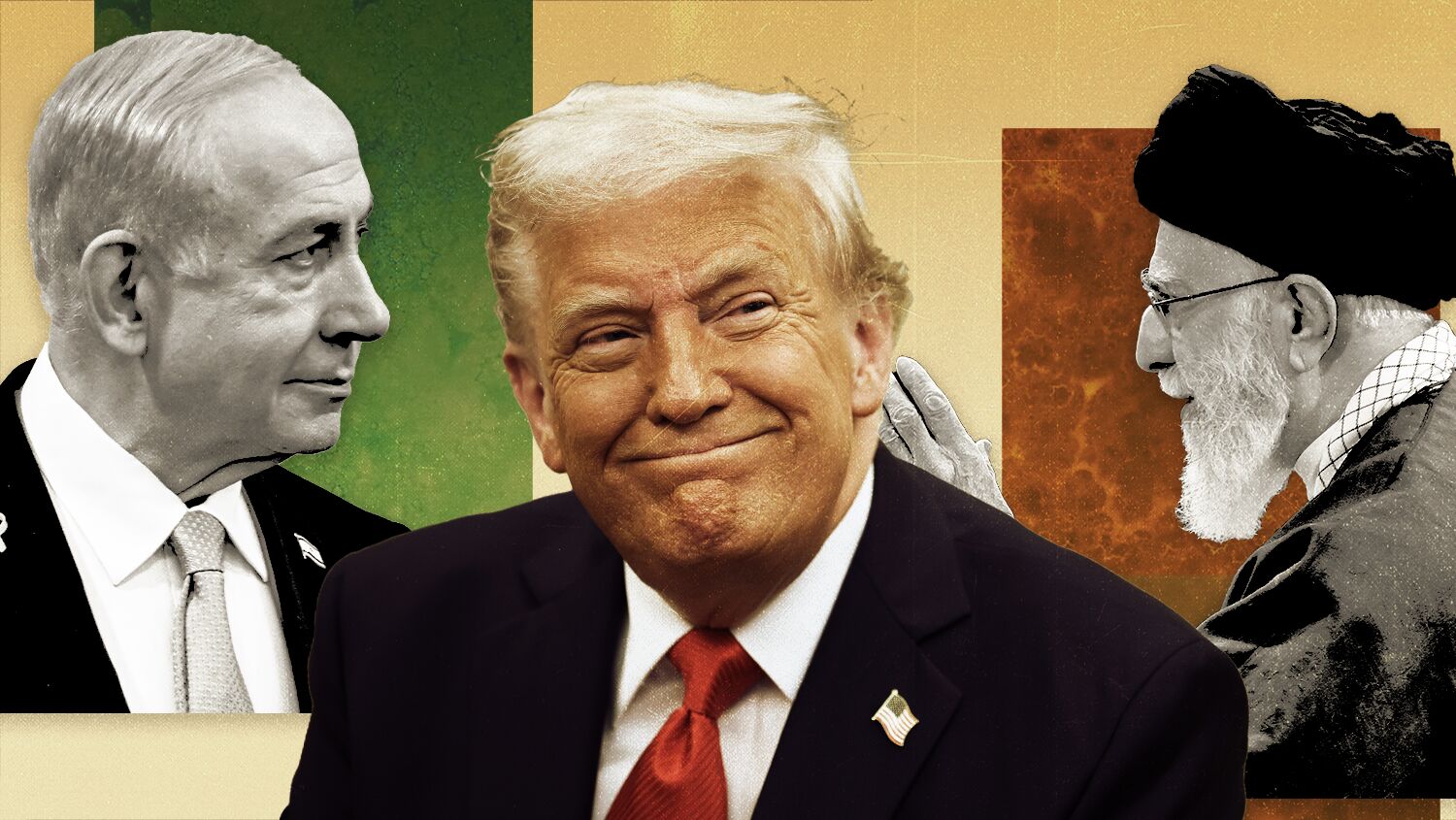
Trump’s “mission accomplished” moment: For all the people accusing Donald Trump of being a warmonger, his strike on Iran actually highlights the opposite. He likes declaring victory—not making war.
It took two days from when America dropped bombs on Iran’s nuclear sites before Trump announced a ceasefire. He called the conflict the “12-day war” and labeled Iran’s nuclear program “totally and completely obliterated.” He ignored Iran’s retaliatory measures and offered the nation a bright future. President Trump is eager to put the whole nasty business behind him as quickly as possible.
But the Iran quandary isn’t going away.
There are many reasons. One came yesterday, with a preliminary report from the Defense Intelligence Agency (dia), the Pentagon’s intelligence arm, concluding that, far from obliterating it, U.S. strikes “only set Iran’s nuclear program back by few months.”
- The report notes that the strikes sealed off entrances to facilities but did not destroy underground infrastructure or key components like centrifuges and enriched uranium stockpiles.
- The dia labeled its report “low confidence,” acknowledging that it has incomplete data and that assessing underground facilities like Fordow is challenging without on-the-ground inspections.
- Nevertheless, this assessment matches the known difficulty of targeting deeply buried sites with even advanced munitions like the gbu-57 bunker buster.
The White House strongly disputed the dia’s findings, calling them “flat-out wrong” and alleging leaks by disgruntled intelligence officials. White House Press Secretary Karoline Leavitt said: “Everyone knows what happens when you drop fourteen 30,000-pound bombs perfectly on their targets: total obliteration.” (Of course, “everyone knows” is exactly the kind of thing you say when you lack facts and figures.)
cnn reported, “The Israeli assessment of the impact of the U.S. strikes also found less damage on Fordow than expected. However, Israeli officials believe the combination of U.S. and Israeli military action on multiple nuclear sites set back the Iranian nuclear program by two years, assuming they are able to rebuild it unimpeded, which Israel would not allow. But Israel had also stated publicly before the U.S. military operation that Iran’s program had been set back by two years.”
Israeli intelligence isn’t publicly disagreeing with the White House. As cited by the Times of Israel, it estimates the setback to Iran’s nuclear program as “several years.” One Israeli official quoted by Axios said, “A professional battle damage assessment takes time. … Israeli intelligence services haven’t arrived at any bottom lines for now. But we don’t think there was any bug in the operation, and we have no indications the bunker-buster bombs didn’t work. Nobody here is disappointed.”
Whether Israel’s public stance reflects its confidence in the strikes or its need to maintain solidarity with Trump remains to be seen. The fact that, after the ceasefire was declared, Israel launched one last barrage may indicate its unease over what could be the new status quo. It is very likely the job remains unfinished.
Trump’s declaration of victory is naive. This is not “mission accomplished.” Iran is far from defeated, and attempts to restrain Israel at this stage will ultimately lead to greater conflict.
This conclusion is also supported by a report of another possibly unresolved matter:
Iran’s other underground nuclear facility: Pickaxe Mountain, also known as Kūh-e Kolang Gaz Lā, is near Natanz, Iran, about 90 miles south of the Fordow nuclear facility. It is believed to be a deeply buried underground nuclear facility under construction, potentially more fortified than Fordow. The site has drawn international attention due to its depth, secrecy and potential role in Iran’s nuclear program, particularly as a possible new location for enriched uranium and centrifuge operations. The Telegraph reports:
Before the strike, 16 lorries were seen queuing up outside Fordow, and an expert on Iran’s nuclear program told the Telegraph the regime had moved much of its highly enriched uranium to a secret location before the U.S. was able to bomb its facilities.
Tehran had hidden sites housing “hundreds if not thousands” of advanced centrifuges capable of producing weapons-grade uranium needed for a nuclear bomb, said Sima Shine, who has worked within the Israeli military establishment for 30 years.
Pickaxe Mountain may be the perfect hiding place. …
After the devastating strikes, Iran’s potential back-up plan may lie in this ultra-secure facility that satellite imagery shows has been secretly expanded with new fortifications around what appears to be a uranium enrichment site. … [I]ts underground chambers extend even deeper—potentially beyond 100 meters beneath the surface compared with Fordow’s 60-to-90-meter depth.
The Telegraph quoted Reuel Marc Gerecht, resident scholar at the Foundation for Defense of Democracies, saying, “The Kolang Gaz Lā or ‘Pickaxe’ mountain underground complex is intended to give the clerical regime a nuclear weapons site that even the U.S. Air Force would have difficulty destroying with its largest conventional bombs. Adding tunnels and a security perimeter would further complicate any commando raid trying to sabotage the complex. Given the frequency of Israeli commando operations against Hezbollah targets, the Islamic Republic surely has anticipated these same sorts of raids on its own atomic sites.”
And that’s not the only news showing that Iran isn’t abandoning its nuclear ambitions:
Iranian lawmakers voted to suspend cooperation with the iaea: The bill still needs approval from the Supreme National Security Council, but if approved, it will ban nuclear inspectors from the International Atomic Energy Agency from accessing enrichment facilities.
The International Atomic Energy Agency, which refused to even marginally condemn the attack on Iran’s nuclear facilities, put its international credibility up for auction.
—Mohammed Bagher Ghalibaf, Iran’s parliament speaker
The move violates Iran’s obligations under the Nuclear Non-Proliferation Treaty. The iaea has done diddly squat to prevent Iran from nuclear development. Still, Tehran is sending a strong message that it still intends to accelerate its pursuit of a nuclear bomb.
And in related news, Russia is threatening to supply Iran with nuclear warheads after Israel and the U.S. struck Iran’s nuclear bases, our In Brief reports.
IN OTHER NEWS
“Partners not rivals” is how China and India have described their relationship after meeting in Beijing in Monday, as our In Brief describes.
Pushing Japan’s militarization: The U.S. is calling for Japan to increase defense spending to match Europe’s—5 percent of gdp. Our In Brief explains.
Calls for ceasefire: Germany’s chancellor has called for a ceasefire between Israel and Hamas, Josué Michels reports.
NYC Democrats choose radical: 33-year-old Democratic socialist Zohran Mamdani was on track to secure a stunning upset (44 percent to 36 percent) in the New York City Democratic primary mayoral election on Tuesday over former Gov. Andrew Cuomo. Who is Mamdani? His progressive agenda proposes initiatives like freezing rent, providing free bus service, and launching city-owned grocery stores, all funded through $10 billion in new taxes targeting corporations and the wealthy. If Democrats view his success as a roadmap for how to revive their unpopular party, Republicans are sure to encourage them to go for it. Mamdani will run in the general election against incumbent mayor Eric Adams—now running as an independent—and Republican candidate Curtis Sliwa.
On the sunny side of Šxʷməθkʷəy̓əmsəm Street: That’s not a typo. To be more inclusive, Vancouver renamed Trutch Street, after British Columbia’s first lieutenant governor, Joseph Trutch, to honor the Musqueam First Nation in its unreadable native language. A win for wokeness—and a big loss for gps systems, 9-1-1 first responders and residents hoping for pizza delivery.


