

Canada’s Historic Speech From the Throne
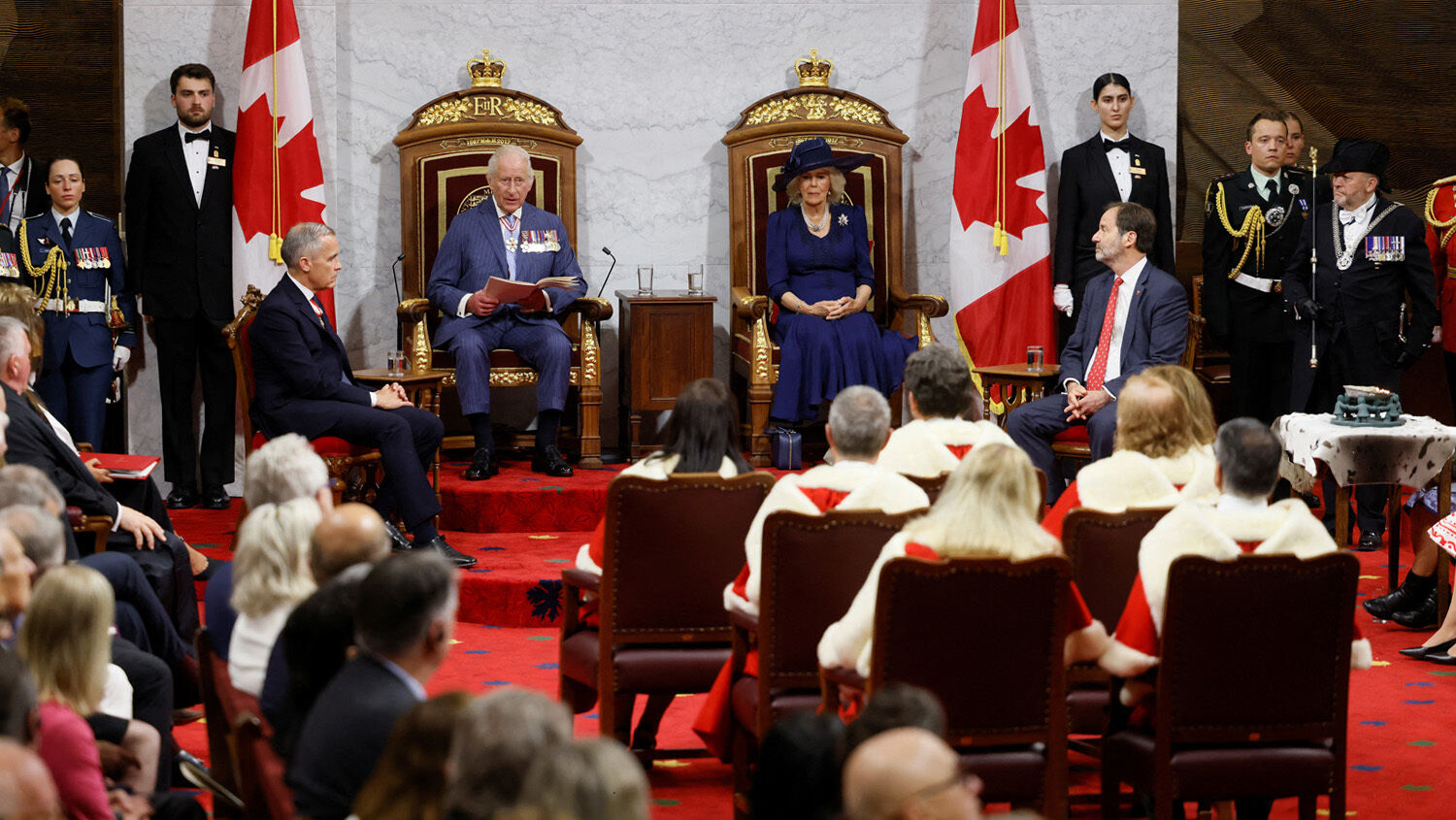
“It is with a sense of deep pride and pleasure that my wife and I join you here today, as we witness Canadians coming together in a renewed sense of national pride, unity and hope.” With those words, King Charles iii opened Canada’s Parliament yesterday with a speech praised as historic and momentous.
The “speech from the throne” is a parliamentary tradition dating back to the 16th century that embodies the role and importance of the crown in Westminster democracy. Many Commonwealth nations around the world still practice this tradition, connecting people to the throne in Great Britain.
King Charles is the King of Canada, the true head of state, and was invited to open Parliament by newly elected Prime Minister Mark Carney. This is only the third time since Confederation in 1867 that the sovereign has personally opened Parliament. The first two were by the late Queen Elizabeth ii in 1957 and 1977. Why did Carney invite the King for this special occasion? What message is this Liberal government conveying by having the sovereign intervene in current affairs?
It is clear that bringing the King to Canada was a direct response to United States President Donald Trump’s talk of annexation and offers for Canada to become the 51st state. As the sovereign, it is Charles’s duty to support the sovereignty of Canada. However, there is another clear motive: The Liberals disgracefully used his royal majesty as a prop to legitimize their radical government.
The speech from the throne was historic and momentous, but for all the wrong reasons. It exposed the sickness at the heart of our people and our sovereign.
This speech was an opportunity for King Charles to deliver a message of hope to a hopeless nation, unify a fractured people, and remind Canada of the glorious history it has forgotten. It was a chance for Canada to reconnect with the living God.
Sadly, it was a missed opportunity.
The King’s Speech
To be clear, the King did not write the speech. The sitting government writes the speech for the sovereign to deliver, outlining the priorities and objectives of the cabinet. But that does not diminish its shamefulness. In one of the first paragraphs of the speech, King Charles said:
I would like to acknowledge that we are gathered on the unceded territory of the Algonquin Anishinaabeg people. This land acknowledgement is a recognition of shared history as a nation. While continuing to deepen my own understanding, it is my great hope that in each of your communities, and collectively as a country, a path is found toward truth and reconciliation, in both word and deed.
It is federal policy for nearly everything in Canada to begin with a land acknowledgement. Whether it is a plane flight, hockey game, board meeting or e-mail signatures, you will find a land acknowledgement. This is a surrender to radical indigenous narratives that white Europeans stole their land. Land acknowledgements are actually a surrender of sovereignty by the Liberal government long before Donald Trump became president.
King Charles has been under pressure to apologize for the legacy of residential schools in Canada, which is where the “truth and reconciliation” movement in Canada began. As the Trumpet has explained, this movement is not about reconciliation but radical indigenous leaders’ deconstruction of Judeo-Christian heritage in Canada. Now the sovereign of Canada officially endorses this narrative.
The speech stated Canada is at a turning point and Canadians need to prepare for “fundamental change.” The King said: “We must be clear-eyed: The world is a more dangerous and uncertain place than at any point since the Second World War. Canada is facing challenges that are unprecedented in our lifetimes. … Fundamental change is always unsettling. Yet this moment is also an incredible opportunity. An opportunity for renewal. … [B]y staying true to Canadian values, Canada can build new alliances and a new economy that serves all Canadians.”
Notice the language the Carney government chose: “unprecedented,” “fundamental change,” “renewal,” “new alliances.” This speech signals that Canada is about to move in a new direction. What is this new direction?
After outlining several new economic measures, the King said: “It will boost Canada’s defense industry by joining ReArm Europe, to invest in trans-Atlantic security with Canada’s European partners.” Carney intends to integrate Canada into Europe’s trillion-dollar rearmament program. This pivot centers around the connection between Quebec and France. The King said: “During this time of great change, Canadians are uniting behind what makes Canada unique. The French language and the Quebec culture are at the heart of the Canadian identity. They define the country that Canadians and I love so much.”
This obscures the real history of the Catholic-Quebec movements to supplant the British throne with the papal throne. This history is explained in our latest Trumpet issue. A refusal to acknowledge this reality means Canada can never find true unity.
The King’s closing lines were: “As the anthem reminds us: The True North is indeed strong and free!” This is being heralded as a courageous declaration of Canadian sovereignty, but it simply is not true. Canada is not strong nor free.
This underscores the fact that the royal visit was a mirage to hide the real issues and the real agenda.
Blotting Out the Throne
“The crown has for so long been a symbol of unity for Canada. It also represents stability and continuity from the past to the present. As it should, it stands proudly as a symbol of Canada today, in all her richness and dynamism.” This was by far the best line from the speech.
The crown has been the one force able to forge unity out of a country of many different races, languages, cultures and religions. It also connected Canada to the larger family of British nations and to critical world events. It connected a young country to ancient traditions and heritage.
The Liberal government pulled out all the trappings of pomp and pageantry. The media broadcast scenes of cheering crowds and public interactions. Carney lauded Charles in an official statement, saying: “The royal visit is a reminder of the bond between Canada and the crown—one forged over generations, shaped by shared histories, and grounded in common values. A bond that, over time, has evolved, just as Canada has, to reflect the strength, diversity and confidence of our people.”
Governor General Mary Simon, the King’s official representative, said: “The crown’s role in Canada is more than symbolic; it serves as a cornerstone of the democratic freedoms and rights we cherish. The presence of their majesties fosters a sense of unity among Canadians, reminding us of the shared values that bring us together—respect, compassion and hope.”
Yet all of these statements are completely disingenuous. This Liberal government, led previously by Justin Trudeau, has deliberately blotted out the British throne from Canada. The governor general was specifically appointed to represent the grievances of the radical indigenous movement.
In 2021, the media reported that unmarked graves of children had been discovered by ground-penetrating radar at the site of a residential school in Kamloops, British Columbia. Without verifying if these facts were true or not, an anti-white crusade began to humiliate and disassemble the perceived colonial underpinnings of the country. The violence came to a fever pitch in Winnipeg, Manitoba, when protesters tore down a statue of Queen Victoria and beheaded it. A statue of Queen Elizabeth ii was also torn down, and countless others were vandalized and defaced. History books were rewritten. Canada Day was canceled. Flags flew at half-mast. In the end, no graves were found in Kamloops. They were merely tree roots or other underground disturbances.
This was a violent revolution against the crown, yet the government encouraged it and fanned the flames. Most of the Liberal ministers and the governor general promoted the narratives of colonialism because it helped their agenda. Now, when supporting the monarchy is expedient, they fawn over the King. Our leaders are fake and hypocritical.
When Charles was first crowned in 2023, Trudeau immediately attacked the authority of the crown by forcing him to accept a new crown of “maple leaves and snowflakes” on the coat of arms. Trudeau also removed his title of “defender of the faith” in Canada. Both of these debased the office of the King.
In many of these matters, King Charles had little choice due to constitutional conventions. But he has also participated in the decline of the crown. The last important speech Charles gave in this hemisphere was in Barbados in 2021 when the country removed the late Queen as head of state. Charles fully endorsed the narrative of racism and white supremacy.
Canada has been drifting away from the monarchy for many generations. Angus Reid reports that 83 percent of Canadians were “indifferent” or “didn’t care” about Charles’s visit. While recent events actually increased his favorability ratings with Canadians, most polls indicate that 46 percent of Canadians want to end formal ties with the crown. A Leger poll from 2023 indicated 63 percent want to reconsider ties. While there is a temporary increase in support for the crown, the damage has been done.
2 Kings 14:26-27 warn of a movement to “blot out the name of Israel” in the end-time nations of Britain and America. The attack in Canada has targeted the crown. The damage has been caused by the Canadian government and the royal family itself.
The Throne of Hope
The last sovereign to open Parliament was the late Queen Elizabeth ii in 1977. It is astonishing how closely her speech resembles Charles’s speech. In some ways, Canada is still struggling with the same problems: affordability, housing, inflation, pipelines, energy projects, green energy and redefining values.
Pierre Trudeau used Queen Elizabeth to legitimize his own radical agenda to transform Canada, just as Carney is now. Only five years later, the Queen signed the Charter of Rights and Freedoms into law, which was the single-most damaging act against the authority of the crown.
In the lifetime of King Charles, the British Empire, Commonwealth and royal family have experienced steep decline. As the British throne has declined, so has Canada. The weaker the throne has become, the more divided Canada has become. First Quebec wanted to separate, now Alberta. Canada will continue to splinter as the throne becomes more compromised.
The Bible makes this connection crystal clear. The late Herbert W. Armstrong proved in The United States and Britain in Prophecy that the British royal family was the continuation of David’s throne, the fulfillment of God’s promise to King David that there would always be a descendant sitting on that throne (2 Samuel 7; Jeremiah 33:17). The heritage of that throne points to God. It is a living reminder of His promises, His purpose and fulfilled Bible prophecy.
This tremendous honor comes with a tremendous responsibility. Rejecting this throne and heritage puts us on dangerous ground with God. This is the spiritual reality of Canadian history. Trumpet editor in chief Gerald Flurry warns in Hosea—Reaping the Whirlwind:
Do you imagine the nation would have allowed itself to degenerate as far as it has if the British people really understood about the throne? Do you think the royals would be so plagued by divorce and debauchery if they knew their heritage?
How do you think Christ looks upon a person who is about to assume David’s throne? Biblical history shows that the personal lives of the kings of Israel affected the nation as well. The kings of Israel were severely punished for their sins. Britain’s glorious history is soon going to turn to tragedy. God must plunge the British people into the Tribulation to get them to repent. Britain and the royal family have very little excuse for not knowing about God and their precious heritage.
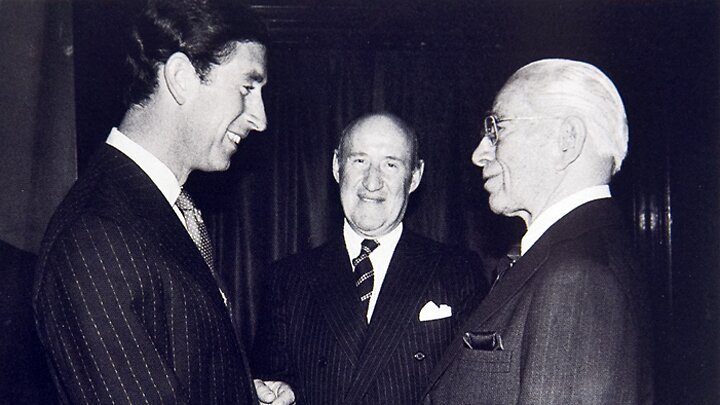
Canada has little excuse for not recognizing this heritage. King Charles has little excuse, especially since he actually met Mr. Armstrong several times in 1981 and 1983. In many ways, the King’s personal life is a mirror image of the problems afflicting the nation.
However, this throne gives us hope. God calls it the throne of David because God wants us to consider the example of King David. In all the Bible, there is no greater example of repentance, changing from rebellion to obedience. This legacy of redemption in the throne of David is the message Canada needs right now. That should have been at the heart of the speech from the throne.
This is the message of hope we all need right now. This message can be found in the inspiring change that occurred to David’s throne, explained in Mr. Flurry’s book The New Throne of David.


