Will Iran Sink the Petrodollar?
Will Iran Sink the Petrodollar?
The Iran war endangers American and Israeli fighters, trade ships and civilians. It also threatens the petrodollar system that underpins much of America’s economic power.
Iran’s Islamist terrorist regime does not aim for direct military victory over the United States. Instead, it employs asymmetric tactics, including strikes on infrastructure, oil facilities and vessels. Its strongest leverage is disrupting civilian cargo traffic through the narrow Strait of Hormuz.
Since March, Iran’s Islamic Revolutionary Guard Corps has shut down nearly all commercial transit through the Strait of Hormuz by threatening and attacking vessels linked to the U.S., Israel and their supporters. This blockade has triggered one of the largest oil supply disruptions in history.
Petroleum flows that formerly averaged 20 million barrels per day have slowed to a trickle, prompting Arab Gulf producers to slash their combined output by at least 10 million barrels per day. This is a crisis for the Arab Gulf monarchies, whose economies are about 30 percent dependent on oil—and for the rest of the world, since those nations produce as much as a quarter of global oil supply.
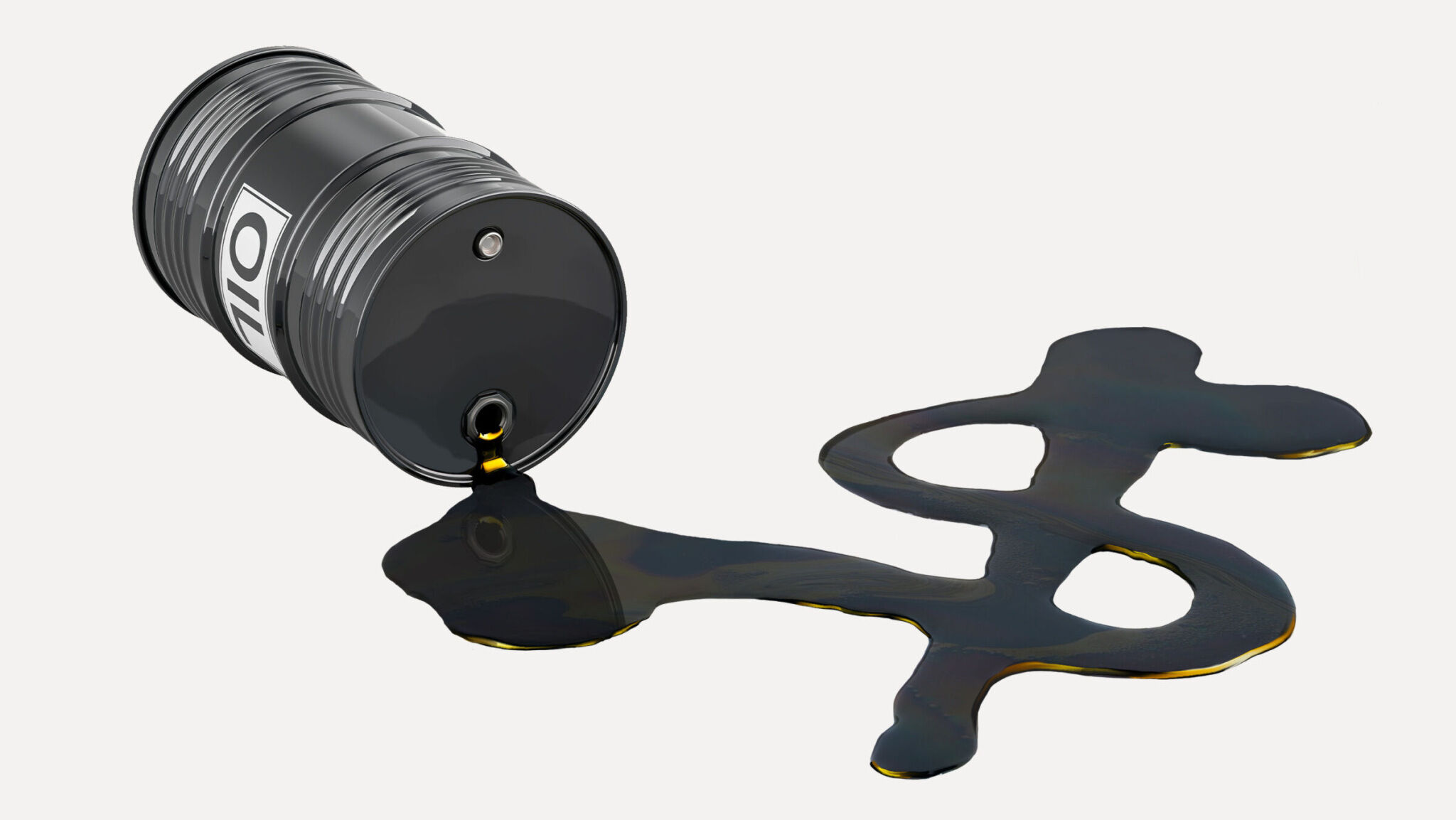
The dollar is tightly linked to oil. In fact, much of the dollar’s enduring global strength stems from the fact that international oil trade is overwhelmingly priced and settled in U.S. dollars. Countries worldwide must hold large dollar reserves to buy oil. This creates constant demand for the currency.
This petrodollar system originated more than 50 years ago.
As U.S. President Richard Nixon ended the last of the dollar’s convertibility to gold in 1971, his administration, led by Secretary of State Henry Kissinger, deepened ties with Saudi Arabia. In exchange for U.S. security guarantees, the Saudis agreed to price and sell their oil in U.S. dollars and use the profits to buy American assets, particularly U.S. treasuries. Other major oil exporters followed, creating the “petrodollar” system that has fueled global demand for the dollar ever since.
The current war has thrown U.S. security guarantees into question.
Saudi Crown Prince Mohammed bin Salman has urged President Donald Trump to act decisively to reopen the strait and to bring down Iran’s Islamist regime. But President Trump faces domestic and international resistance.
This is an enormous test. It’s not just about 150 oil tankers and $4 gas prices for unhappy American consumers or midterm elections. It’s about America’s position as the world’s superpower. Can America “guarantee” your security when you need it? Because if it can’t or won’t, nations like Saudi Arabia have no reason to keep lending America the money it needs to police the world.
If Saudi Arabia and its neighbors reduce reliance on the dollar—pricing oil in other currencies and cutting treasury purchases—the dollar could lose its reserve status. That would fuel U.S. inflation and elevate interest rates on the national debt. The U.S. government already devotes 19 percent of tax revenue to pay interest on its debt, so further rate increases could trigger a fiscal crisis.
Herbert W. Armstrong forecast that a financial crisis would trigger a restructuring of Europe. In a July 22, 1984, co-worker letter, he warned that a U.S. banking crisis “could suddenly result in triggering European nations to unite as a new world power larger than either the Soviet Union or the U.S.”
If America cannot or will not reliably protect the strait, Gulf states will seek new protectors. Could a European leader negotiate security guarantees from the EU—or a German-led power—in exchange for pricing oil in euros and recycling surpluses into European assets? A prophecy in Psalm 83 says Gulf states will ally with Germany (biblical Assyria) against America, Britain and Israel. (For a detailed explanation of Psalm 83, read “A Mysterious Prophecy,” by Trumpet editor in chief Gerald Flurry; theTrumpet.com/8136.)
German Chancellor Friedrich Merz has signaled readiness to support freedom of navigation in the strait, proposing contributions like minesweepers, maritime intelligence, reconnaissance aircraft and possibly escorts. Speaking after talks in Paris with French President Emmanuel Macron and British Prime Minister Keir Starmer, Merz conditioned German intervention on a stable ceasefire, a strong international legal basis (ideally a UN Security Council resolution) and German parliamentary approval. He expressed desire for U.S. participation but envisioned an EU-led coalition for long-term security.
Such a coalition could be an initial step toward a new financial order. Crown Prince Mohammed bin Salman may back Washington temporarily if Trump projects strength. Ultimately, though, the Gulf states could realign as the petrodollar weakens and a different global system emerges. Events in the Strait of Hormuz are testing not only regional security but also the foundations of American financial power. The crisis highlights vulnerabilities in the dollar’s dominance and raises the prospect of a radically altered world order.