The Vatican’s Endgame in Jerusalem
The Vatican’s Endgame in Jerusalem
When do you block a cardinal from attending mass? When he might get hit by an Iranian rocket.
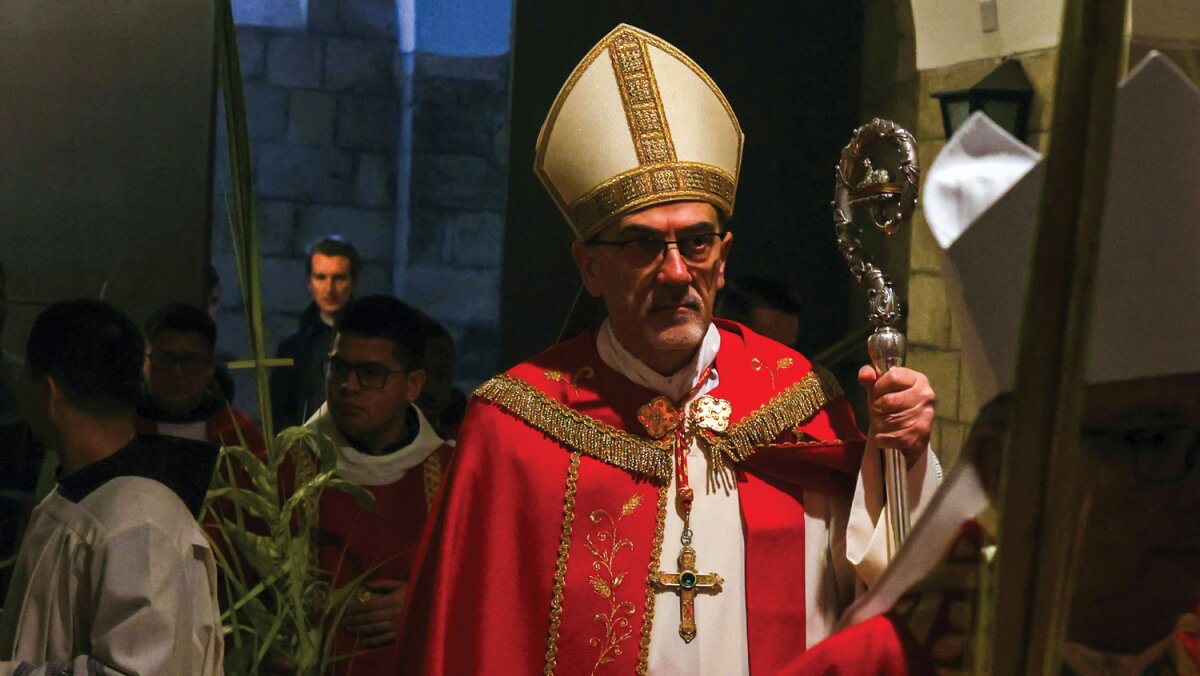
Cardinal Pierbattista Pizzaballa, the Latin patriarch of Jerusalem, was stopped by police from entering the Church of the Holy Sepulchre to celebrate Palm Sunday Mass on March 29. At the time, Iran was firing missiles at Israel. The Old City of Jerusalem has few modern bomb shelters and no easy escape routes, so for safety reasons, Israeli officials closed several public areas—including the Western Wall, the al-Aqsa Mosque and the Church of the Holy Sepulchre.
Pizzaballa turned the situation into a public standoff. He called the police action “unreasonable and grossly disproportionate” and said it set a dangerous precedent—the first such blockade in centuries. Israeli Prime Minister Benjamin Netanyahu stepped in and ordered officials to let the cardinal enter so he could “hold services as he wishes.” Church leaders later reached an agreement with authorities to allow Christian Holy Week and Easter events in Jerusalem.
But the damage was already done. Within hours, news outlets such as cnn, bbc, the Guardian and Al Jazeera ran stories casting the event as a significant Israeli attack on Christianity. Many included photos of the cardinal at the barricades. On social media, hashtags such as #IsraelPersecutesChristians and #HandsOffJerusalem spread quickly. Pro-Palestinian and pro-Catholic groups helped push the story.
The Vatican has long called for an internationally guaranteed “special statute” for Jerusalem’s holy sites. This would give outside powers a say in how the sites are run, ostensibly to protect religious freedom. The Palm Sunday incident fueled international anger toward Israel, increasing pressure for such a deal.
This calculated incident points to a larger reality: The Vatican is working hard to gain more influence in Jerusalem. While the world watches the United States-Iran conflict and the Israeli-Palestinian peace talks, the Catholic Church is quietly pushing forward its centuries-old plan for the Holy City. Over the years, the church has used crusades, diplomacy and negotiated agreements to strengthen its position there. Now those efforts are intensifying.
Bible prophecy warns of a coming bloody struggle for control of the Holy City—one that will pit religious ambitions against modern realities in a high-stakes clash destined to shake the nations.
Anti-Semitic Roots
Jerusalem’s holy sites are often a focal point of tension because the city is sacred to three major religions: Judaism, Christianity and Islam.
For Christians, Jerusalem is invaluable. It is where Jesus was crucified, buried and resurrected from the dead. It is where His followers received the Holy Spirit on the Day of Pentecost, where the apostles first preached the gospel, and where the First Council of Jerusalem met around a.d. 50.
Many Christians do not know that the early church in Jerusalem changed hands after the Bar Kokhba revolt from a.d. 132 to 135. Historian Eusebius wrote that Jewish Christians, some of whom were relatives of Jesus, led the Jerusalem church until then. The last Jewish bishop was Judah Kyriakos, a great-grandson of Jesus’s brother Jude.
After Emperor Hadrian crushed the revolt in a.d. 135, he renamed Jerusalem as Aelia Capitolina and banned Jews from the city on pain of death. He also banned Sabbath-keeping and forbade teaching the Old Testament. Judah Kyriakos was removed, and a Gentile bishop named Marcus was installed—the first in a line of leaders who followed Hadrian’s anti-Jewish rules. From that point on, the Jerusalem church was led by Sunday-observing Gentiles rather than Sabbath-keeping Jews.
With Jewish Christian leaders pushed out, mainstream Christianity increasingly shifted toward opposition to the Jews. Around a.d. 140, the influential teacher Marcion of Sinope gained influence in Rome. He made a large donation of 200,000 sesterces to the Roman church and began teaching that the God who sent Jesus was entirely different from the God of the Old Testament. He portrayed the Jewish God as harsh, vengeful and inferior—essentially the devil—and argued that Christians should reject the Hebrew Scriptures. Although Church leaders like Polycarp strongly condemned Marcion, famously calling him the “first-born of Satan,” his ideas spread rapidly and intensified mainstream Christian disdain for all things Jewish.
Soon after, the Christian apologist Justin Martyr wrote that the Jews as a group were guilty for Jesus’s death. He said Sabbath-keeping and circumcision were signs of God’s punishment on them. Later, Christian theologian Augustine (a.d. 354–430) built on these ideas. He taught the “doctrine of Jewish witness,” which claims God has kept the Jews scattered and lowly as proof of Christian truth. This argument held that, like Cain—who was marked after killing Abel—Jews carried the Old Testament Scriptures (which pointed to Jesus) while living in a humbled condition that testified to the superiority of the New Covenant.
This thinking shaped Catholic views for centuries. To many traditional Catholics, a strong Jewish state in the Holy Land goes against the teachings of the early church fathers. Those fathers taught that Jews were cursed to wander without a homeland of their own. A Jewish-controlled Jerusalem challenges the idea that the Catholic Church has replaced Israel. This helps explain why the Vatican has resisted Jewish control over the holy sites.
The Crusader Kingdom
In a.d. 451, the Council of Chalcedon made the bishop of Jerusalem a patriarch alongside the patriarch of Rome, Constantinople, Alexandria and Antioch. This gave the church in Jerusalem stronger official standing over Christianity’s key holy places, including the Church of the Holy Sepulchre. That church was built in a.d. 335 by Emperor Constantine on the site where many Christians believe Jesus was buried and rose again.
Christians held Jerusalem until Muslim Arab forces took it from a.d. 636 to 638. Under early Muslim rule, Christians could usually keep a presence at the holy sites. But in 1009, the situation collapsed into crisis. The Fatimid Caliph al-Hakim bi-Amr Allah (often called the “Mad Caliph”) ordered the destruction of the Church of the Holy Sepulchre and banned Christian worship there.
This event became one of the main catalysts for the Catholic Crusades.
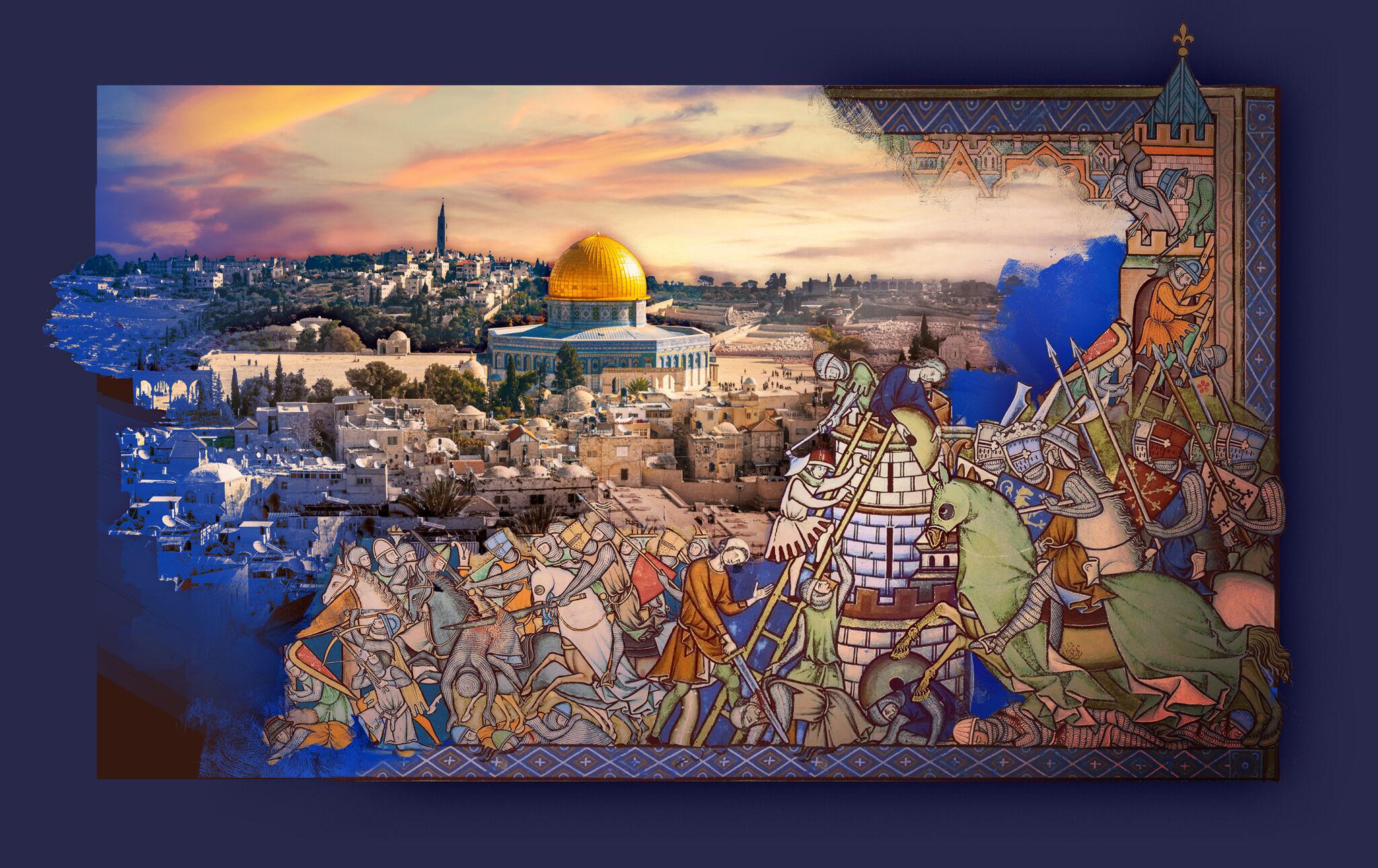
In 1095, Pope Urban ii called for the first of the Crusades. Freeing Jerusalem and recovering the Church of the Holy Sepulchre were its major goals. The cry “God wills it!” inspired tens of thousands of European Christians to fight to take Christ’s tomb back from Muslim control. Sadly, their crusading fervor was not only directed against Muslims. When they captured Jerusalem on July 15, 1099, they also killed thousands of Jews. Many who hid in the main synagogue were burned alive.
After taking the city, the crusaders set up a small state in the Eastern Mediterranean called the Kingdom of Jerusalem. They removed the Eastern Orthodox patriarch, installed a Latin patriarch loyal to Rome, and created a church structure under the pope. They also banned Jewish settlement in the city. Jerusalem had almost no Jewish residents for about 90 years.
Once the Kingdom of Jerusalem was reconquered by the Muslims in 1187, a limited number of Jews were allowed to return to the city. Muslims treated both Jews and Christians as second-class people, required to pay extra taxes. But Islam did not have a teaching like Augustine’s “doctrine of Jewish witness.” Thus, the Muslims did not exclude the Jews from Jerusalem to the extent Catholics did.
Even after suffering this sore defeat, the Catholics never abandoned their goal to reconquer the Holy Land.
Fascist Sympathies
Seven hundred years later, the Vatican’s basic position had not changed. In 1904, Zionist leader Theodor Herzl asked Pope Pius x for his support of a Jewish return to Palestine. The pope replied, “We cannot prevent the Jews from going to Jerusalem—but we could never sanction it. The Jews have not recognized our Lord, therefore we cannot recognize the Jewish people.” He added that while it was unpleasant to see the Turks in possession of the holy places, supporting Jewish control of them was impossible. The church fathers had taught that such a thing would never happen.
Despite the pope’s stance, God soon intervened in human affairs to bring about the Jews’ return to the Promised Land. The late Herbert W. Armstrong explained this powerfully in his booklet The Proof of the Bible (free upon request). He showed that God used Great Britain to deliver Jerusalem from the Ottoman Turks on Dec. 9, 1917—exactly 2,520 years after Nebuchadnezzar’s 604 b.c. acceptance of the Jews’ surrender. This 2,520-year period (seven prophetic “times” of 360 days each, applied via the biblical day-for-a-year principle; see Ezekiel 4:6) is a measure of divine punishment and restoration (see Leviticus 26 and Daniel 4).
After the British Army liberated Jerusalem from the Ottoman Empire, which had ruled it for exactly 400 years, the Vatican tried to use its influence with the newly established League of Nations to ensure that Italy or another Catholic state gained control of the Holy Land. Pope Benedict xv did not want Britain or any other Protestant nation to control Jerusalem, because he feared they would help the Jews return.
Yet the League of Nations awarded the Holy Land to Britain in 1922, and the British allowed Jews to return to the Promised Land. The Vatican staunchly opposed both of these decisions.
In June 1940, 30 Italian bishops sent a telegram to Italian dictator Benito Mussolini urging him to crown the “unfailing victory of our Army” by planting the Italian flag over Jerusalem. Reports also surfaced in Time magazine that the Axis powers planned to turn control of the Holy Land over to the Vatican, with Italy managing the territory.
Through many more divine miracles, however, the Allied Powers won World War ii, and the Holy Land remained in British hands until November 1947, when the United Nations General Assembly voted in favor of partitioning the Holy Land into a Jewish state and an Arab state.
This ran counter to the Vatican’s desires. Yet since Italy’s fascist government had fallen, Pope Pius xii had no choice but to accept the UN decision. Instead of pushing for Catholic control of the entire Holy Land, the pope began pushing for Jerusalem to become an international city-state run by the UN.
Palestinian State
The very existence of the State of Israel has created deep division in the Catholic Church.
Many traditionalist Catholics who attack Jews and Christian Zionists today are trying to defend Augustine’s teaching that the Jews must remain scattered as punishment for rejecting Christ. To them, a Jewish state in the Holy Land is a challenge to the idea that the Catholic Church has completely replaced Israel. On the other hand, reform-minded Catholics have been forced to admit that God still has an ongoing covenant with the Jewish people. This split underscores the challenges the Vatican faces in navigating the realities of modern Israel.
The Vatican did not officially recognize the State of Israel until 45 years after it was created. By comparison, it recognized the Islamic Republic of Iran immediately after it was created in 1979.
Today, the Vatican supports a two-state solution in the Holy Land. At the same time, it demands that Jerusalem be recognized as a shared city under some form of international oversight.
This brings us directly to Cardinal Pizzaballa’s standoff with Israeli police at the Church of the Holy Sepulchre. The incident was not just about one mass on Palm Sunday. It was a carefully timed move that generated worldwide headlines against Israel and increasing pressure for exactly the kind of international control the Vatican has sought for centuries.
After the cardinal was stopped, U.S. political commentator Jack Posobiec posted a message to his 3 million followers on X that Pizzaballa “does not need to ask for permission to go to his own church.” He declared, “Never forget that the Crusades were defensive and justified. Defend the Church of the Holy Sepulchre.” His post stirred strong emotions and revived historical memories of Catholic claims to holy sites.
Prominent European leaders quickly joined the criticism. Italian Prime Minister Giorgia Meloni said the action “constitutes an offense not only against believers but against every community that recognizes religious freedom.” French President Emmanuel Macron condemned the decision, saying it added to “the worrying increase in violations of the status of the holy places in Jerusalem.” European Union foreign-policy chief Kaja Kallas called it “a violation of religious freedom and long-standing protections governing holy sites.”
These swift, strong statements from top European leaders helped turn a local safety measure into an international controversy. They increased pressure on Israel and gave fresh support to the Vatican’s longstanding call for outside powers to guarantee access and control over Jerusalem’s holy sites.
New Headquarters
In Zechariah 12:3, God says, “And in that day will I make Jerusalem a burdensome stone for all people: all that burden themselves with it shall be cut in pieces, though all the people of the earth be gathered together against it.” Jerusalem means “city of peace.” But this passage shows that it will not be a place of peace in the latter days. Rather, it will be a burden.
Zechariah 14:1-2 reveal that the nation of Israel will soon lose control over East Jerusalem, the half it acquired in 1967. Then a revived Holy Roman Empire will reconquer the city and the entire surrounding region.
These verses reveal the Vatican’s endgame in Jerusalem. First, Catholic leaders like Cardinal Pizzaballa will help stir up anti-Jewish sentiments and a Palestinian resistance movement that will violently conquer half of Jerusalem. Then European “peacekeepers” will move in to “protect” Jerusalem’s holy sites by establishing the sort of “Palestinian Mandate” that those 30 bishops urged Mussolini to create in the 1940s.
This means another crusade is coming.
In the October 1951 issue of the Plain Truth, Herbert W. Armstrong highlighted a prophecy in Daniel 11:45 indicating that the Vatican will move its headquarters to Jerusalem just before Christ’s return. In reference to the leader of a revived Holy Roman Empire, this verse says: “And he shall plant the tabernacles of his palace between the seas in the glorious holy mountain; yet he shall come to his end, and none shall help him.”
“There it is!” Mr. Armstrong wrote. “As the Communist red hordes roll 200 million strong over Europe, destroying everything in their path, the capital of this revived Roman Empire, along with the Vatican, will make a lightning move to Palestine—probably Jerusalem! That shall be the last abomination to be set up there! Notice, in Daniel 11:45, ‘tabernacle’ is a place of worship, and ‘palace’ the residence of a king.”
Bible prophecy shows that the Vatican’s centuries-long quest is heading toward this dramatic climax. Cardinal Pizzaballa may sometimes sound like a peacemaker, but his goal is the same as that of Pope Urban ii. He wants one overarching church ruled by one overarching pope from one universal headquarters: Jerusalem.
The current war between Israel and Iran is giving the Catholic Church an opportunity to turn public opinion against the Jews. Bible prophecy tells us that neither Jew nor Arab will come out on top in the peace process. Rather, the Roman Catholic Church will lead one final crusade before “he shall come to his end.”
Jesus Christ will return and put an end to all man’s schemes for the Holy City. He alone will establish peace in Jerusalem and the whole world. The Vatican’s endgame is rapidly unfolding, but God’s plan will prevail!