

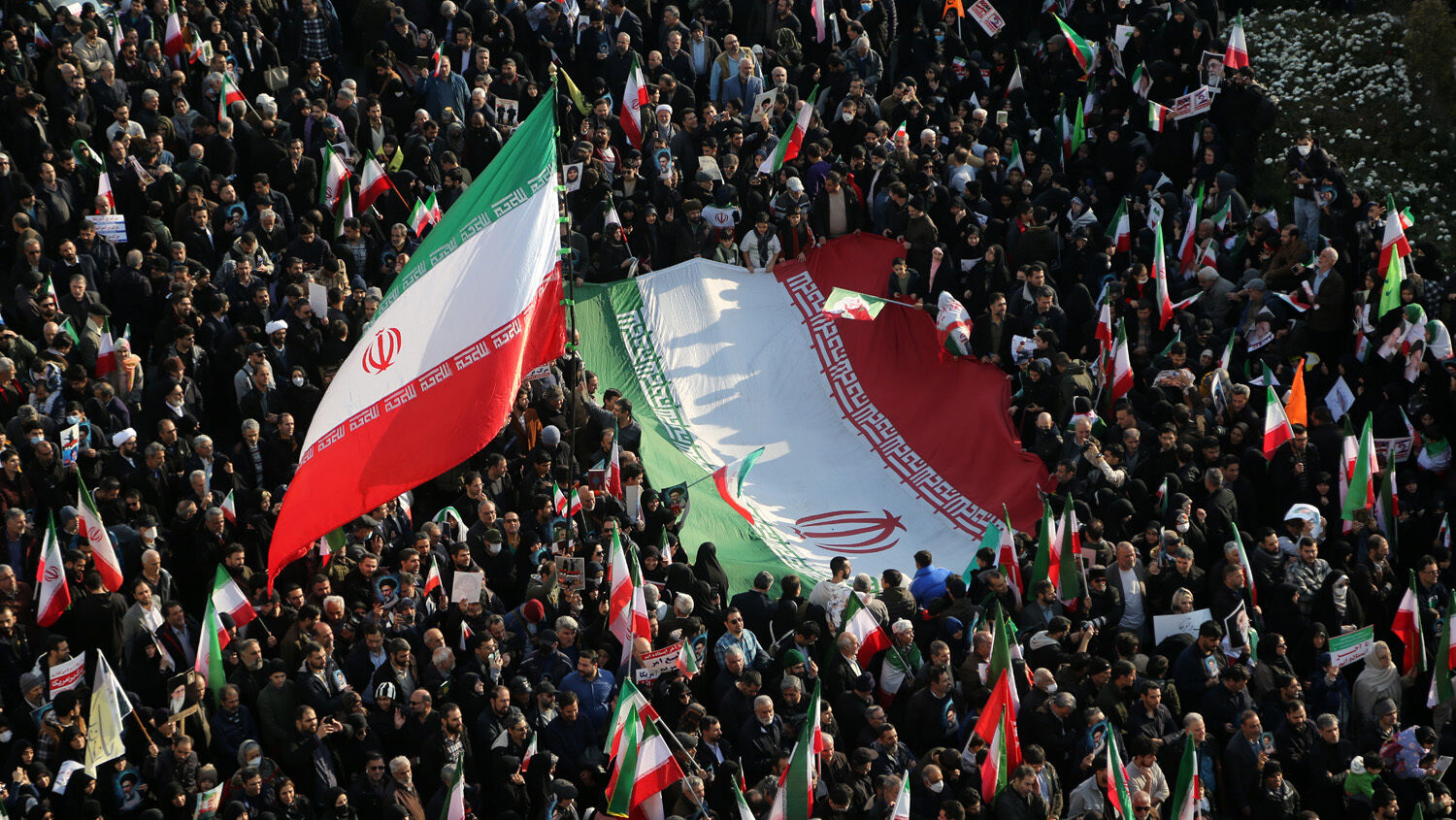
United Nations Appoints Iran to Human Rights Council
The United Nations has nominated a serial human rights violator to form human-rights policy. The UN Economic and Social Council is the main UN body overseeing global human rights. Iran will sit on the council’s Committee for Program and Coordination. This means, starting next month, Iran will help craft UN policy on women’s rights, human rights, disarmament and preventing terrorism.
Such a farcical action from the UN is nothing new. The organization has been implicated in everything from helping Yugoslavia break up to helping Iran get a nuclear weapon to building up Hamas to attack Israel.
But pause for a moment to ponder the context behind such an appointment.
In January, the Islamic Republic of Iran faced the largest protests in its history. It responded with equally unprecedented bloodshed. In two days, the Iranian government massacred an estimated 30,000 of its own people. This is a higher death toll than many notorious wars in living memory. Leaked video footage shows rooms stacked with dead bodies. Eyewitness accounts obtained by the Sunday Times say gunmen from the Islamic Revolutionary Guard Corps (irgc) and other government agencies fired into crowds with Kalashnikovs from motorbikes and with machine guns mounted on pickup trucks. Sources say government forces hunted down wounded protesters in hospitals for execution. Images show corpses with medical tubes and other equipment still attached.
Aside from this, Iran has one of the most abysmal women’s rights records in the world. The government recently called for a mass mobilization of child human shields. Iran has been the world’s biggest sponsor of Islamic terrorism for years.
Among the United States’ goals in its current war on Iran is to stop its nuclear weapons program, stop its sponsorship of terrorist proxies, and stop its manipulation of world trade. Iran has responded by activating Hezbollah, the Houthis and its other terror groups. It has refused to give up its enriched uranium or its capacity to enrich. It has closed the Strait of Hormuz, killing the global oil trade. Since the death of Supreme Leader Ayatollah Ali Khamenei at the start of the war, anecdotal reports suggest the irgc—the same military that launched the January massacre—is now running the country.
This is all common knowledge. Yet the UN still approved Iran to shape global policy in the area where it is the world’s most prominent offender.
This was not the only controversial appointment last week. China, Cuba and Nicaragua also made it to the Committee on Nongovernmental Organizations—meaning these countries will now globally oversee the very groups they are notorious for persecuting.
The UN and its organs are not faceless blobs. They are composed of member-states, often run by democratically elected leaders. Countries like Australia, Canada, France, the Netherlands and the United Kingdom voted for the appointment of countries like Iran, China and Cuba.
These countries are the most vocal proponents of the “rules-based international order.” Canadian Prime Minister Mark Carney, especially, has been one of the leading voices blaming the U.S. under President Donald Trump for destroying the world order. To counter this, Carney and leaders like him call for the international system’s supporters to band together and salvage what they can.
Such leaders covering for Iran amid recent history is a telling demonstration. These leaders don’t actually care about preserving a “rules-based international order.” They are actively covering for some of the evilest regimes on the planet. They know exactly what they are doing and where they stand.
The recent appointments indicate the UN has not only failed at its original mission; it has become the problem it pledged to solve. Even more, the UN and the governments of the “free world” have embraced their new role.
Late theologian Herbert W. Armstrong gave his verdict of the UN in 1966: “[I]t has failed. The United Nations has no power over the nations. It has no power to settle disputes, stop wars or prevent wars. The so-called United Nations are not united. This effort has degenerated into a sounding board for Communist propaganda. Man has failed in his last chance!”
The world formed the UN after the atrocities of World War ii and the Holocaust. The UN was supposed to be man’s best hope for making sure those crimes were never repeated. If the UN is now a failure, where is mankind supposed to go from here?
True global justice has always eluded mankind. But that doesn’t mean a genuine system of justice is unattainable. Mr. Armstrong described a soon-coming international system that will work. You can learn about it by requesting a free copy of his booklet The Wonderful World Tomorrow—What It Will Be Like.


