

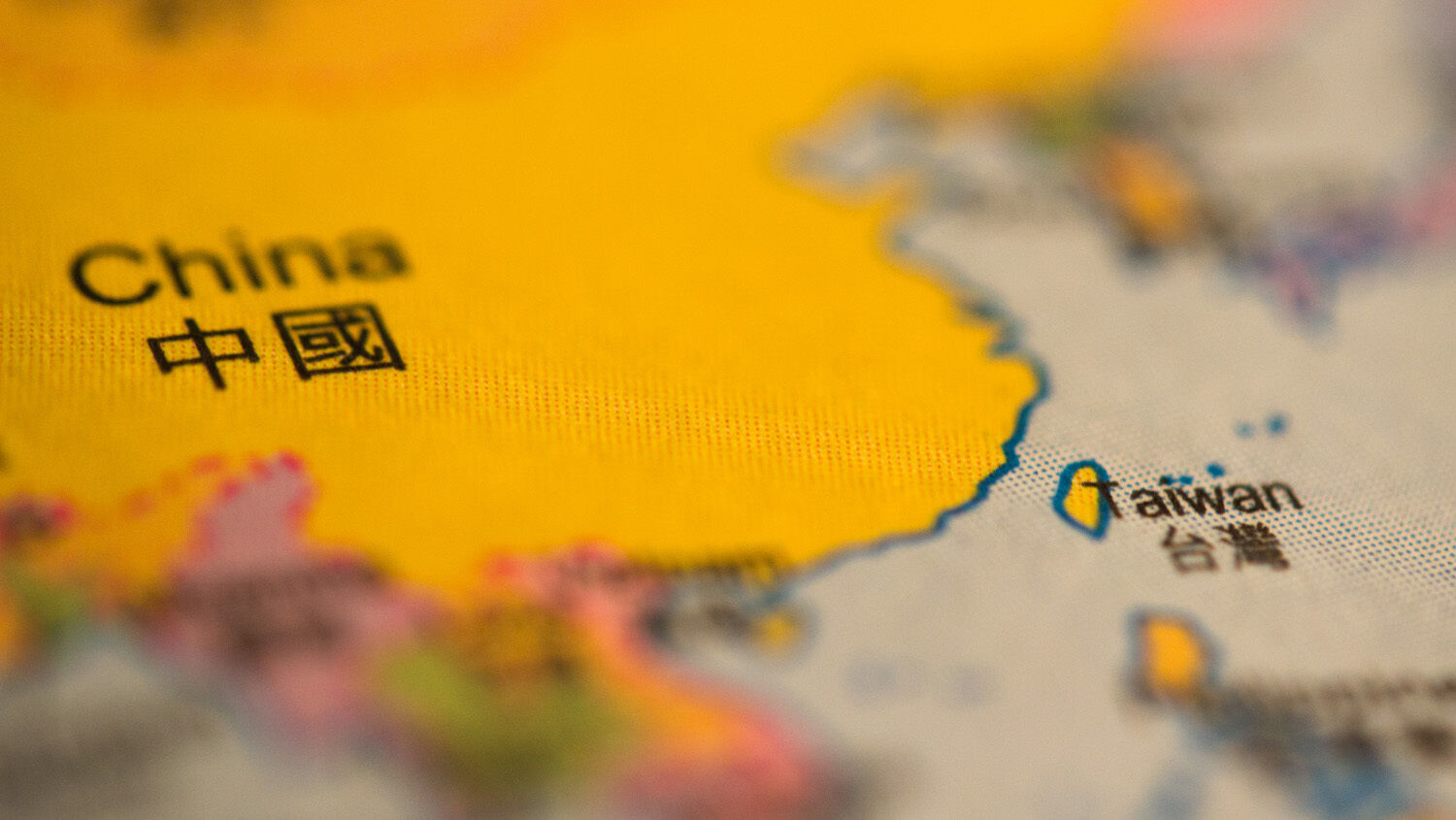
Taiwan: The Mirror China Longs to Shatter
The Chinese Communist Party (ccp) does not resent Taiwan merely because of territory or some ancient maps from a bygone dynasty. It hates Taiwan because the nation’s free society stands as glaring proof against everything the party needs the people of China to believe.
The ccp needs its people to believe that democracy does not and cannot work, especially for Chinese people, and that an authoritarian government—such as the ccp—is the only type of regime that can succeed. Chinese General Secretary Xi Jinping’s report to the 19th National Congress framed the claim in the ccp’s trademark euphemisms: “The path of socialism with Chinese characteristics is the only path to socialist modernization and a better life for the people.”
Xi and other party members understand that this claim undergirds their hold on power. The Chinese people must believe that restrictive governance is the only way to guarantee order and progress—or else they may reject that form of rule.
But just 100 miles off China’s coast lies a chilling rebuke to this claim.
“Beijing isn’t scared of Taiwan’s army,” China analyst Ken Cao said in a February 25 briefing. “It is scared of Taiwan’s ideas. Because if 23 million Chinese people across the strait can run a thriving democracy, what is stopping mainland Chinese people from asking for the same? Why can’t we have that too? … Taiwan shows the Chinese people you don’t need a Communist party to have prosperity, technology or global respect.”
It is beyond dispute that Taiwan’s people are economically and socially thriving—significantly beyond China’s people. Taiwan’s gross domestic product per capita is three times higher. With its superior and more accessible health-care system, the average Taiwanese lives years longer than those in China. And Taiwan’s corruption and generosity levels help push it into the World Happiness Report’s top fifth globally—while China doesn’t even break into the top half.
All of this is accomplished by the will of the people, since Taiwan is a robust liberal democracy, with freedom of speech, press and Internet that is the very antithesis of China’s restrictive model.
The China-Taiwan comparison is made even starker by the fact that the overwhelming majority of Taiwanese share the same Han Chinese ancestry as the majority of China’s people. The two lived as one on the mainland until the 1949 revolution, when the Kuomintang party fled to the island of Taiwan. But the blood coursing through their veins today has not been changed by the sea dividing them.
Also relevant is that Taiwan was not always a democracy. For decades after the revolution, the Kuomintang governed the island under martial law. This was one-party and dictatorial rule, not unlike the ccp’s governance of China. It was only after years of pressure from the Taiwanese people that the nation transitioned in the late 1980s and early 1990s to become one of Asia’s most vibrant democracies.
So how can the ethnically Chinese people of Taiwan be living so successfully when they don’t have authoritarian overlords monitoring and dictating their every move? How is it that they are not only surviving without the Chinese Communist Party’s repressive governance but outperforming those who are under it? How is it that they were able to transition from authoritarianism to democracy with minimal turmoil and emerge stronger, healthier and happier as a result?
The Chinese Communist Party recoils from the mere suggestion of such questions. Yet there lies Taiwan just off China’s coast, making the juxtaposition of the two all but inevitable.
And this is why the ccp is hell-bent on conquering the island.
“For Beijing, the stakes are existential,” Cao said. “If Taiwan stays free, the ccp’s lie just unravels. If Taiwan thrives, mainlanders start asking questions. And once those questions start, the entire Chinese system begins to wobble. And the ccp would rather risk war than allow that to happen.”
Cao called the idea that Chinese culture is fundamentally incompatible with democracy the ccp’s “favorite lie” and a “scam narrative” that the party pushes to “justify its own power.”
He continued:
Taiwan proves them wrong every single day. Twenty-three million people ethnically Chinese, fluent in Mandarin. Yet they vote, protest, sue their politicians, and even throw punches in parliament without the sky falling. …
Free Taiwan is like a mirror showing the Chinese people the dictatorship they live under and Xi Jinping would rather just smash the mirror than face the truth.
Even as the ccp grows angrier at what it sees in the “Taiwan mirror,” Taiwan’s most important security backer is wavering on its commitment to protect the nation’s independence. After a call last month between Xi and United States President Donald Trump, the Wall Street Journal said American officials are now “vacillating” over whether to sell Taiwan a massive, congressionally approved weapons package.
The 1979 Taiwan Relations Act legally requires the U.S. to sell Taiwan arms so it can defend itself. And one of the Reagan-era “Six Assurances” specifically bans America from consulting with China on whether to sell Taiwan weapons packages. But the Trump administration may think safeguarding a trade truce with China is more important than abiding by these laws.
As China’s hatred intensifies and America’s will vacillates, Taiwan’s independence looks increasingly uncertain. And Trumpet editor in chief Gerald Flurry has long warned that China will eventually shatter this infuriating mirror.
In 1998, after Bill Clinton became the first U.S. president to yield to Chinese pressure and issue a statement critical of Taiwanese independence, Mr. Flurry said it meant Taiwan’s days of freedom were numbered. He wrote:
The Chinese leaders pressured the president and America to speak against our freedom-loving friends before the whole world. … The people of Taiwan fear for their future. They feel betrayed. …
Once again, America has showcased its broken will to the whole world. …
How could anyone fail to see that Taiwan is destined to become a part of mainland China? These [23 million] people are going to be forced into the Chinese mold; and it is going to happen for one reason: because of a pitifully weak-willed America.
Does freedom really mean so little to us?
Mr. Flurry grounded his analysis of America’s faltering will, and its role in the China-Taiwan equation, in biblical prophecy. Leviticus 26 records God warning the descendants of Israel—mainly modern America and Britain—that if they refused to obey Him, then He would “break the pride of [their] power” (verse 19).
To better understand how America’s shattered resolve will ultimately enable China to shatter Taiwan’s independence, order your free copy of Russia and China in Prophecy.


