

As Trump Shakes the World Order, China Seeks to Seize the Moment
As United States President Donald Trump shakes the global order, China is seizing the moment, working with renewed urgency to deepen partnerships with nations around the globe.
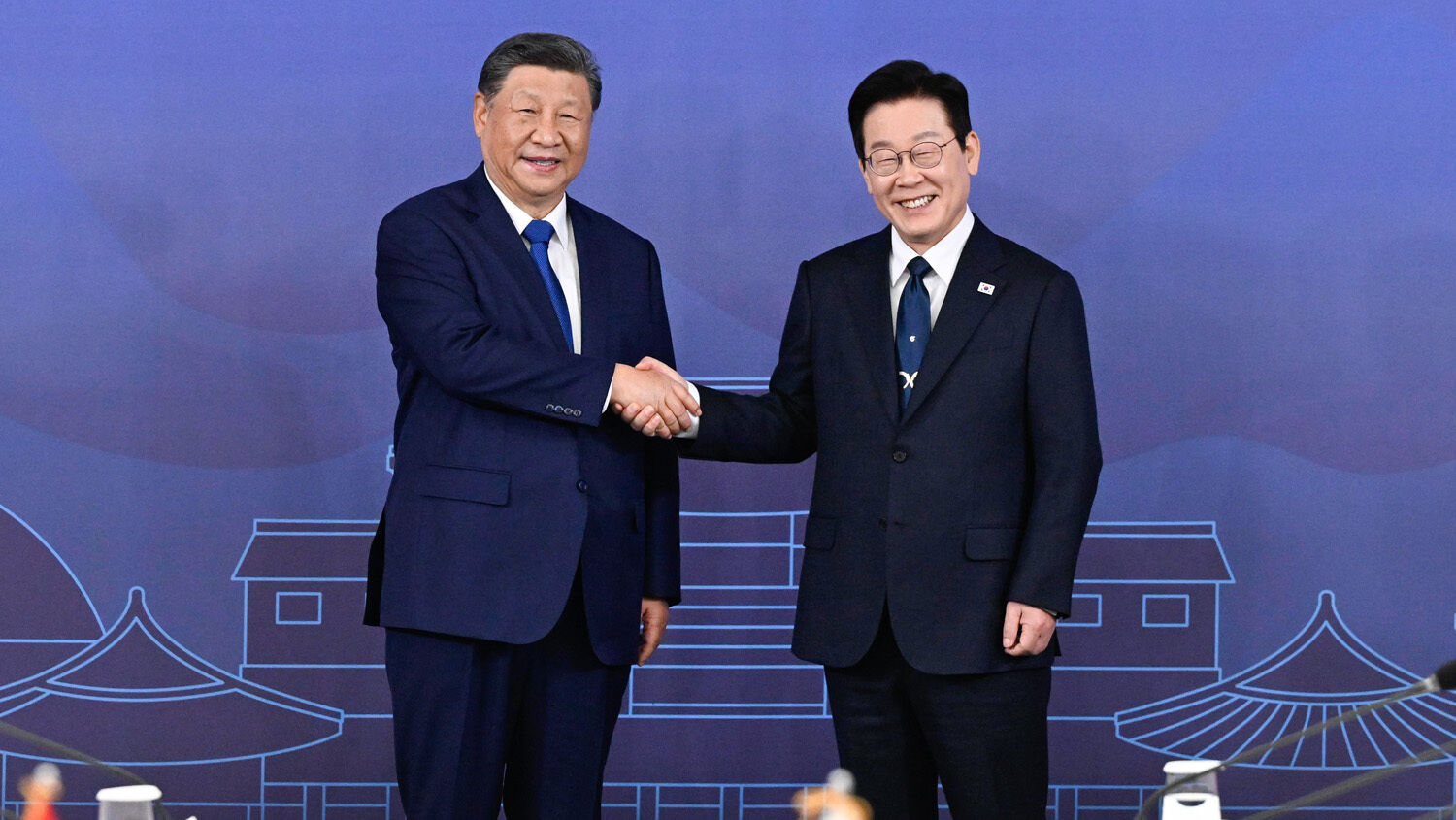
In early January, Chinese General Secretary Xi Jinping hosted South Korean President Lee Jae Myung in Beijing, the first visit by a South Korean president to China in six years. Lee spent four days in the country, holding meetings with Xi and other senior Chinese officials aimed at strengthening ties between Beijing and Seoul.
South Korea remains a formal ally of the U.S., but President Trump’s heavy tariffs on the country, alongside the U.S.’s humiliating detention of hundreds of workers at a Hyundai plant in Georgia—combined with the broader uncertainty and erraticism surrounding U.S. leadership—have prompted Seoul to hedge its bets. The Chinese would relish nothing more than seeing South Korea pried away from the U.S. and drawn more deeply into their orbit, so they are actively courting Seoul. In that context, the visit was highly significant.
Last week, Chinese Foreign Minister Wang Yi concluded a tour of Africa, stopping in Ethiopia, Lesotho and Tanzania. The trip focused on expanding trade and advancing infrastructure projects linked to China’s Belt and Road Initiative. During the tour, Wang announced the “2026 China-Africa Year of People-to-People Exchanges”—a soft-power offensive that will comprise almost 600 activities across Africa, including AI competitions and study trips. This marks a shift for China—from standard state-to-state diplomacy to broader, networked, bottom-up engagement. The moves underscore Beijing’s intensifying determination to deepen its economic, political and cultural footprint across the resource-rich continent.
At the same time, China has been courting partners in the West. Beijing hosted Canada’s Mark Carney last week, marking the first visit to China by a Canadian prime minister in almost a decade. “Mr. Carney is driven by a sense of urgency,” said former Canadian ambassador to China Guy Saint-Jacques. “And this urgency comes from the difficulties that we have with our neighbor to the south.” The Chinese capitalized on this urgency, viewing it as a chance to drive a deeper wedge between Canada and America. They struck significant trade deals with Carney’s delegation and announced a “new strategic partnership” with Canada.
Looking ahead, German Chancellor Friedrich Merz is scheduled to travel to Beijing next month, where China-Germany trade relations will be front and center in meetings with Xi. Deals on fair trade, mutual market access and increased trade volumes are expected to draw the two nations closer. “The world is in the state of flux, and we must adapt to it,” Merz said Monday.
Taken together, these developments point to a clear strategy. China is overjoyed by America’s antagonistic posture toward its longtime partners. It is positioning itself as a partner to nations unsettled by U.S. unpredictability, such as territorial threats toward allies, intensifying protectionism and abrupt policy shifts. Beijing is attempting to present itself as a reliable, predictable and reasonable alternative to American leadership.
It would not be accurate to suggest that China truly embodies those qualities. Under Xi Jinping, the Chinese Communist Party has grown increasingly authoritarian and coercive, and Beijing routinely threatens its neighbors in ways that exceed tensions associated with the Trump administration. Taiwan stands as the starkest example.
China is hardly an altruistic or benign nation, and few of those lining up to kiss Xi’s ring mistake its ambitions for generosity. But in light of President Trump’s volatility, many see engagement with China less as an endorsement and more as a hedge—a way to balance against American unpredictability.
As Alexander Dukalskis, an international relations scholar at University College Dublin, told Bloomberg on Thursday: “Faced with a U.S. acting belligerent and erratic on the international stage, many leaders will conclude they need to be at least on decent terms with China.”
More nations are deepening ties with Beijing—particularly in trade. In light of biblical prophecy, this trend takes on considerable significance. Passages in Isaiah 23 and Ezekiel 27 describe the emergence of a powerful economic alliance involving China, Europe and other nations. When these scriptures are read alongside Deuteronomy 28:52, it is clear that this alliance will form mainly to besiege the U.S. and cut it off from global trade.
Trumpet editor in chief Gerald Flurry has written extensively about these passages, particularly in his booklet Isaiah’s End-Time Vision. He explains that this economic siege will lead to a third and final world war.
Xi Jinping’s rush to host world leaders in Beijing and his efforts to strengthen trade ties, especially with Germany, are laying the groundwork for the emergence of this alliance. To understand the meaning and implications of these developments, order your free copy of Isaiah’s End-Time Vision.


