

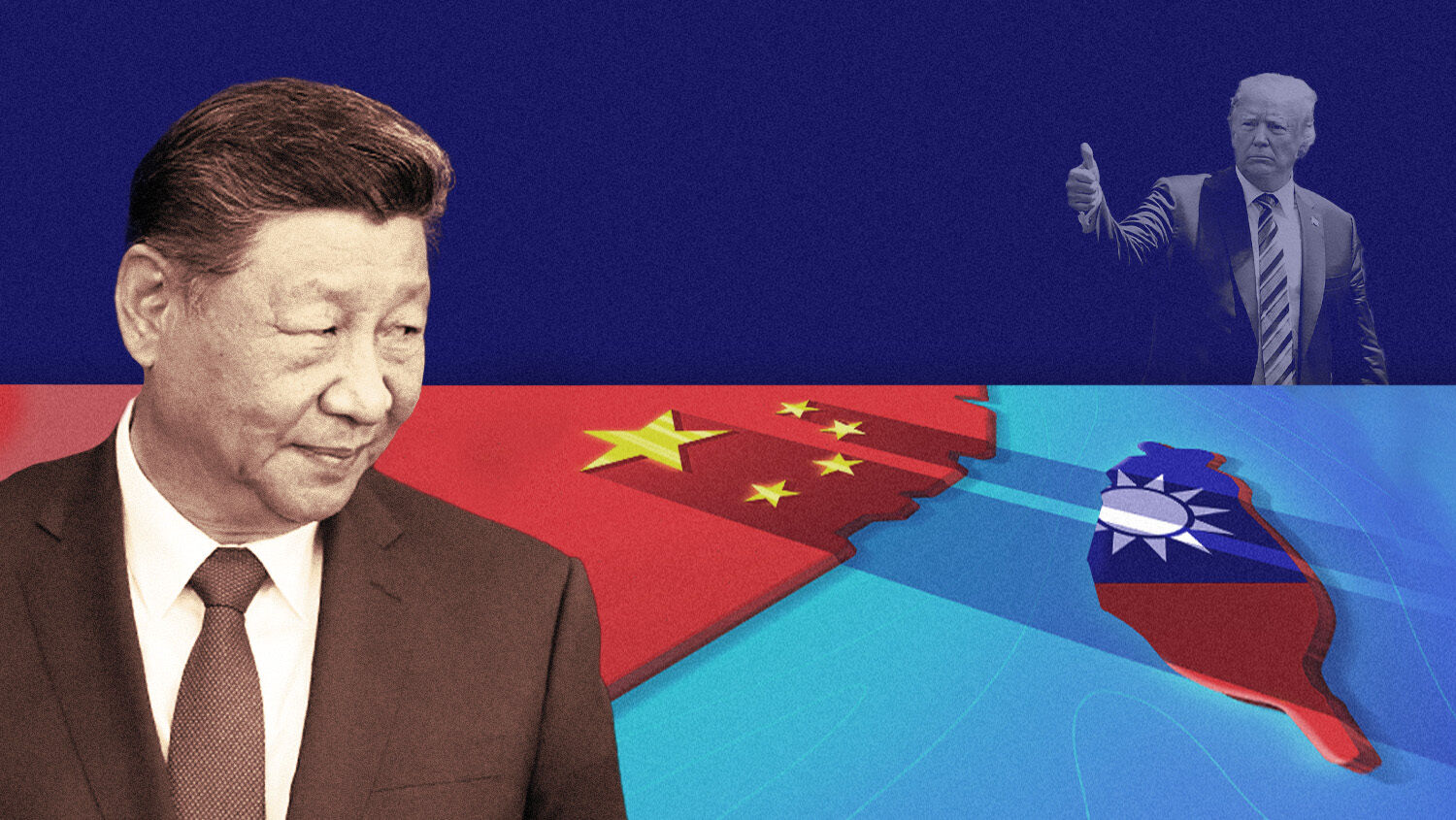
Is Trump Emboldening China to Seize Taiwan?
United States President Donald Trump’s poor treatment of Taiwan is cementing his reputation as a betrayer of U.S. allies and could embolden China to invade the Island, Ambrose Evans-Pritchard argued in the Telegraph yesterday.
- In July, the Trump administration reportedly denied permission for Taiwan’s president to make a stopover in New York after China objected.
- In August, President Trump levied 20 percent tariffs on Taiwanese goods, higher even than the rate on other U.S. Asian allies such as Japan and South Korea.
- In November, after Japan’s leader enraged China by saying an attack on Taiwan would prompt Japanese involvement, Trump had a chance to affirm support for America’s Japanese ally, back Taiwanese sovereignty and champion the rules-based global order. Instead, he essentially told Prime Minister Sanae Takaichi to moderate her tone.
- Meanwhile, Trump has treated Ukraine not as a democratic ally under attack but as a troublemaker that has no right to defend itself from brutal aggression.
Although the Trump administration has approved a records arms sale to Taiwan, Chinese General Secretary Xi Jinping has interpreted these other developments as a signal that President Trump places a low premium on America’s partnership with Taiwan and that it may be time for China to make good on its longtime plan to seize the island. In recent months, Xi has increased gray-zone coercion tactics against Taiwan, including ramped-up cyberattacks, increased naval patrols and more than 1,000 military aircraft flights near the Island.
According to Evans-Pritchard, this could be just the start:
The worry is that Xi will force the pace harder the more he smells weakness, possibly launching a customs blockade of Taiwan to test the waters. Failure to respond would lead to the rapid disintegration of the U.S. alliance system in the Far East. … Early capture would enable China to inflict calibrated disruption on the U.S. and Western tech industry—or better yet, to exploit that leverage in pursuit of a total reordering of the international system.
The Trumpet said: In 1998, after Bill Clinton became the first U.S. president to yield to Chinese pressure and issue a statement opposing Taiwanese independence, Gerald Flurry said it meant Taiwan’s days of freedom were numbered. He wrote:
The Chinese leaders pressured the president and America to speak against our freedom-loving friends before the whole world. … The people of Taiwan fear for their future. They feel betrayed. … Once again, America has showcased its broken will to the whole world. … How could anyone fail to see that Taiwan is destined to become a part of mainland China? These [24 million] people are going to be forced into the Chinese mold; and it is going to happen for one reason: because of a pitifully weak-willed America.
Does freedom really mean so little to us?
Mr. Flurry’s understanding of America’s weak will, and how it will factor into the China-Taiwan dynamic, is founded on Bible prophecy. Leviticus 26 records God warning the descendants of Israel—mainly modern America and Britain—that if they refused to turn to Him, He would “break the pride of [their] power” (verse 19). Learn more in Mr. Flurry’s article “Taiwan Betrayal.”


