Germany: Back to Coalition Chaos
Germany: Back to Coalition Chaos

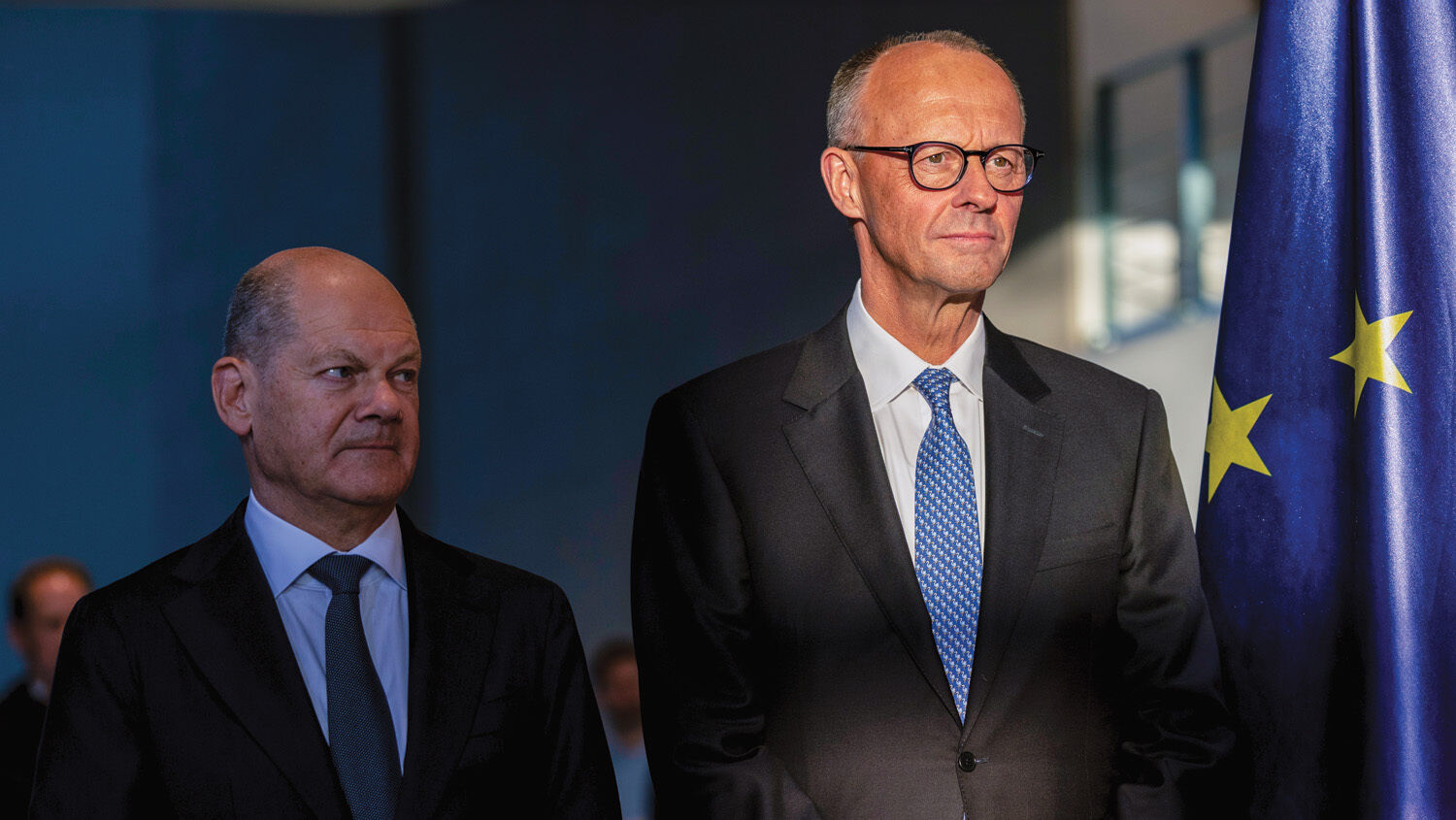
When German Chancellor Friedrich Merz took office in May 2025, he was welcomed as a breath of fresh air. His predecessor, Olaf Scholz, was the most unpopular chancellor in German postwar history. By talking tough and then failing to follow through, he gave his name to a new word: “Scholzing.” Merz, in contrast, was a doer. Even before taking office, he led Germany to change its constitution to allow unlimited borrowing for military spending.
His military reforms were dramatic and popular: 60 percent of Germans support greater military spending. The international media is just waking up to the results: “Germany Is Arming Itself to the Teeth to Transform Europe Again,” declared the Telegraph. The Atlantic wrote a lengthy feature: “The New German War Machine.”
But mere months into Merz’s chancellorship, as celebrated as his policy of militarization is, the wheels are coming off just about everywhere else. German industry is in a sustained crisis. Merz’s approval rating is approaching Scholz’s low, and most Germans expect his coalition to fall apart. Despite Germany’s surge in military power, coalition chaos is back.
What does this mean for Germany and for Europe?
Bundestag Bickering
The trouble first began over plans to enlarge the German military from 180,000 to 260,000 personnel. Defense Minister Boris Pistorius wanted to shift gently toward conscription, having all men, and any women who wanted, fill in a questionnaire assessing their fitness for military service. It was supposed to nudge young Germans toward signing up.
The Christian Democratic Union (cdu), the largest party in the coalition, is in a bigger hurry than Scholz and Pistorius’s Social Democratic Party (spd). If too few people volunteer, it wanted a lottery system to draft young men at random to make up the shortfall. To prevent that, Pistorius torpedoed his own bill, threatening to lead Social Democrats in voting against it.
A compromise was hammered out. The new bill opened the door to a lottery. Another vote in the Bundestag will be necessary to implement it, but the very public coalition infighting that got it this far created a lot of bad blood.
Before that crisis was resolved, another began. The Social Democrats want to fix pensions at 48 percent of average earnings. With the number of those employed shrinking and the number of pensioners growing, this places a growing burden on workers. Merz doesn’t like it, but he supports the guarantee as part of doing business in a coalition. The cdu-spd coalition agreement promises to fix pensions at this level until 2031.
But 18 of Merz’s cdu members under age 35 demanded more. They wanted the law to outline specific reforms to kick in after 2031 to keep pension costs down. They stalled the government for weeks, refusing to support the compromise.
The majority finally got its way, and the Bundestag narrowly approved Merz’s pension guarantee on Dec. 5, 2025.
But this isn’t really about pensions. This coalition will have the same trouble with anything it tries to accomplish. Merz leads a coalition of the mainstream left and mainstream right—Germany’s equivalent of Democrats and Republicans. However, the popularity of both parties has plummeted so steeply that this “grand” coalition has a majority of just 12 in the 630-seat Bundestag. Thus, a handful of naysayers from either party can block anything.
“We are not surprised that this coalition is acting the way it is,” wrote EuroIntelligence. “We had three grand coalitions under [Angela] Merkel, during which the country laid the foundation of its economic decline. Why would grand coalition number four be any different?” (Nov. 19, 2025). It condemned Merz’s “lack of leadership quality, poor negotiation skills, and … tendency toward flippancy.”
“We are not ruling out that a future German government might pass reforms, but we can rule out that it will happen under this coalition,” it wrote. “We can also rule out that it will happen under Merz no matter what coalition he leads.”
Most Germans have already written Merz off, a poll published by Bild on November 26 showed. Of those surveyed, 54 percent expected Merz’s coalition to collapse before its full term expires in 2029, 17 percent aren’t sure, and only 29 percent believe it will go the distance. A Forsa poll gave Merz just a 22 percent approval rating, tying with Scholz for the lowest rating ever. By comparison, Chancellor Merkel’s Forsa lowest-ever approval rating was more than double Scholz’s, at 46 percent.
Not Just Business
A more important group than German voters is becoming fed up with Merz. The real power behind Germany is its elite industrialists, and they are ready for change.
Poland was irate at Chancellor Merkel for approving undersea gas pipelines with Russia. When confronted privately over the issue, Merkel said she was “helpless” in the face of German business leaders who wanted the pipelines built.
“The German businesses have a lot of power, and … they even overruled the chancellor of Germany,” commented Trumpet editor in chief Gerald Flurry (Key of David, Sept. 19, 2025). He remarked that these industrialists “keep rising and sometimes even overthrow the chancellor.”
EuroIntelligence says the Federation of German Industries (bdi) “was once the single-most important nonstate institution in the country.” The bdi declared the German economy was in its “deepest crisis since the founding of the Federal Republic” (Dec. 2, 2025).
“Europe’s biggest economy is in free fall, but the federal government is not responding decisively enough,” said federation president Peter Leibinger. His organization forecast that factory output would fall 2 percent in 2025, the fourth year of decline. Other data show industrial employment is down 2.2 percent compared to 2024, and 4.8 percent compared to 2019. Over the last six years, employment in Germany’s important automotive industry has fallen 13 percent. Nearly half of all industrial companies are planning more job cuts this year. Almost half of Germany’s gross domestic product consists of manufactured exports, but the only significant increases in German manufacturing are in the defense industry.
The German economy once revolved around buying cheap raw materials and fuel from Russia, creating high-quality machinery and selling it around the world. That economic model no longer works, and the only big German businesses not struggling are weapons manufacturers.
On Sept. 22, 2025, leaders from four top business associations made their disappointment clear at a secret meeting with Merz. Bild reported that they “gave the chancellor a thorough grilling for an hour and a half”; it said their key demand of Merz was that he “pick up the pace on social reforms, reducing bureaucracy and modernizing the state.”
Merz came to power promising massive pro-business reforms. Six months into his government, those reforms are nowhere to be seen, and Germany’s industrial sector continues to struggle.
This isn’t really Merz’s fault. A different chancellor would have the same difficulty getting anything through a coalition with such a small majority and such deep divisions. Nor would fresh elections change much: The mainstream parties are still large enough to win but small enough to need each other, or fringe parties, to establish a governing majority.
There seems to be no democratic way to achieve the reform that business leaders desperately want.
A Strongman
“As dramatic as the fulfilled prophecy in America is, we also need to pay close attention to events in Germany,” Mr. Flurry wrote after Donald Trump was reelected. “This nation’s future is weak if something doesn’t change. But Bible prophecy forewarns us that Germany is about to shock the world with its power. To accomplish this, it needs a strong leader—something it sorely lacks right now” (Trumpet, January 2025).
He wrote that Germany’s elections last February “seem unlikely to solve Germany’s leadership crisis. Polls suggest they will only produce another weak, divided government” (ibid). Germans are united in building a stronger military, but in other areas, this government is as divided and weak as those that preceded it.
“There is a big leadership vacuum,” continued Mr. Flurry. “Germans know something dramatic must be done, and quickly! You see this in recent election results with the rise of fringe parties like the Alternative für Deutschland. Voters are showing themselves willing to embrace out-of-the-ordinary politics. They are clamoring for a strong leader!” Business leaders are now adding their voices to this clamor.
In a 2009 Key of David program, Mr. Flurry said this coming leader could perhaps “take advantage of a weak coalition.” As recent weeks have made clear, Germany is once again suffering from a weak coalition.
Daniel 11:21 states that this coming leader will not be given “the honour of the kingdom.” This means that he won’t come into power in a democratic manner. Instead, he shall “obtain the kingdom by flatteries,” maneuvering his way to office through backroom deals.
It also states that he shall come in “peaceably.” Daniel 8:25 states that “by peace [he] shall destroy many.” Mr. Flurry wrote: “Presenting himself as a man of peace, suddenly he destroys you. This will shock the world!”
America is empowering Germany to lead and dominate all of Europe. But Germany is on the cusp of a radical shift: A strongman is about to break Germany’s coalition paralysis. A radically new Germany will emerge, powered by a world-class industry, enormous amounts of raw resources and, finally, a strong leader. No longer dependent on the United States, this new German-dominated European superpower will indeed shock the world.