
Pope Leo’s Olive Branch
Pope Leo’s Olive Branch
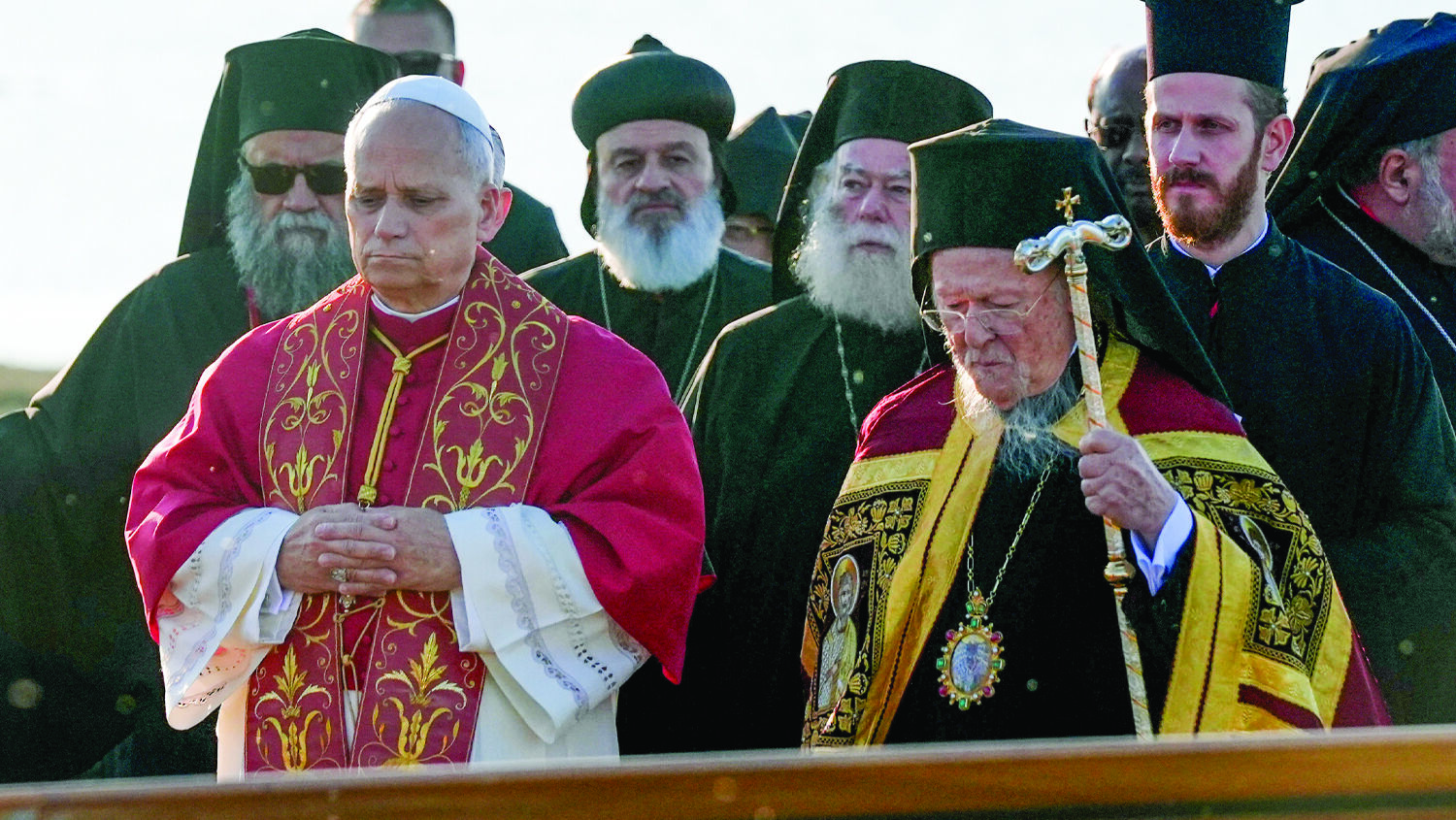
Pope Leo xiv made a historic concession when he joined Orthodox, Oriental Orthodox and Protestant leaders in Iznik, Turkey, on Nov. 28, 2025.
The meeting commemorated the 1,700th anniversary of the First Ecumenical Council, the momentous meeting in a.d. 325 that established governmental involvement in Christian doctrine and changed the Western world forever.
In a landmark development, the heads of 27 churches recited the Niceno-Constantinopolitan Creed in English. They did not include the “Filioque clause” added by the Roman Catholic Church in 1014. This seemingly small linguistic change could herald the beginning of a major religious revolution.
It took two councils—the First Council of Nicaea (a.d. 325) and the First Council of Constantinople (381)—for the Roman Catholic and Eastern Orthodox churches to agree that they believed “in the Holy Spirit, the Lord, the Giver of Life, who proceeds from the Father; who with the Father and the Son together is worshiped and glorified; who spoke by the prophets. In one holy, Catholic and apostolic church.”
Yet centuries later, Pope Benedict viii added the Filioque clause to the creed, a Latin phrase meaning “and the Son.” This addition was meant to emphasize the Roman Catholic belief that the Holy Spirit proceeds jointly from the Father and the Son rather than from the Father alone.
The Eastern Orthodox rejected this addition, and it was a major contributing factor to the Great Schism of 1054. The fact that the current leader of the Catholic Church is willing to recite the creed without this clause is a major olive branch to the Eastern Orthodox churches.


