

End of the English Reformation?
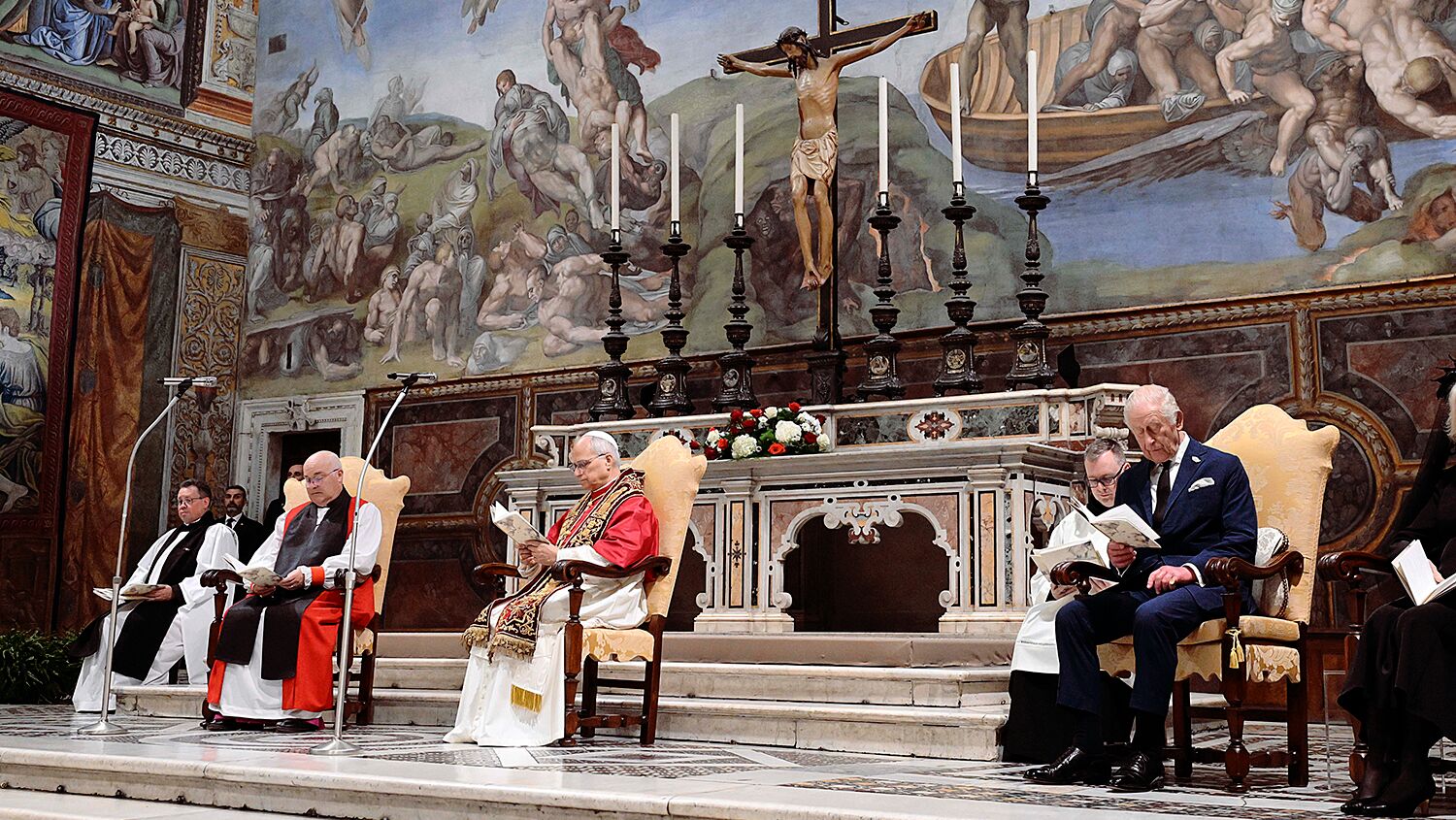
Pope Leo and King Charles prayed together, exchanged gifts and symbols of esteem, and called each other spiritual brothers yesterday. Is English Christianity reuniting with the Vatican?
“It was the moment that made ecclesiastical history,” wrote the Telegraph. “The King and the pope joined together in prayer, marking the public end to a 500-year-old divide and ushering the Christian faith into a new era.”
The King and the pope prayed together in the Sistine Chapel, the first time this has happened since Henry viii broke the Church of England away from Rome in 1534. Even prior to that, when England was still Catholic, the king and the pope rarely prayed together, if ever.
The two held another service at the Basilica of Saint Paul Outside the Walls. During that ceremony:
- The pope gave the king a new chair—perhaps you could call it a throne—for him and his heirs to use when in Rome. It is inscribed with ut unum sint, Latin for “that they may be one.”
- The pope conferred a papal knighthood on the King.
- The pope gave the King the title “Royal Confrater of the Abbey of St. Paul.” This is the first time a king of England has received a papal title since Henry viii.
- Prior to the ceremony, he also gave the King a replica of a Norman mosaic in Sicily.
In return, King Charles:
- Made the pope a Knight Grand Cross of the Order of the Bath.
- Made the pope “Papal Confrater of St. George’s Chapel at Windsor Castle.”
- Gave the pope an icon of St. Edward the Confessor, an Anglo-Saxon king the Catholic Church made a saint.
Confrater is Latin for “fellow brother” and can refer to associates of a religious order. The Catholic Herald explained the significance of the title:
The title of royal confrater, conferred with the approval of Pope Leo xiv, historically belonged to Catholic monarchs who served as honorary protectors of one of Rome’s major basilicas.
The notion of “Confraternity” being bestowed on King Charles—and thereby on the Protestant British crown—by the Vatican serves as a recognition of spiritual fellowship. The revival of the title in this context also signals a delicate but real shift in Anglican-Roman Catholic relations, according to commentators.
For centuries, the English monarch has served as supreme governor of the Church of England, embracing a firmly Protestant identity at the coronation. Thus the King’s acceptance of a Catholic title attached to a papal basilica, even if symbolic, is a significant ecumenical act in the history of the Anglican and Catholic churches.
“Your presence is historic by any measure or calculation,” Cardinal James Harvey told the King at St. Paul’s. He called the visit part of a “soul-stirring new chapter” in relations between the two churches. He also said:
- “It is no longer unusual for [a] British sovereign to meet with [the] bishop of Rome. Today saw a new step along the road of reconciliation.”
- “Today cannot be underestimated. For the first time since the separation of the 16th century, the pope and monarch shared an act of worship.”
If the pope and King both believe they are fellow brothers and that they worship Christ together, what spiritual substance is left from the English Reformation?
There are still divides. The two don’t recognize each other’s communion as valid. The Church of England is more liberal, a fact accentuated by the recently appointed female archbishop of Canterbury. But the visit makes clear that both sides see their differences as minor details to be overcome. English churches have a long, deep history of independence from the Vatican. Not long ago, the papacy was recognized as an enemy, and the pope was burned in effigy. Every November 5, the nation remembers and celebrates how Catholic terrorists were thwarted from literally blowing up the King and Parliament. Yesterday’s ceremony indeed demonstrates a historic and radical change in attitude, especially at the top.
We’re watching what Herbert W. Armstrong called “the greatest revolution in religion the world has witnessed.”
“Europe will go Roman Catholic!” his Plain Truth magazine forecast decades ago. “Protestantism will be absorbed into the ‘mother’ church—and totally abolished.”
It’s happening before your eyes, and the King of England, of all people, is making it happen.
This is a fulfilled prophecy, but is it a good thing? And what does this eagerness to make up with Rome say about King Charles? Yesterday’s article by Trumpet editor in chief Gerald Flurry has the answer.


