

The War for Peace: The Battle Between the Negotiators and the Warriors
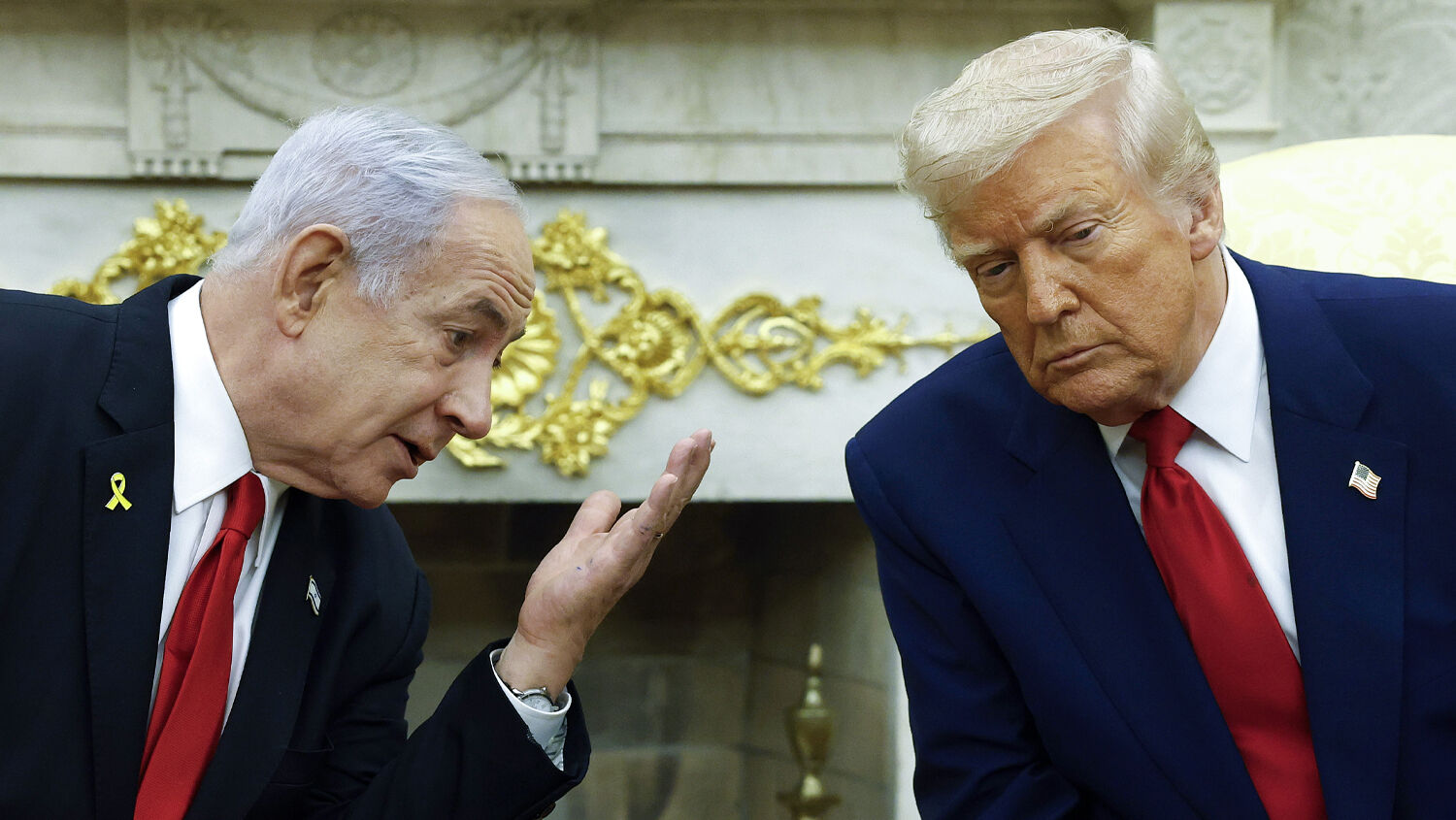
One moment United States President Donald Trump and Israeli Prime Minister Benjamin Netanyahu are close allies; the next moment they are at odds. They work together on historic peace deals and military operations, then contradict each other’s end goals. They are colleagues with profound differences. They both deeply love their countries and believe they are working toward peace, but they have different methods to achieve it. They have fundamentally different views on human nature.
On the Iranian nuclear threat, Trump believes negotiation will end the violence and create a new age of peace. Netanyahu believes that only superior force and willpower will stop the Iranian regime from fulfilling its ambitions.
This same dynamic was at play nearly 100 years ago in the 1930s. British Prime Minister Neville Chamberlain and Winston Churchill were colleagues with diametrically opposite positions on dealing with the rising threat of Adolf Hitler’s Nazi regime.
Both the Nazis and Shiites in Iran are death cults. Both believe in the genocide of the Jews, and both have a religious zeal for conquest. Chamberlain—like Trump—believed in negotiation. Churchill—like Netanyahu—was a watchman, warning about these dangerous regimes.
Like the 1930s, there is a war for peace between the negotiators and the warriors. And like the 1930s, it will end in armed conflict. This history and its modern parallel teaches us that mankind does not know the way to peace.
The Negotiators
Chamberlain and Trump share some stunning similarities. Both came from wealthy business families: The Chamberlains were wealthy industrialists from Birmingham, and the Trumps are wealthy real estate icons from New York. They learned about the world through the hard knocks of the business world. This shaped their perception of human nature: In business, negotiation is usually the ultimate weapon.
Neville Chamberlain’s father, Joseph Chamberlain, was a powerful Conservative politician who dreamed of imposing an ambitious tariff scheme to protect the British Empire. This controversial policy, which came to a head in 1903, alarmed the Germans.
“What Chamberlain thought he had discovered in tariffs was the golden key to the British Empire,” writes Michael Shelden in Young Titan: The Making of Winston Churchill. “He was intent on unlocking its potential by allowing it to develop into a strong, unified market protected from foreign competition by a high wall of tariffs.”
Wallace Notestein wrote in Joseph Chamberlain and Tariff Reform that “his policy alarmed the Germans” and “[w]hatever proposal he made aroused their suspicion.” He continued: “The Chamberlain policy put economic interest in Germany upon the side of big naval budgets, it gave support to the Prussian habit of aggression, and some shadow of reason to the dreams of the Pan-Germans.” Joseph Chamberlain’s protectionist dream shaped Neville’s view of economic policy. During the Great Depression, Neville realized his father’s dream of implementing high tariffs in the British Empire.
Trump’s view on tariffs has also been shaped by a career in business and finance. The “America First” agenda is a modern version of what Joseph Chamberlain was trying to build in the British Empire. Today it is stirring Germany to action.
Another experience that profoundly shaped Neville was when his father sent him to Andros in the Bahamas to try and save their sisal plantation from bankruptcy. Sisal is a grass used to make rope and textiles. Joseph Chamberlain bought a 20,000 acre plantation and sent 20-year-old Neville to run it. Working in the oppressive heat, Neville cleared brush and trees, taught himself how to sail, and managed the entire estate. For nearly six years, Neville stubbornly worked at growing the sisal, but it ended in failure.
The Churchill’s had dinner at the Admiralty House with the Chamberlains on Oct. 13, 1939. Martin Gilbert quoted Churchill’s impression of Neville in his biography:
“By happy chance I turned the conversation on to his life in the Bahamas, and I was delighted to find my guest expand in personal reminiscence to a degree I had not noticed before. He told us the whole story, of which I knew only the barest outline, of his six years’ struggle to grow sisal on a barren West Indian islet ….” Churchill listened fascinated while Chamberlain spoke at length of his earlier, and unsuccessful struggles, culminating in the loss of £50,000 of his family’s fortune. It was, Churchill recalled, a tale “of gallant endeavor.” As he listened to it he thought to himself: “What a pity Hitler did not know when he met this sober English politician with his umbrella at Berchtesgaden, Godesberg, and Munich that he was actually talking to a hard-bitten pioneer from the outer marches of the British Empire!”
It is easy to view Chamberlain as a weak-willed leader being led around by Hitler’s cunning. But that is not the case. Chamberlain was a strong-willed man with a pioneer spirit. He was an excellent administrator with an eye for detail, but the sisal plantation taught him to be incredibly stubborn. The horrors of World War i, including the death of a close cousin, made another war with Germany an unthinkable outcome.
As a result, Chamberlain lacked vision. He focused on short term gains, the immediate benefits of sticking to what he believed to be right. This led to Munich. Paul Basinski wrote for the Claremont Institute: “At Andros in the Bahamas, in World War i, and in the twilight of his career, as Hitler’s power increased, Chamberlain lacked the vision necessary to see where his efforts would lead.”
“Peace in our time” led to the worst war in human history. President Trump’s declaration of peace in the Middle East and desire to be remembered as a peacemaker have echoes of Munich. Trump is also a strong-willed leader with an eye for detail, whose experiences with America’s failed forever wars make conflict an unthinkable option.
Trump also lacks vision to see where negotiation will lead. “Where there is no vision, the people perish …” (Proverbs 29:18).
The Warriors
Similarly, Netanyahu shares key similarities with Churchill. Both men joined the military at a young age and spent their youth fighting for their countries. Churchill fought in the British Empire’s frontier wars; Netanyahu fought terrorism in Israel’s elite special forces. They learned war was a necessary sacrifice: Some people and nations cannot be reasoned with.
This warrior mindset is the foundation of Netanyahu’s world view and understanding of human nature. Sometimes words are not enough. Some problems must be confronted with force.
Both these men became political leaders in the face of existential threats to their nation. “Before World War ii, Winston Churchill warned of the rise of Nazi Germany,” wrote Trumpet editor in chief Gerald Flurry in his article “Netanyahu: Israel’s Rising Lion.” He continued:
For 30 years, Netanyahu has unceasingly blasted warnings about the threat of nuclear weapons in terrorists’ hands. Both these men backed up warnings with actions. Both men rose like lions to attack the enemy.
I believe that just as God used the courage of Churchill to save Western civilization, God has used the fighting spirit of Netanyahu to hold off the atomic forces of evil.
Like Churchill, Netanyahu is a watchman as described in Ezekiel 33:1-6, warning about dangerous Gentile powers.
Both men also displayed keen historic vision. As students of history, they understood human nature and looked to the past to understand the present. Netanyahu’s study of Churchill prepared him to warn and fight against Iran.
Churchill understood force was the only way to stop madmen dictators. God used Churchill to save Western civilization, but Churchill did not know the true way to peace. Neither does Netanyahu, despite his courageous actions against Iran and its terrorist proxies.
The Real Cause of Conflict and Peace
To understand the path to peace, we must first understand the cause of war and conflict. The late Herbert W. Armstrong explained the cause in Mystery of the Ages: “All the evils and troubles in the world are caused by minds clashing with minds.”
In the modern Middle East dynamic, there are three minds clashing.
President Trump believes negotiation with Iran will stop its genocidal ambitions and refuses to contemplate regime change. Prime Minister Netanyahu believes force is the only way to stop Iran from seeking to wipe out Western civilization. The Shia regime in Iran believes nuclear war is needed to bring about its messiah’s return.
Trump and Netanyahu will never unite as long as their thinking conflicts. This is fulfilling the prophecy about the brotherhood between Judah and America being broken (Zechariah 11:14).
As long as these three minds do not turn to God’s way of life, there will never be peace. Negotiation may delay conflict, war may defeat an enemy for a period of time, but real peace comes from a change of heart.
The Bible prophesies that the next world war will begin in the Middle East because of the clashing of minds occurring right now. Any ceasefire between Israel, Iran and America is only a temporary pause to Iran’s ambitions. However, Daniel 11:40 prophesies Europe will conquer Iran in a “whirlwind” attack.
Path to Peace Restored Momentarily
There was one moment when the Middle Peace had peace. The entire world should be studying this example, but it is sadly forgotten. Mr. Flurry highlights this history in his booklet The Way of Peace Restored Momentarily. When Egyptian President Anwar Sadat traveled to Jerusalem in 1977 to offer peace to Israel, it was a remarkable moment. Sadat repented of his hatred toward the Jews and sacrificed for peace.
Sadat’s change of heart resulted in the Camp David Accords. Mr. Armstrong was intimately involved in the process, which is why it was so successful. Arabs, Jews and Americans all come from the patriarch Abraham. Trump’s Abraham Accords will only be successful if the nations live God’s way of outgoing concern, the same way Abraham lived. Mr. Flurry writes:
The three peoples represented at the Camp David talks all descended from Abraham, and the three dominant religions all originated among those descendants. If you look at their history, it’s plain that none of these peoples have been acting like sons of Abraham! That great man taught his children in the way of God, and to keep the law of God (e.g. Genesis 18:19). But these peoples mostly show contempt for God’s law today. That is why they cannot have peace among themselves!
Considering the hate among these religions and peoples, the efforts Anwar Sadat made to seek reconciliation were truly remarkable.
What a sacrifice this man made! Virtually the entire Arab world harbored intense hatred for the Jews. Yet Sadat traveled right to the heart of the Jewish state and spoke to the Knesset in Jerusalem. Perhaps he didn’t fully realize how much hostility that move would create, but from that point forward he was a marked man. He had an ambulance following everywhere he drove because he knew a lot of people wanted to kill him. …
It takes extreme sacrifice to achieve real peace.
In the end, Sadat sacrificed his life for peace. When Iran’s Ayatollah Khamenei assassinated Sadat, it exposed the hatred at the heart of the Iranian regime. Sadat was a great man, and his example of repentance should be at the heart of the peace process in the Middle East.
This essential understanding is what was missing from Chamberlain’s, Churchill’s, Trump’s and Netanyahu’s efforts to bring about peace. But this will be the foundation of the world peace Jesus Christ will establish very soon. Christ is returning to bring the world to repentance and submission to His government. Only then will the nations have true and everlasting peace.
Read more about the path to peace in The Way of Peace Restored Momentarily.


