
How ‘Obliterated’ Is Iran’s Nuclear Program?
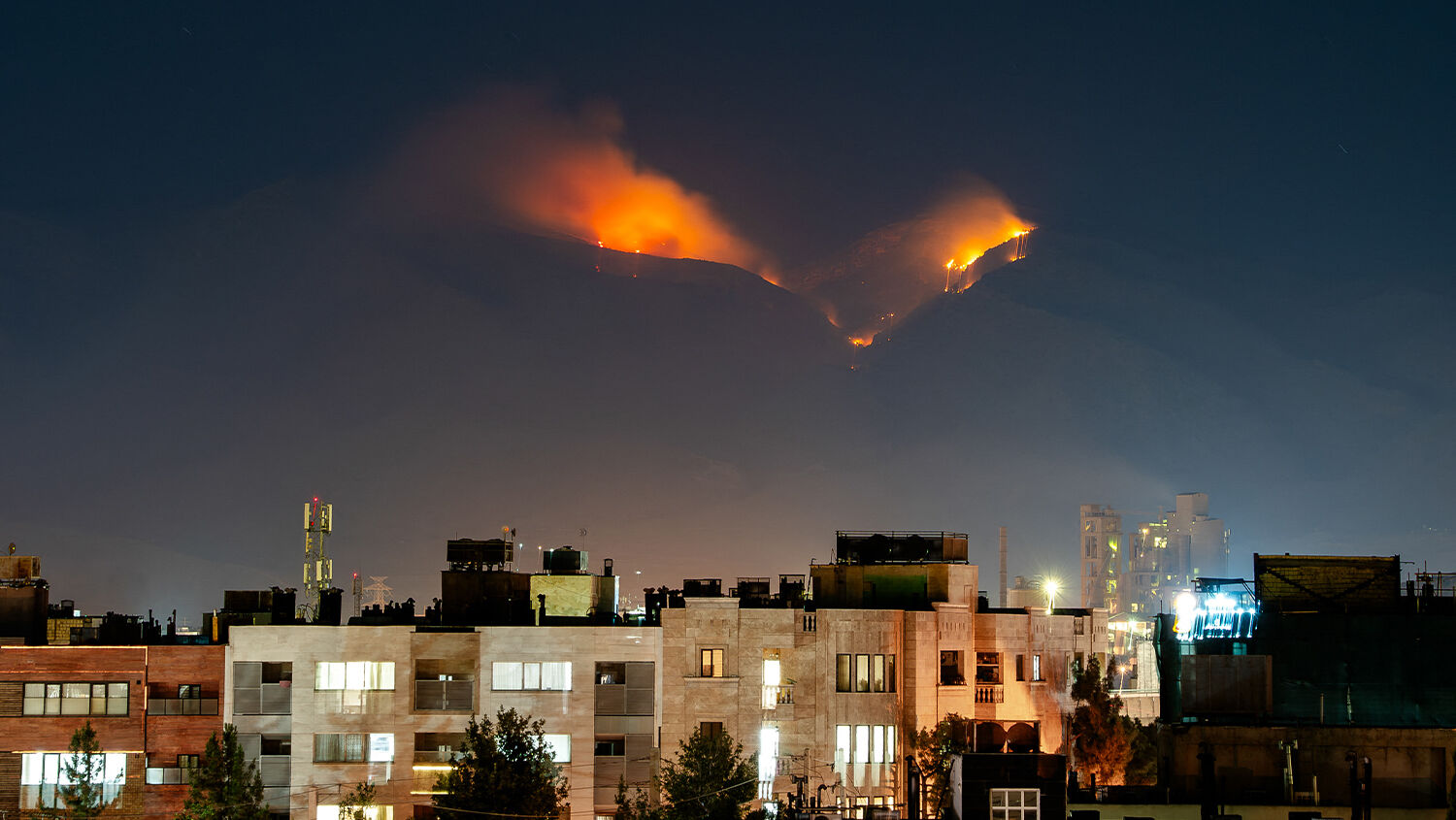
How ‘Obliterated’ Is Iran’s Nuclear Program?
In many ways it was refreshing to see Donald Trump push aside the antiwar critics and join Israel’s fight against Iran’s nuclear program. Read our feature story this morning about Operation Midnight Hammer, America’s precision air strikes on three Iranian nuclear facilities, including the Fordow site.
The question is, how decisive will the attack prove to be?

President Trump claimed the strikes “completely and totally obliterated” Iran’s nuclear capabilities. Iran says that is false, and other reports, including from the Pentagon, are more measured.
- The iaea reported no off-site radiation increases. Iranian officials claimed no significant radioactive material was present at the sites.
- Iran’s Atomic Energy Organization claimed its nuclear program was unaffected because enriched uranium had been moved to secure locations before the strikes.
- Some analysts say that while the strikes likely disrupted infrastructure, Iran’s nuclear knowledge and uninstalled centrifuges remain intact. They say Iran could still enrich uranium at covert sites, potentially enough for multiple bombs.
- The New York Times reported yesterday that “senior officials conced[ed] they did not know the fate of Iran’s stockpile of near-bomb-grade uranium.” If this is true, this means the most important part of Iran’s nuclear program—the actual enriched uranium—is still at large.
It is almost certain that Iran has retained enough resources and expertise to continue its nuclear program, and these attacks likely accelerated its urgency to produce bombs.
It would be a mistake to believe the Iranian threat is over. This morning we have two articles detailing other threats the nation could yet pose.
- First is the report that Iran’s parliament voted to close the Strait of Hormuz as retaliation against America for its strike. This would still require Iran’s National Security Council to approve, but it certainly indicates the nation’s resolve.
- Another article points to evidence that if Iran’s supreme leader is ousted, an even more-radical leader could take his place. In light of the extent to which Iran’s supreme leader has been weakened by recent events, this scenario seems quite plausible.
As I wrote yesterday, “It is easy to overestimate the effects of America joining forces with Israel against Iran. The notion that this regional powerhouse has been neutralized by several days of bombing, enthralling as it may be, ignores history and defies logic.” It also defies biblical prophecy. Read this morning’s feature story to see why.
Christianity under attack: Two attacks on Christian churches happened yesterday—one in Syria, the other in Michigan. It spotlights religious persecution happening on a broad scale.
At least 25 people died and dozens were injured in a suicide bombing conducted by the Islamic State yesterday at a Greek Orthodox Church in a suburb of Damascus. The terrorist responsible entered the church, where some 350 people were worshiping, and opened fire before detonating an explosive vest.
- This is reportedly the first attack of its kind in Syria in years. Since late last year, Syria has been governed by President Ahmed al-Sharaa, who formerly led a jihadist group. The Islamic State is not affiliated with Sharaa’s group, but the attack still demonstrates concerns that Sharaa doesn’t have the hold over the country needed to stop religious violence from erupting again.
In Michigan, a man opened fire outside CrossPointe Community Church in the town of Wayne. The suspect, whose mother is apparently a member of the church, was hit by a vehicle driven by a church deacon and then shot dead by security personnel before he was able to kill anyone.
International Christian Concern, an ngo that tracks and treats persecution against Christians, released a report on June 20 detailing how Christian communities worldwide are facing persecution in countries with Christian majorities or otherwise large minorities: Cuba, the Democratic Republic of the Congo, Mexico, Mozambique, Nicaragua and Nigeria. About the last country, they wrote:
[I]n Nigeria, Christians account for roughly half the population and are being killed at near genocide levels. Tens of thousands of Christ followers have been slaughtered for their faith in the nation during the past 25 years, with no signs of the persecution slowing down. A great deal of the violence is perpetrated by jihadists and Islamic extremists.
This unrest happens for a variety of reasons, but as the cases in Syria and Nigeria demonstrate, much of it springs from friction with the Islamic world. Geopolitically, this fits with a prophetic trend the Trumpet watches for: a clash between radical Islam and Catholic Europe. Our Trends article explains.
Germans: We want nukes, too! Nearly two thirds of Germans want Europe to have an independent nuclear deterrent, a survey by the Forsa Institute concluded. Sixty-four percent wanted to set up a Europe-wide nuclear shield, with only 29 percent opposed.
There is “solid backing across age groups, regions and party lines—something rare in German foreign-policy debates,” noted Deutsche Welle.
Back in 2018, the Trumpet’s editor in chief wrote,
Many elite Germans feel their nation has now gotten all it can from the U.S. and they are ready to move on. Some powerful Germans today are thinking more and more about the Holy Roman Empire, and they want modern Germany to assume more power of its own in the spirit of that empire. They want to establish Europe as a mighty, German-led superpower.
Survey results like this shows that some of that attitude has filtered down from the elites to the German population as whole.
IN OTHER NEWS
Asian alliance: Vladimir Putin and Indonesia’s president signed several military cooperation agreements on the sidelines of the International Economic Forum in Saint Petersburg on Wednesday. Our In Brief explains the significance of such deals binding the nations of Asia together, particularly with Russia.
The world’s largest digital camera is now scanning the sky in the Southern Hemisphere. The Vera C. Rubin Observatory in Chile published its first photographs today after a decade of construction. The 27.5-foot telescope is equipped with a 3.2 gigapixel digital camera. It would require 400 4K screens to display its pictures in full resolution. The detail it can pick up makes it ideal for detecting small changes in the night sky. It will continuously photograph the southern sky every few nights. Comparing the images will reveal changes that coax more secrets from the heavens.


