

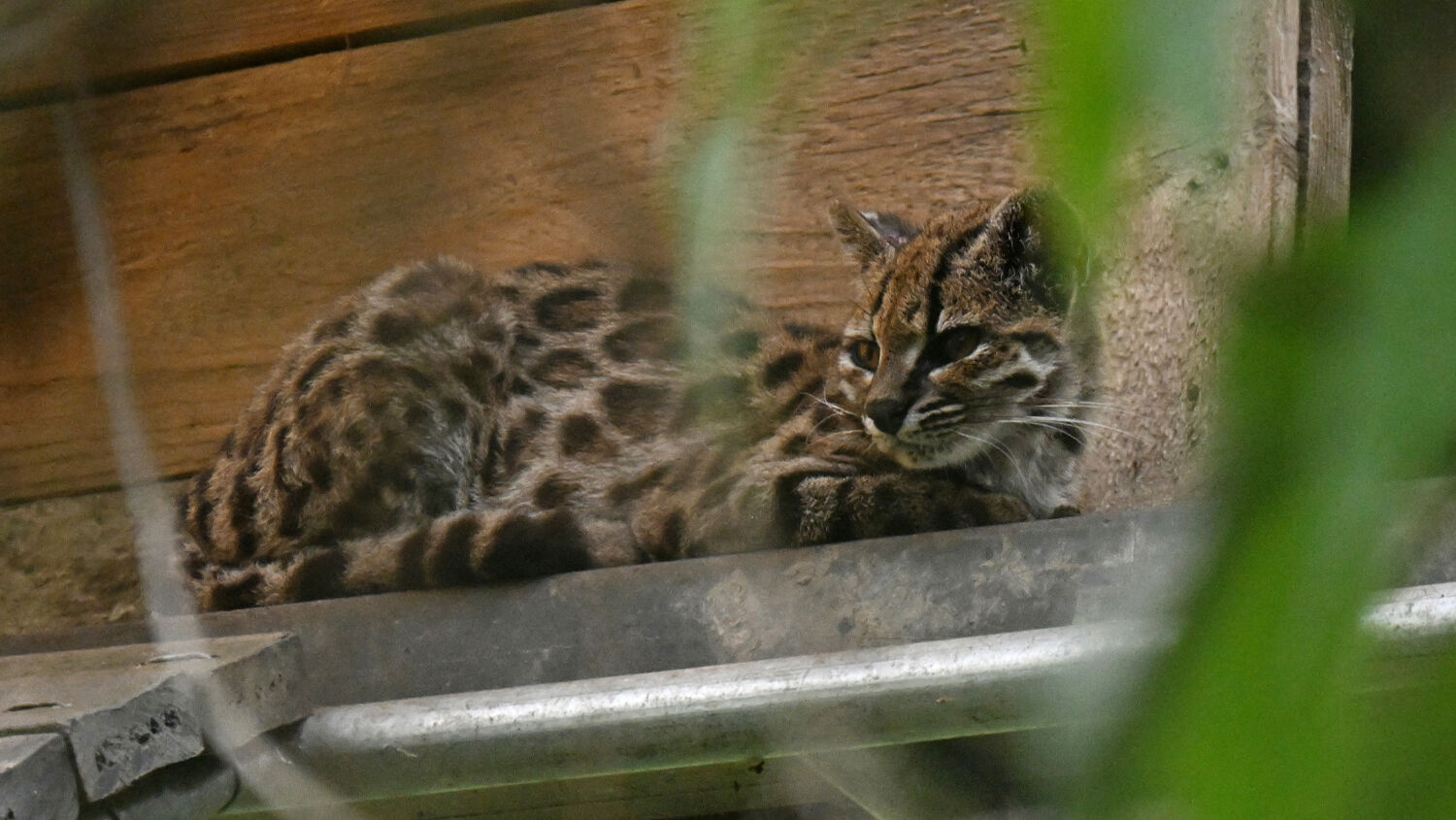
Newly Discovered Cat Species Highlights Earth’s Natural Heritage
Meet the tilcayo. A spotted cat related to the ocelot and margay, it is tiny. At about 18 inches long and weighing around 3 pounds, it is smaller than a typical housecat. Its only known home is the Yungas, a cloud forest where the Andes Mountains meet the Amazon basin in Bolivia. Its size, unique pattern of spots and other physical features distinguish it from its relatives. Yet until scientists completed a dna analysis, published by Current Biology on September 17, the general public was unaware of its existence. The tilcayo (scientific name Leopardus tilcayo) is the first new species of cat discovered and formally described in over a century.
Strictly speaking, Paola Nogales-Ascarrunez, a biologist with National Geographic, first encountered the tilcayo in 2017 when a Bolivian man called her about a “weird cat” originally identified as a housecat. Some locals knew of the existence of a “weird cat” in the forest and named it “tilcayo,” the meaning of which has been lost to history.
There is much we don’t know about the tilcayo. Describing a new species in the modern era usually requires years of analysis. Camera footage suggests it is probably nocturnal, while feces samples suggest its main prey is small rodents.
“[T]he discovery is monumental,” National Geographic wrote September 17, “and not just because it’s the first new cat discovered since the pampas cat in 1923. The new paper doesn’t just name a new species; it redraws the cat family tree to have a lot more branches than previously thought. What’s more, the researchers hope the methods used to identify L. tilcayo may soon be used to find even more cat species spread across the world and even transform how we protect them.”
Media calls the tilcayo a “new species,” but it has inhabited its cloud forest for thousands of years while most of humanity has been oblivious to its existence. The announcement shows that even in our modern, social media-obsessed age, unique species remain undescribed by science. One wonders what other creatures are waiting to be discovered.
Several announcements of “new species” have come out in 2026 alone.
- Uroconger gracilis is a type of conger eel from China noted for its unusually long and slender body.
- The Colobus congoensis monkey of central Africa has unique vocalizations and coloration.
- Eublepharis jhuma is the first species of leopard gecko found in the east Indian state of Bihar.
Marine Mammal Science published an article in March suggesting a large undescribed animal is lurking in the depths. In 2020 and 2025, ships near the coast of Brazil recorded the vocalizations of a type of beaked whale. The noises had a higher frequency than any known species and may represent a species new to science. Beaked whales can measure over 40 feet long and weigh up to 15 tons. Various species are found in all the world’s oceans, are among the deepest-diving mammals, and are probably Earth’s last group of large mammals with undescribed species.
Scientists consider such discoveries to be biological marvels, but there is a deeper meaning with every new species described.
Each creature on this planet, known and unknown, has its origins in Genesis 1. In six days, God prepared the Earth for humanity. Three of those days involved mass creation of new life forms. The third day saw the creation of plants; the fifth day, birds and sea creatures; the sixth day, land animals and humans. After each and every one of these creations, God proclaimed them good (Genesis 1:12, 21, 25).
God took pleasure in crafting and designing every creature on this planet, as an artist takes pleasure in his individual paintings. The Bible states that we get to know God through examining His handiwork in the natural world. “For ever since the creation of the world His invisible attributes, His eternal power and divine nature, have been clearly seen, being understood through His workmanship [all His creation, the wonderful things that He has made] …” (Romans 1:20; Amplified Bible).
When revealing His divinity to the patriarch Job, God pointed Job to how the natural world functions. He challenged him: “Do you know the time when the wild mountain goats bear young? Or can you mark when the deer gives birth? … Have you given the horse strength? … Does the hawk fly by your wisdom, And spread its wings toward the south? Does the eagle mount up at your command, And make its nest on high? (Job 39:1, 19, 26-27; New King James Version).
The psalmist succinctly noted in Psalm 104:24-25: “O Lord, how manifold are Your works! In wisdom You have made them all. The earth is full of Your possessions—This great and wide sea, In which are innumerable teeming things, Living things both small and great” (nkjv). In our December 2013 Trumpet, Jeremiah Jacques wrote: “The mind-boggling array of animal life being discovered daily in our oceans, rainforests and other ecosystems testifies to the beauty, mystery and intricacy that the Creator saturated His creation with.”
Jacques wrote regarding newly discovered species in 2013, when no one other than local Bolivians knew the tilcayo existed. Numerous other creatures have been discovered since 2013. That is the beauty of God’s handiwork: Even in the physical creation, there is always something new to discover. The Apostle Paul wrote in Romans 11:33: “O the depth of the riches both of the wisdom and knowledge of God! how unsearchable are his judgements, and his ways past finding out!”
Seeing God in creation isn’t reserved for isolated scientists in remote jungles. You can learn more about God by looking in your backyard or around the local park. Take time to notice the intricacies of a butterfly’s wing, the unique tone of a frog’s chirp, how a squirrel jumps between branches without fear of falling, and realize that God wants you to see Him behind that creation and use it to get to know Him better.


