

The New Race for the Top of the World
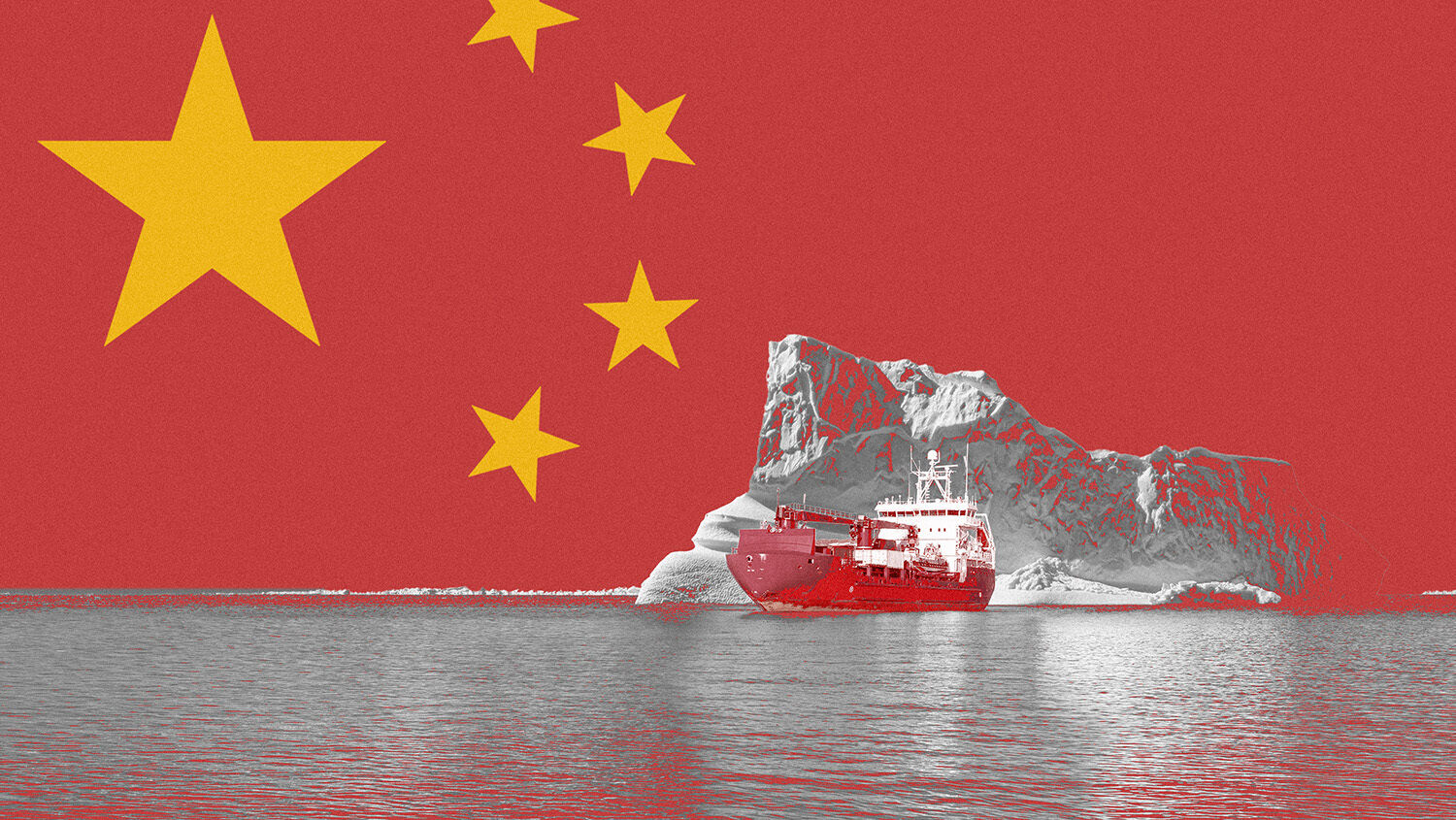
A 35,000-ton container ship will depart China’s Ningbo Port tomorrow, bound for Britain on a route that redraws the global shipping map. Instead of heading south and transiting the Suez Canal, it will sail north, across the top of Russia and through the Arctic Circle.
For centuries, the Arctic was largely insulated from the geopolitical rivalries that have shaped other parts of the world. But as the ice retreats and technology advances, the region is becoming increasingly accessible—and increasingly contested.
- The Arctic Ocean is a growing strategic priority for the eight nations that border it: Canada, Denmark (through Greenland), Finland, Iceland, Norway, Russia, Sweden and the United States.
- China’s territory stops some 900 miles short of the Arctic Circle, but it calls itself a “near-Arctic state” with claims and interests in the region.
In fact, no nation has pursued dominance in the Arctic more aggressively than China, along with Russia.
Navigating together: The vessel leaving China tomorrow must navigate between Arctic ice floes, but Russian nuclear-powered icebreakers will accompany it for this purpose, smashing the track back open if waters begin to freeze.
- The ship is expected to arrive at Felixstowe, Britain, in three weeks.
- That is roughly 15 days faster than the usual route through the Suez Canal.
- If shipping companies can begin using this route routinely, they will save enormous sums in operating costs and complete more shipments with the same amount of resources.
- Due to recent Middle Eastern turmoil, most container lines have avoided the Suez to take an even longer route around southern Africa. This adds up to 15 days to the voyage, making an Arctic alternative roughly 30 days more efficient.
The trip itself is not unprecedented—it repeats a test run made last year. What is new with tomorrow’s voyage is that it aims to officially launch the first scheduled container service through the Northeast Passage, a major global shipping shortcut between Asia and Europe.
Untapped potential: Besides the immense value of a quicker shipping route, the Arctic is home to an abundance of natural resources.
- According to the U.S. Geological Survey, the region holds an estimated 90 billion barrels of undeveloped oil, 30 percent of the world’s untapped conventional natural gas, and vast caches of minerals.
Russia and, particularly, China, whose vast economy demands ever more resources, are eager to secure access to these sea routes and to this wealth.
Prophetic perspective: Biblical prophecy warns of an immense Asian alliance, led by Russia and China, that will soon partner with European nations and dominate the global trade at the direct and severe expense of the United States. Learn more in “China Plans a ‘Polar Silk Road.’”


