

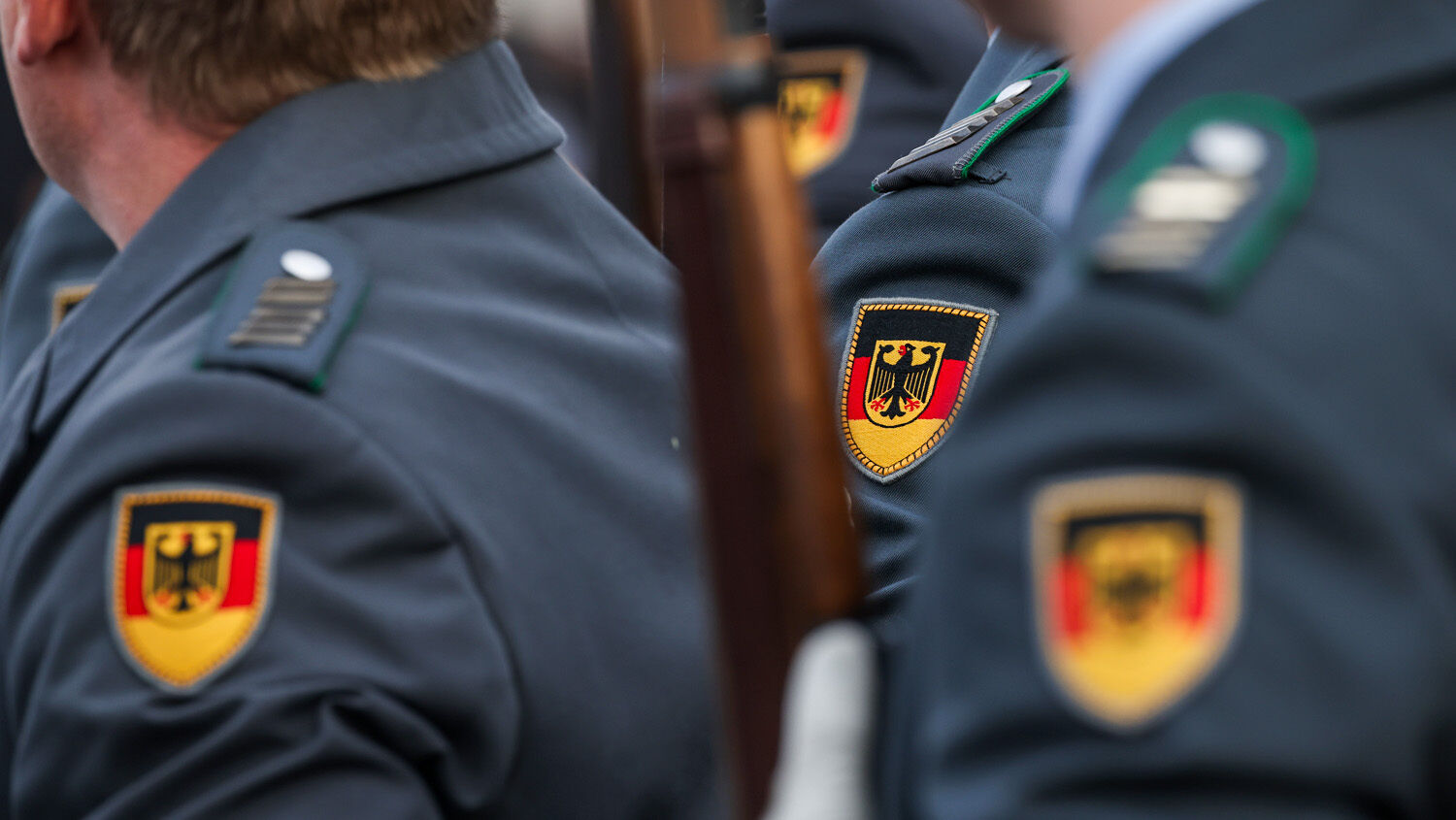
Germany’s Self-Inflicted Economic Crisis Brings Military Transformation
Germany once looked unstoppable. Around 2005, sweeping labor market reforms and cheap, reliable power—drawn from nuclear plants and abundant Russian natural gas—caused German industry to flourish. The euro solidified Germany’s rule over the European Union and devalued its currency, making its exports cheaper and more competitive. “Made in Germany” was desired around the world.
But circumstances and seemingly foolish government decisions began to change this.
Stricter emissions regulations placed growing pressure on German industry. The government decided to phase out nuclear energy. Trade disputes between the United States and China weakened global demand, and Brexit created further uncertainty across European markets. Germany’s export-driven economy began to lose momentum.
Then came covid-19. Germany, along with many other countries, shut down large segments of its economy.
Just as its economy was on track to recover in 2022, Russia invaded Ukraine. This was foreseeable, but Germany was seemingly unprepared. (Germany has long withheld measures to help Ukraine, which could have averted this crisis.) It was forced to stop relying on cheap Russian natural gas delivered through continental pipelines and the Nord Stream pipelines in the Baltic Sea, which were later damaged in a 2022 sabotage attack.
Germany found itself in a self-inflicted crisis. It could still get its economy back on track by reversing some foolish economic decisions, such as reliance on green energy. Although in the process of phasing out its nuclear energy (which became unpopular after Fukushima), it could have decided to stop this phase-out to prevent an energy crisis.
Instead of keeping the nuclear centrifuges running—which were considered the best in the world—Germany closed the last plants in April 2023.
Paradoxically, the European Union, Germany in particular, increased imports of more expensive Russian liquefied natural gas. Oil that used to come from Russia was rerouted through India to Europe, which made it more expensive.
Germany said it is taking this economic hit to sanction Russia, but really, it only harmed its own economy.
When the new German government was sworn in last year, it promised to undo these mistakes and boost the economy. However, it has not seized any opportunities that could have revitalized the economy. It has, however, mastered something else: using the economic crisis to drive military transformation.
A Reversible Crisis?
The nuclear phase-out is one of the most concrete examples of how Germany’s energy crisis is self-inflicted. It also shows how this crisis could be reversed.
In January 2025, Chancellor Friedrich Merz, campaigning for the Christian Democratic Union at the time, called the abandonment of nuclear technology a “grave strategic mistake.” He said regarding the nuclear plants, “They are being dismantled, they are being decontaminated. There is no way to fix this, most likely.”
But some experts say there is. Germany’s Bild wrote on May 23, 2025:
Representatives from politics and the nuclear power lobby met in Berlin on Thursday at the elegant Hotel de Rome. They discussed whether the German nuclear power plants could be restarted.
The focus was on Mark Nelson, a nuclear engineer from Chicago, Illinois, and founder of the Radiant Energy Group, who meticulously calculated what a ramp-up would cost and how quickly it would happen.
“There is no cheaper way to generate electricity in the world than with your paid-off nuclear power plants,” Nelson told Bild. Together with a consortium of companies and investors, he is planning the nuclear turnaround in Germany. The Americans are certain: Nine German nuclear power plants could be reactivated. …
Nelson puts his finger in the wound: “You got out of nuclear power just as Chatgpt came onto the market. Everyone knows that AI needs an infinite amount of energy, and that’s when you shut down the best power plants in the world.”
Merz acknowledged in April of this year that it was a mistake to shut down nuclear energy, but that “correcting it will not solve any of our country’s current energy supply problems.” However, it is obvious that if his government had taken action at the beginning, it would likely have at least mitigated Germany’s energy crisis.
But the government decided against it.
In May 2025, Economic Minister Katherina Reiche said, “The phase-out has been completed. A return to nuclear power requires not only money, but also the trust of the companies that are supposed to make this commitment, and not just for one legislative period, but beyond.”
In other words, the industry will not invest in nuclear power plants if they know the next government could phase them out again. So Germany appears happy to see its economy plummet.
For the future, the government is focusing on fusion energy, which could take many years to harness successfully. Reiche also acknowledged the possibility of building small modular reactors, smaller factory-built nuclear power plants. This is something her boyfriend and former economics minister, Karl-Theodor zu Guttenberg, also advocates. In February, Reiche said small modular reactors could be used to power data centers due to their high electricity needs.
Sounds like a great idea, but why isn’t it already a reality?
The government is keenly aware of its energy crisis, which will only grow worse as data centers consume vast amounts of energy to power AI models. But for some reason, it will not implement solutions. Instead, it has focused on something else.
A Military Transition
Merz and Reiche have one goal they did deliver on: militarization. The economic crisis helps with that.
After his party won the parliamentary election last year, but before the new government was sworn in, Merz brought a majority in the parliament together to suspend the debt brake to allow for militarization. This allows the nation, over the next few years, to pump hundreds of billions of euros into its military.
Due to Russia’s invasion of Ukraine and America’s gradual withdrawal from Europe, demand for German weapons is soaring.
Its economy needs to shift toward making weapons—and this has become Reiche’s main goal, as Welt wrote on July 28: “Several measures taken by the minister in recent days clearly illustrate the new focus of her department. Reiche has discovered the defense industry for herself.”
The National Interest wrote on May 11:
Under her leadership, the government supported emerging defense technology start-ups while encouraging struggling manufacturers and automotive suppliers to pivot toward military production. Her ministry even launched a platform connecting traditional German manufacturers with defense companies, helping shift parts of the industrial economy into military supply chains.
The effects are noticeable.
“As autos and heavy manufacturing falter, Berlin is steering factories, workers and capital toward rearming Europe,” the Wall Street Journal wrote on April 19. “Berlin’s approach isn’t to revive the old economy, but to replace it.”
Germany’s economy—centered around civilian manufacturing—is being systematically replaced by arms manufacturing.
“Across Germany’s industrial belt, factory lines that once powered the country’s export miracle are being rewired into the machinery of Europe’s rearmament” (ibid).
Germany is already the largest military spender in Europe—by far. This year, its expected spending is about $127 billion; meanwhile, France’s is $70 billion.
What Happens When Germany Restarts the Economy?
Now imagine if Germany were to restart its nuclear power plants, build new reactors, regain access to cheap Russian gas, secure a steady supply from the Middle East, or make a breakthrough in fusion.
Germany would quickly regain economic prosperity. With much of the German industry already repurposed for military production, it would mass-produce tanks instead of cars.
Such a transformation is exactly what the Bible reveals will happen.
Numerous Bible prophecies show Germany will suddenly rise as a military powerhouse. The book of Revelation depicts this military empire now rising in Europe as a beast. The world will wonder in awe and ask: “Who is like unto the beast? who is able to make war with him?” (Revelation 13:4).
Revelation 17 shows that this same empire went underground to prepare to rise again. In 1996, the U.S. declassified a document that exposed these plans. This document is reprinted in our free booklet Germany’s Conquest of the Balkans.
This military transformation is not an accident. While not every decision the government makes is in line with it, the overall direction is certain. And there is a profound reason for it. Notice Revelation 17:17: “For God hath put in their hearts to fulfil his will, and to agree, and give their kingdom unto the beast, until the words of God shall be fulfilled.” In “Rising From the German Underground,” Trumpet editor in chief Gerald Flurry wrote:
Note that! God says that this business-fueled German-led empire will fulfill His will. Other prophecies show that it will wreak unspeakable destruction on America and Britain and other English-speaking nations. How could such atrocities possibly be the will of God?
The Bible explains that the reason for this is that God will actually use this terrifying beast to correct the modern-day nations of Israel for their grievous sins. In Isaiah 10:5, God calls this power “the rod of mine anger”! He is going to use this power to punish and correct His people.
After that, however, God will correct this empire. He also wants to reach those people and give them the opportunity to get to know Him!
Germany’s military transformation is not an accident. It is by God’s design. Today, people may scoff at the idea that Germany could again threaten our world, even as we see it return to its old bloody industry. But these people will not scoff for long. It is up to us to prove God’s prophecies and understand why He is bringing these curses on us. To start your study, request Nahum—An End-Time Prophecy for Germany.


