

Germany Rejects U.S. Intervention in Cuba
United States President Donald Trump is pressing hard for big changes in Communist Cuba. He is talking about stronger economic pressure, possible military action, and even a U.S. takeover of the island.
In recent weeks, Trump’s words have grown stronger. He has spoken of a “new dawn” for Cuba while Pentagon officials are quietly making backup plans for a U.S. invasion. Some people worry about another U.S. conflict right after the one in Iran winds down. Germany is drawing a hard line against the idea.
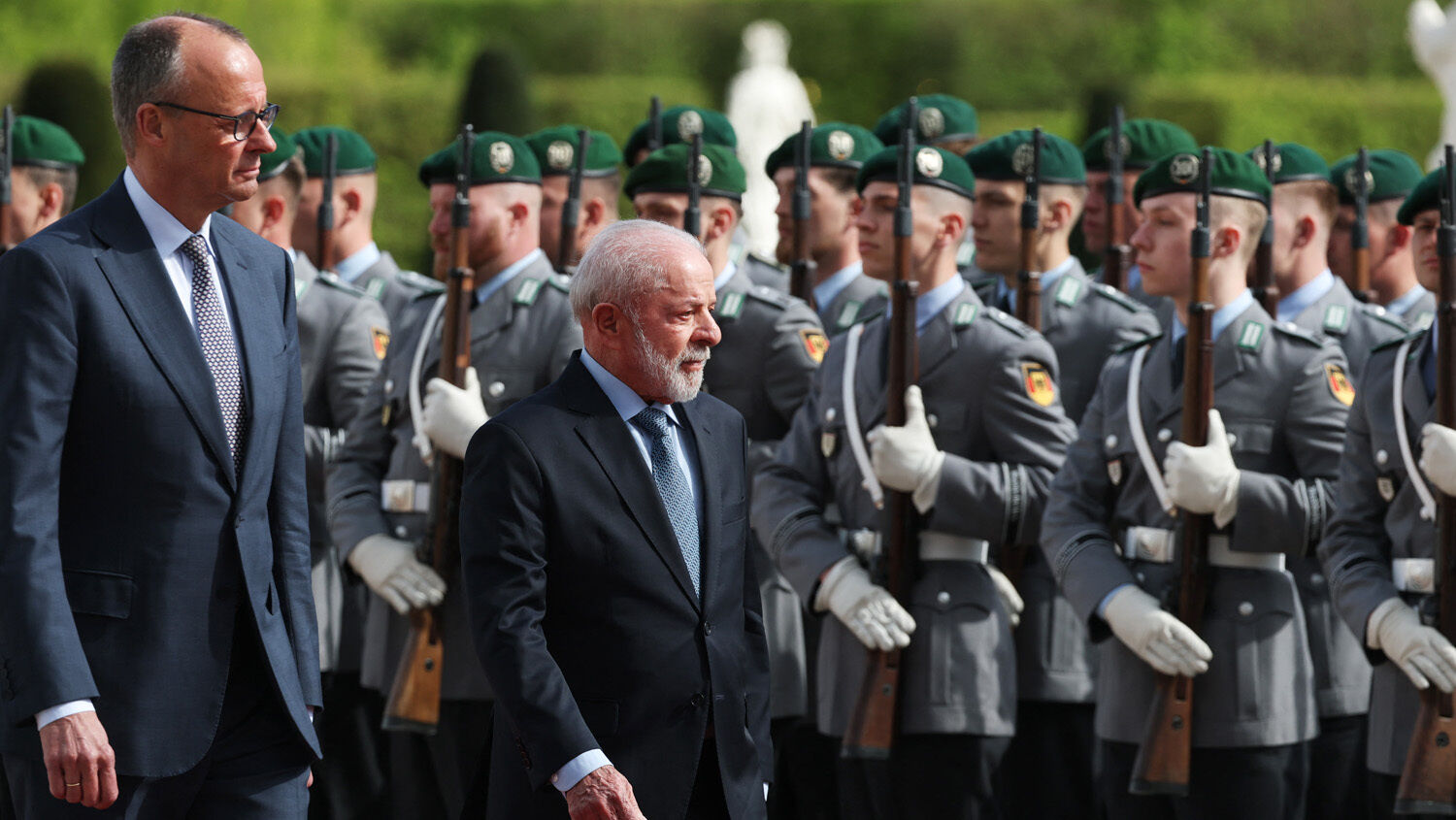
Speaking beside Brazilian President Luiz Inácio Lula da Silva, German Chancellor Friedrich Merz said there is “no reason” and “no discernible threat” from Cuba that would justify a U.S. invasion. He admitted the Cuban regime is tyrannical yet insisted no country has the authority to force its will on another nation with a different political system.
Chancellor Merz is wrong. Cuba is a “discernible threat” to the United States. The Communist regime is officially listed by the U.S. as a State Sponsor of Terrorism—the same as Iran, North Korea and Syria. The government in Havana shelters terrorists and fugitives wanted in the United States. A well-known example is Assata Shakur, a Black Panther activist on the fbi’s Most Wanted list who murdered a New Jersey state trooper. Cuba has refused for decades to send her back.
The Cuban regime also helps America’s enemies. It allows Russian and Chinese intelligence operations only 90 miles from Florida. These spy bases can listen in on U.S. military communications and other important secrets. Cuba works closely with China, Iran, Russia and the troubled regime in Venezuela. This creates real dangers for the United States in its own backyard.
Merz does not want to face these facts because the European Union has diplomatic and trade ties with Cuba’s current government. He prefers quiet talks and business deals instead of tough action.
The EU has given Cuba large amounts of aid over the years. According to human rights groups, the EU provided more than $100 million in aid from 1993 to 2020. This month, the EU announced $2.3 million in emergency aid to help with Cuba’s energy crisis and food shortages. European leaders say they hope this money will help modernize Cuba’s economy and support its private sector. But they are not demanding the kind of free-market reforms and political changes that President Trump is calling for. They fear that pushing too hard could drive Cuba further away from Europe and closer to America.
The last time the U.S. and Germany fought each other was during World War ii. In 1942, during the Battle of the Caribbean, German U-boats and Italian submarines attacked ships in the Caribbean Sea. Their goal was to blockade the Panama Canal and cut off the flow of oil from Venezuela to the United States. Adolf Hitler wanted to control these important sea routes so that he could economically besiege America.
That plan failed. The U.S. stationed 65,000 troops in the Panama Canal Zone and worked closely with Cuban President Fulgencio Batista to defend the Caribbean. During that time, the entire Gulf of Mexico and Caribbean Sea area was called the “American Mediterranean.”
In the almost 80 years since World War ii, however, American influence in the Caribbean has fallen dramatically. Cuba turned against America after Fidel Castro took power in 1959. This problem worsened after the U.S. gave up control of the Panama Canal Zone in 1999, opening up one of America’s most important strategic assets to foreign powers. U.S. relations with Venezuela soured after authoritarian Hugo Chávez came to power in 1999.
President Trump is trying to reclaim America’s lost influence by demanding that China leave Panama, arresting Chávez’s successor in Venezuela, and pushing for regime change in Cuba. All of these goals are indispensable for American security. Yet foreign leaders like Chancellor Merz adamantly oppose these steps.
In his article “Germany Unites the World Against America,” Trumpet publisher Gerald Flurry warned about a prophecy in Deuteronomy 28:52 that foretells an economic siege against America. “This is a prophecy that America will be besieged in all our gates!” he wrote. “It refers to a trade war that will devastate America! For such a siege to be successful, almost the whole world will need to ally against America. And America cannot truly be besieged unless Latin America is part of the siege. Look at a map. Naval strategists say the Caribbean Sea is just as important to U.S. security as the Mediterranean Sea is to European security and the South China Sea is to Chinese security. An aspiring superpower that controls the Caribbean could cut the U.S. Navy in two and restrict America’s access to vital shipping routes.”
America’s history in World War ii proves this assessment correct. The U.S. could not have won that war without control over the Panama Canal and the island of Cuba. America’s rivals in the EU know they have to keep President Trump from reclaiming U.S. dominance in the Caribbean.
Germany currently does not have the military strength to stop Trump from pushing for regime change in Cuba, so in conjunction with the Vatican, it is working to convince the U.S. to negotiate a deal with Cuba that will leave important elements of the Castro regime intact. The situation is just a bit more subtle and a bit more sophisticated than it was in World War ii, but Germany still has ambitions in Latin America.
To learn about Cuba’s significance, read “The Deadly Dangerous U.S.-Cuba Deal,” by Gerald Flurry.


