

Russia Planning to Nuke Satellites in ‘Space Pearl Harbor’: Report
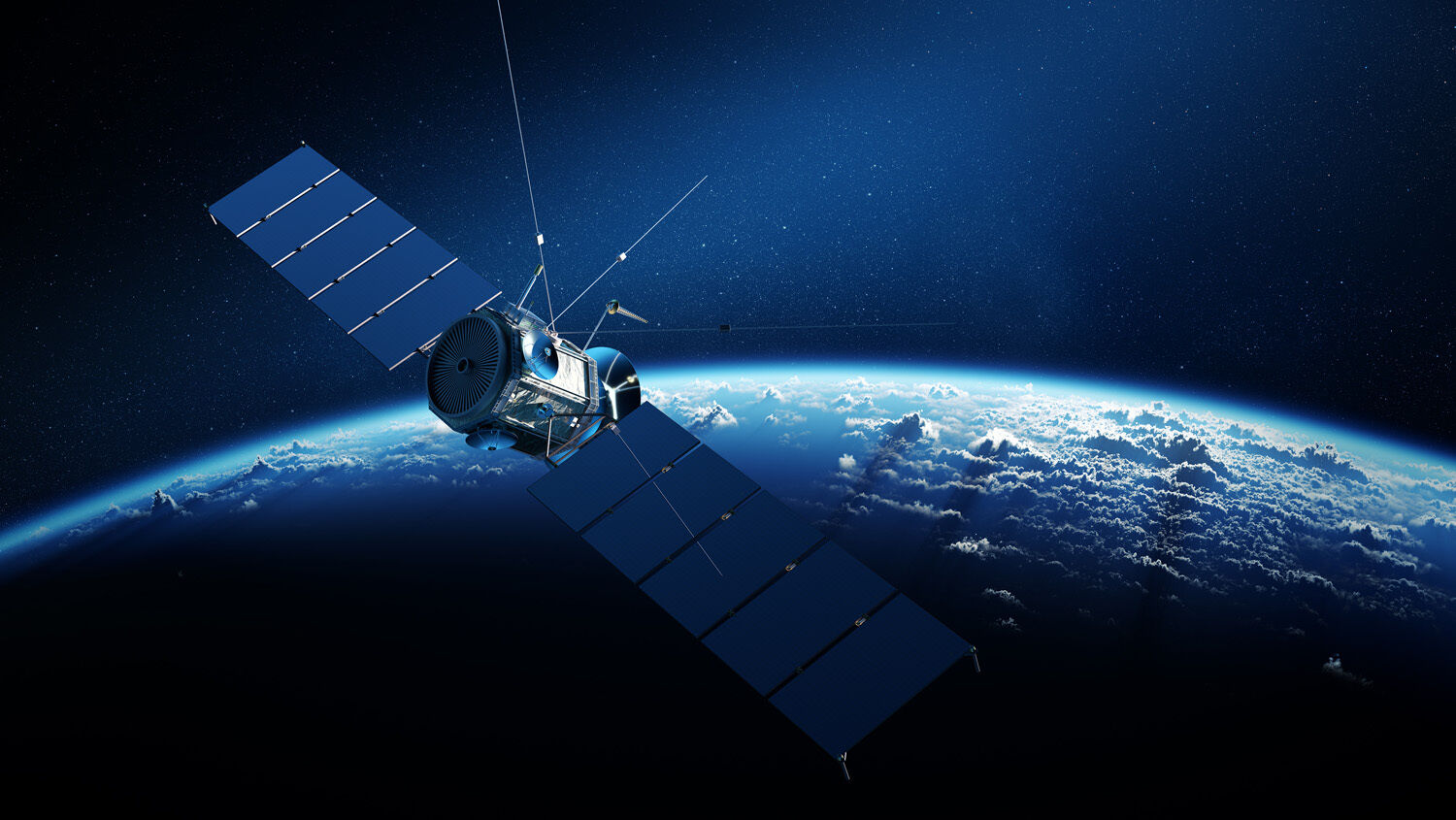
Russia plans to place a “nuclear antisatellite weapon” in space that would “hold at risk everyone’s satellites in low Earth orbit,” said Gen. Stephen Whiting, head of United States Space Command, in an interview published Wednesday.
Russia’s motivation for the weapon is to “level the battlefield” for a future confrontation with the U.S. and nato, Whiting told The General and the Journalist podcast.
He said:
From a Russian perspective, they look at the United States, they look at nato and they see an overmatch there of conventional arms. And they believe that novel ways of trying to undermine the United States and nato, such as by neutralizing our space capabilities, helps them to level the battlefield.
The U.S. military is “very concerned” about the development, General Whiting said, because such an attack could be a “Pearl Harbor in space”—a surprise attack causing extreme disruption.
Some argue that the logic of “mutually assured destruction” would deter Russia, China and other U.S. adversaries from targeting American satellites, given that those countries also have valuable space assets at risk. But the balance of exposure is not equal. The U.S. depends far more heavily on space infrastructure than any other nation and operates a disproportionate share of the world’s satellites. Of roughly 10,500 active satellites in orbit today, more than 7,000 are American—more than twice the total owned by all other countries combined.
The American military is especially dependent on satellites, relying on “eyes in the skies” for a wide range of reconnaissance, command, control, communications, intelligence, surveillance, navigation, targeting and missile guidance systems.
The U.S. is significantly more vulnerable to satellite attacks than any other country, a reality that Russia and other adversaries are well aware of. They would likely be prepared to accept losses to their own space assets if it allows them to disable those of the United States. As Whiting said, such a move would “level the battlefield” ahead of a conflict.
Frank Rose of the Brookings Institution agrees with this view. “Adversarial nations are developing antisatellite weapons,” he said, “because they believe space represents an asymmetric vulnerability of the United States.”
Trumpet editor in chief Gerald Flurry has repeatedly highlighted the dangers posed by America’s reliance—particularly its military dependence—on computer systems that are vulnerable to enemy attack. In a January 1995 Trumpet article, he cited analyst Joe de Courcy, who described this dependence as “the Western world’s Achilles’ heel”—a reference to the figure from Greek mythology whose body was seemingly invulnerable except for his heels where he could be fatally wounded.
“America is the greatest superpower this world has ever known,” Mr. Flurry wrote in 1999. “But we have a very vulnerable point in our military—our own Achilles’ heel. It is so dangerous that I am amazed it hasn’t received more publicity.”
Mr. Flurry said de Courcy’s warning about cybervulnerability brought to mind a Bible prophecy found in Ezekiel 7. The first three verses of the chapter show that God is speaking to “the land of Israel” during the time of “the end,” which means the modern-day U.S. and Britain.
Ezekiel describes a future time when God will bring punishment on these nations for their “abominations” and rejection of Him (verse 8). Verse 14 offers a stark image of one element of that judgment:
They have blown the trumpet, even to make all ready; but none goeth to the battle: for my wrath is upon all the multitude thereof.
Mr. Flurry said this “alarming” passage is about a near-future moment when U.S. military technology is disabled or compromised by adversaries. “It seems everybody is expecting our people to go into battle, but the greatest tragedy imaginable occurs!” Mr. Flurry wrote in 1995. “Nobody goes to battle—even though the trumpet is blown! Will it be because of a computer terrorist?”
Isaiah 59 offers additional insight into this future period of turmoil affecting the United States and some of its allies. In verses 9 and 10, the people of America are depicted as having lost their vision:
[W]e wait for light, but behold obscurity; for brightness, but we walk in darkness. We grope for the wall like the blind, and we grope as if we had no eyes: we stumble at noonday as in the night ….
This is already coming to pass in a spiritual sense for the U.S. and Britain today, with many people of the nations groping around in spiritual blindness. The vision that is absent in this prophecy might also include physical types of seeing, including those made possible by America’s numerous constellations of satellites.
In his booklet Isaiah’s End-Time Vision, Mr. Flurry discusses prophecies recorded in Ezekiel 5 and 27, Isaiah 22 and 23 and Revelation 18, which show which nations will initiate the attack on America and its allies. He lists them as a German-led European empire and certain Asian powers, including Russia and China.
When these prophecies are examined together, the significance of Russia’s plan to put a nuclear antisatellite weapon in space becomes clear. It shows that some tragically dark times lie ahead. Yet the Bible also shows that there is another type of vision that can be developed and preserved—one that is not vulnerable to such attacks.
To understand more about the prophetic context behind current trends, and the kind of vision that can endure the conflicts ahead, order your free copy of Isaiah’s End-Time Vision.


