

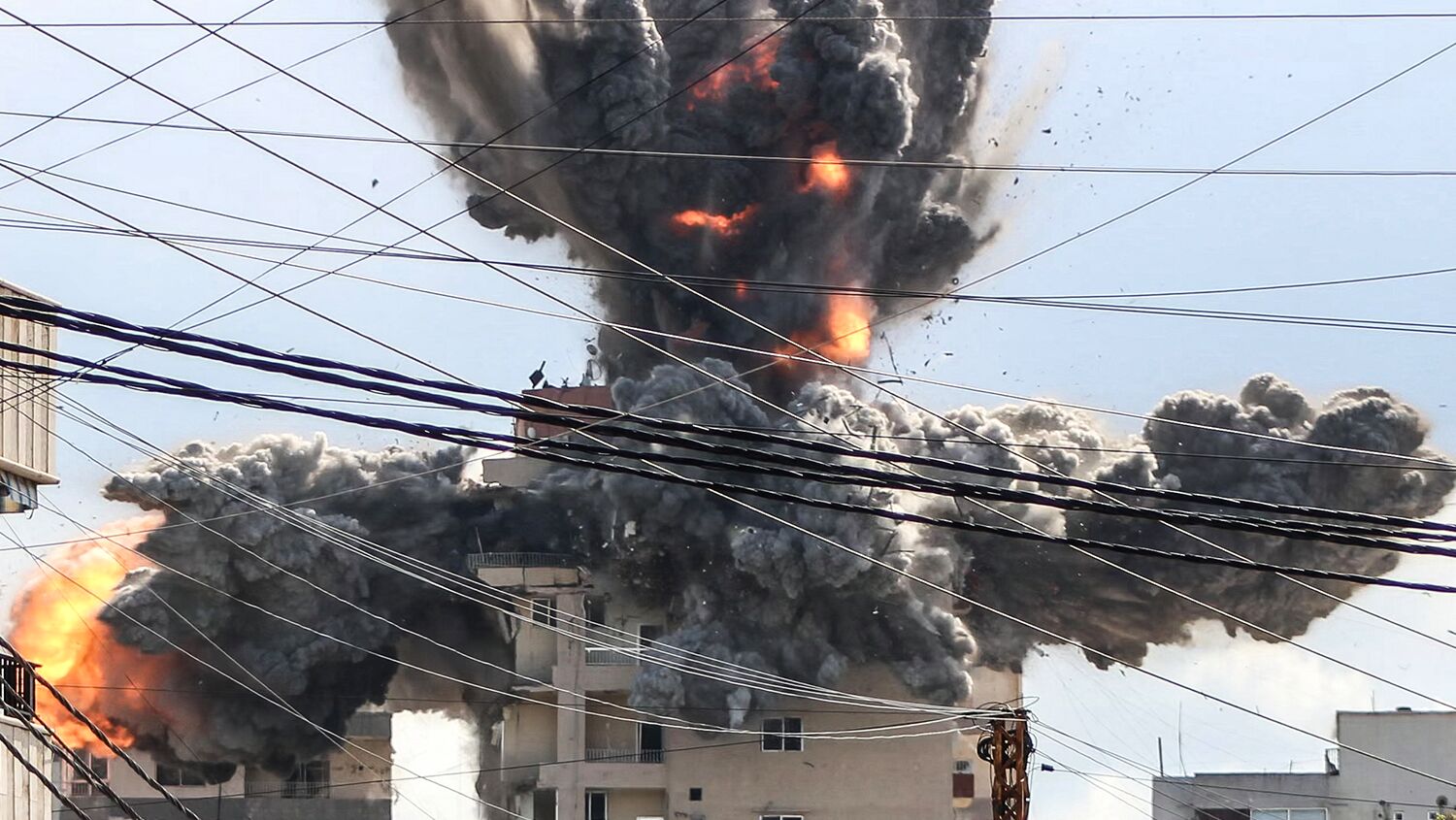
Israel and Lebanon to Talk Peace?
Israeli Prime Minister Benjamin Netanyahu announced April 9 direct talks with the Lebanese government in hopes of a deal to disarm Hezbollah and establish peaceful relations between the two countries. This could lead to massive geopolitical realignment for the Middle East. But is the Lebanese government a reliable partner?
- Israel and the U.S. claim the April 8 ceasefire with Iran doesn’t cover Israel’s war with Hezbollah. Iran claims it does and used Israel’s ongoing attacks on Hezbollah as rationale to continue threatening civilian cargo ships in the Strait of Hormuz.
- Iran has also reportedly been extorting ships it declines to attack, effectively installing a terrorist “toll booth” controlling 20 percent of the world’s oil and natural gas. This all jeopardizes the ceasefire.
Israel says it will still fight Hezbollah while talks are ongoing. But a member of the Lebanese president’s office told bbc today that Lebanon will participate in direct negotiations “if, and only if, there is a ceasefire in place beforehand,” as the bbc put it.
- Governments and media are framing Prime Minister Netanyahu as the primary reason the ceasefire failed.
U.S. President Donald Trump may be pressuring Israel to back down on its war against Hezbollah, just as he has with Israel’s war against Hamas. Trump could be tempted to pressure Israel to accept a premature ceasefire with Hezbollah if it means concessions from Iran.
In a column today, commentator Melanie Phillips expressed concern that Trump is “negotiating at all with religious fanatics, whose infernal agenda is totally nonnegotiable and for whom negotiation merely demonstrates their opponent’s weak-minded refusal to go the military distance.” She continued:
Maybe Trump is using these negotiations as a strategic feint. The suspicion is, however, that he believes that every conflict can be resolved through a deal. If so, that’s a disastrous category error. Iran has always wrong-footed negotiators because they believe that, like everyone else in the world, the regime is susceptible to appeals to personal or national self-interest.
The embattled Jewish state, after a number of miracle victories in its early history, has made itself strategically dependent on the United States. This means that even as it is fighting for its life against a powerful terrorist group on its border, the U.S. may have pressured it to “open direct negotiations with Lebanon as soon as possible.”
- Israel bows to outside pressure and makes an agreement with Hezbollah—and by extension Iran—at its own peril.
Bible prophecy describes the future of 21st-century Lebanon. In fact, it forecasts that it will split with Iran and join an anti-Iran alliance. But it’s probably not the alliance you’re thinking of.


