

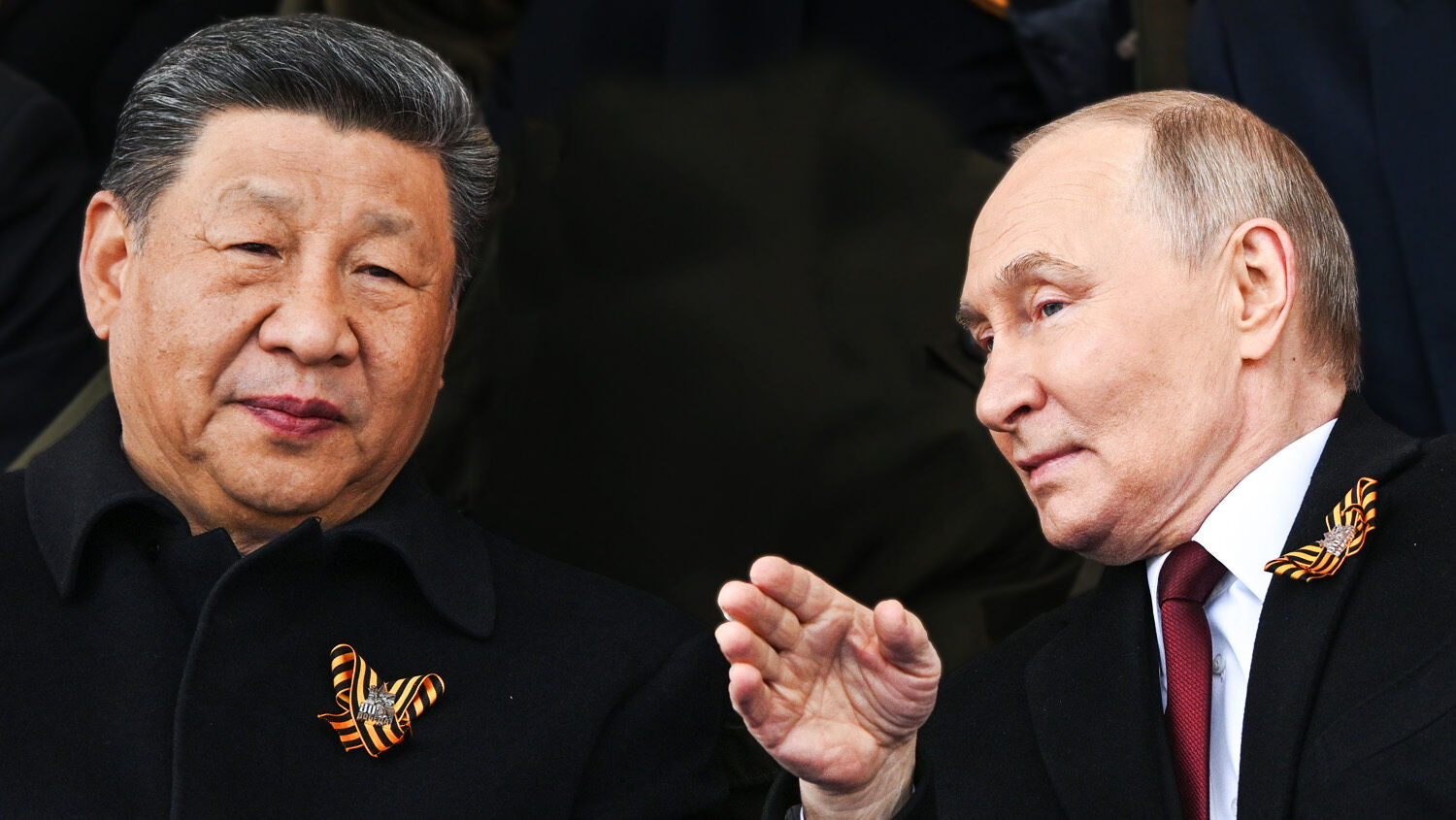
Russia and China Continue to ‘Reshape the International System’
The Russia-China axis is strengthening and “making strategic competition with the West more sustainable, more coordinated and more global in scope,” the Robert Lansing Institute wrote on March 9. The assessment drives home the reality that Vladimir Putin’s Russia and Xi Jinping’s China have pushed beyond temporary alignment to build a durable partnership capable of challenging the America-led system and reshaping the global order.
Russia’s partnership with China provides it with a “crucial mechanism for compensating for its structural weaknesses,” the analysis says. These weaknesses are largely the result of Western pressure placed on Russia following its war on Ukraine, mainly in the form of sanctions and attempts to isolate Russia diplomatically.
Economic Lifeline
Thanks to China, Russia has an alternative economic lifeline for both imports and exports. The U.S.-China Economic and Security Review Commission’s 2026 report reveals that China has sold Russia $10.3 billion worth of advanced technology and industrial equipment since Russia’s war began. This enables Russia’s continued defense production, including specialized manufacturing machines and tools used to build missiles and other military gear. China has also emerged as Russia’s primary source of dual‑use items and critical electronics used in weapons manufacturing. Intelligence agencies say China‑supplied components are now present at more than 20 of Russia’s most important defense factories. This has been key in sustaining Russia’s sanctioned industrial base.
On the other side of the trade relationship, China has also emerged as Russia’s most reliable buyer. As of early 2026, China is the biggest purchaser of Russian fossil fuels by far, buying about half of Russia’s total seaborne crude oil exports. China also buys 27 percent of Russia’s pipeline gas and 22 percent of its liquefied natural gas. With these steady purchases, as well as consistent imports of coal, refined fuels, metal ores, timber, pulp, fertilizers and food products, China is providing Putin’s regime with a crucial revenue stream.
Diplomatic and Political Cover
China also publicly supports and bolsters Russia’s argument that the United States unfairly dominates the international system. It does so partly through diplomatic backing in international institutions such as the United Nations.
In 2022, China abstained from a key UN resolution condemning Russia’s illegal invasion of Ukraine. Since then, the nation has abstained from several UN votes criticizing Russian aggression. Though these abstentions don’t explicitly support Russian belligerence, they prevent unanimous international condemnation. This saves Russia from pariah status, which strengthens its ability to bring weaker nations onto its side.
China also gives Russia cover with endless messaging that echoes Russian talking points. In 2022, Chinese officials cosigned a notable joint communique: “China and Russia have no limits to their partnership. We oppose attempts to impose one-sided rules or models on other countries and call for respect for the sovereignty and security of all nations. We advocate the development of a multipolar world in which no single country dominates.”
By cosigning and amplifying Russia’s narrative in this and similar messages, the Chinese give weight and credibility to Moscow’s efforts to end U.S. hegemony. It signals to the world that Russia is justified in working to dismantle the global order and that other nations would be justified in joining in the cause.
This has strengthened Russia’s political legitimacy across much of Asia and the Global South.
Full Alliance Ahead
The overarching result of China’s economic lifeline and political cover, the Robert Lansing Institute says, is that Russia can “conduct its geopolitical confrontation with the United States from a significantly stronger strategic rear.” It concludes that the “persistent strategic coordination” between Russia and China is a force that steadily “reshapes the balance of influence in the international system.”
The Trumpet monitors and reports on deepening Russia-China ties because biblical prophecy says a multinational Asian alliance will emerge in the modern era. Revelation 16:12 calls this grouping “the kings of the east.” Revelation 9:16 says it will field a force of 200 million soldiers, 15 times larger than the largest military force in history. These prophecies and related passages make plain that this Asian bloc will play a major role in the Third World War.
Russia is prophesied to lead this bloc, with China as a close partner, and the two are already fulfilling the early stages of these prophecies. In 2014, after China voiced support for Russia’s illegal annexation of Ukrainian territory, Trumpet editor in chief Gerald Flurry said it was “a stunning fulfillment of a biblical prophecy!” (Trumpet, May-June 2014).
He wrote: “[W]e have been proclaiming for over 50 years that Russia, China and other Asian nations would ally themselves in the end time.”
Earlier in the article, he wrote: “[W]e are in that end time now. … When these Asian nations—extremely powerful nuclear-armed countries—begin to show solidarity with each other regarding moves like that, what does that portend for the world? I tell you it is woe to the world. It will cause many serious problems.”
To understand the Bible passages that prophesy of this colossal Asian military alliance, order your free copy of Russia and China in Prophecy.


