Iran War: What We’ve Learned After Three Days
Iran War: What We’ve Learned After Three Days
Good morning!
It has been said that the first casualty of war is truth. But war also has a way of shattering illusions and exposing truths. It also has a way of driving in unexpected directions and producing unforeseen outcomes.
We’re only three days into the Iran war. But here are a few truths we’ve learned and fascinating outcomes we’re seeing unfold:
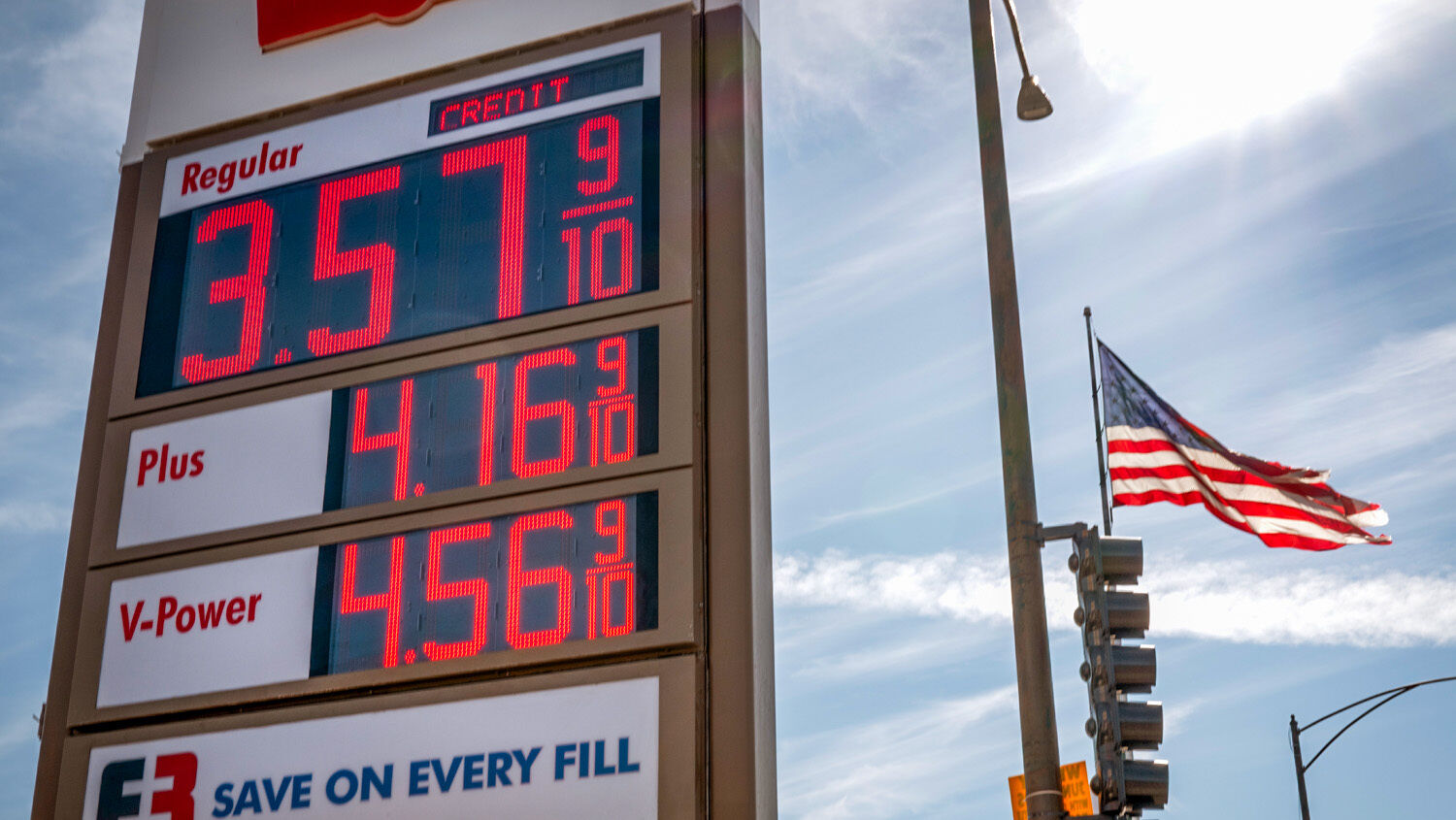
Oil disruption is quick and costly: The conflict is hammering global oil. Iranian retaliation shut down northern Iraqi fields and Qatar’s lng plants. Drone strikes crippled Saudi Arabia’s massive Ras Tanura refinery. Iran’s Islamic Revolutionary Guard Corps blocked the Strait of Hormuz, which transports 20 percent of world oil; over 150 tankers are stranded. Insurers pulled war-risk coverage; freight rates skyrocketed. Global supply is down by millions of barrels a day. Brent crude jumped over 8 percent to above $80 a barrel. U.S. gasoline passed $3 a gallon.
It is extraordinary how rapidly these effects are hitting, and they could escalate hard and fast. Further strikes on Gulf energy sites could push oil to $100–$150 a barrel. President Trump is estimating four to five weeks of conflict, but a widening war could shatter that timeline. A prolonged fight risks a global recession.
The maga movement is divided and angry: America is split over the strikes on Iran. Polls show independents and Democrats largely oppose them; Republicans mostly back them. Pro-Israel voices are praising the attacks and lauding Trump’s boldness. But after just three days, fractures among Republicans are widening.
Many of President Trump’s supporters vehemently disagree with the attack. Many have accused America of serving Israel’s interests above America’s. Yesterday Marco Rubio inadvertently threw a log on this fire as he explained the U.S.-Israel strikes. He said the administration knew Israel planned to hit Iran first and said preemptive U.S. action was necessary to prevent higher casualties. maga’s “America First” camp interpreted this as Israel dragging the U.S. into war. Marjorie Taylor Greene called it “the worst betrayal.” Nick Fuentes claimed Trump “sold us out” for Israel.
President Trump can only do so much without the backing of the American people. And Americans don’t want war. Our feature story this morning has more.
Europe is embarrassing itself again: Europe’s lack of political union and willpower is once again being exposed. EuroIntelligence wrote, “If it weren’t so serious, you would have to laugh at how the Europeans are positioning themselves over Iran.” After the U.S. and Israel struck, EU leaders issued bland calls for “maximum restraint” and “respect for international law.” Ursula von der Leyen condemned Iran’s retaliation and vaguely backed regime change. Spain criticized the strikes outright; most others avoided condemning U.S.-Israeli aggression. A few leaders changed course and cheered the attack.
“What is so remarkably different between the foreign policy discourse in the EU and the U.S. is the total lack of strategic thinking in Europe, except at national level,” EuroIntelligence continued. “If 27 countries optimize their little turf, the compromises that get made do not add up to a strategy.”
As Hormuz closes and oil prices spike, Europe is scrambling. Weak military clout and divided voices leave it a bystander watching chaos unfold.
Yes, Iran was on the cusp of a bomb: Steve Witkoff dropped some bombshells in an interview with Fox News yesterday. He said the Iranians’ opening position in negotiations was them flatly, shamelessly saying they had enough enriched uranium to make 11 nuclear bombs, and they claimed to have “an inalienable right” to enrich their nuclear fuel. “We responded that the president feels we have the inalienable right to stop you dead in your tracks,” Witkoff said. “Jared [Kushner] and I just sort of looked at ourselves flummoxed.” He said Iran’s negotiators “were proud that they had evaded all sorts of oversight protocols to get to a place where they could deliver 11 nuclear bombs.”
Witkoff could be lying. The Iranians could be lying (though why they would bluff their way into getting bombed is a mystery). Or, last June’s attacks didn’t obliterate Iran’s nuclear facilities as promised. Regardless, this shows what the world is dealing with in Iran. And why bombing with the intent to drive Iran into more negotiations is a fool’s errand.
What lessons will day four of the war bring?
Israel Bombs Hezbollah, Invades Lebanon
Early yesterday morning, Hezbollah retaliated against Israel’s strikes on Iran by sending rockets and drones toward Israeli cities. Israeli warplanes struck back against targets in more than 50 communities in Lebanon, including Beirut, the capital. As the conflict in the Middle East escalates, Hezbollah could contribute to the fulfillment of a major Bible prophecy.
- Israel said it was targeting senior Hezbollah members. At least 31 people are dead. One of the confirmed dead was top-ranking Hezbollah spy Hussein Makled.
- Lebanese Prime Minister Nawaf Salam announced “the immediate prohibition of all Hezbollah’s security and military activities as being outside the law, and obliging it to hand over its weapons to the Lebanese state.”
- The Lebanese government announced such a ban a year ago, but Hezbollah rebuilt its capabilities. The government has tried to stay out of the fight. Now, with Hezbollah’s Iranian sponsor under intense pressure, it may be easier to disarm Hezbollah this time.
Today, the Israel Defense Forces announced the start of ground operations. The goal, Defense Minister Israel Katz said, is to “advance and take control of additional strategic positions in Lebanon in order to prevent attacks on Israeli border communities.”
Psalm 83 describes “Gebal” and “Tyre,” two ancient city-states in Lebanon, as part of an alliance between various Middle Eastern peoples and Europe. This is a prophecy for today. Other prophecies, such as in Daniel 11, show that Europe and its allies will fight Iran and its allies.
Iran has controlled Lebanese politics for years through Hezbollah. But Bible prophecy led Trumpet editor in chief Gerald Flurry to forecast that Iran would lose its stranglehold on Lebanon. Hezbollah joining Iran’s fight could be the start of its undoing. Read our Trends article “Why the Trumpet Watches an Alliance Between Arab Nations and Europe.”
The Other War Nobody’s Talking About
Pakistan and Afghanistan went to war last Thursday, and the conflict has likely already killed hundreds of people. What would normally be front-page news has been buried by the war with Iran.
- Pakistan has the Islamic world’s largest military and its only nuclear arsenal.
- Afghanistan is controlled by the Taliban, which directed the 9/11 attacks against the United States, outlasted 20 years of occupation, and forced out the U.S.
The Pakistani Taliban, founded in 2007, operates in both nations and has attacked Pakistan’s government for years, especially recently. It is largely independent from the Afghan Taliban, but Pakistan has pressured Afghanistan to do something about it. Pakistan also accuses its arch-rival, India, of supporting both Taliban groups.
- Pakistan has responded to recent Pakistani Taliban attacks with air strikes against its hubs in Afghanistan’s territory, including its two largest cities: Kabul and Kandahar.
War erupts: On February 22, Pakistan struck Afghan provinces Nangarhar and Paktika, claiming to target terrorist training camps. Afghanistan and the United Nations both reported that more than 10 civilians were killed in these strikes.
- In response, Afghanistan launched a major military attack against Pakistan on Thursday. Pakistan’s defense minister soon after declared “open war” on Afghanistan. The fighting continues.
It’s unclear where this war will lead.
- Afghanistan is far weaker than Pakistan and seemingly has no real chance of destroying its military.
- Pakistan seeks to eliminate the terrorist threat that has plagued it for years, but it is unclear where that would end.
- Recent invasions by the Soviet Union and the U.S. have illustrated the near impenetrability of Afghanistan’s geography.
Regardless, early reports indicate that both sides believe the worst is yet to come. Both nations are moving civilians to safer areas.
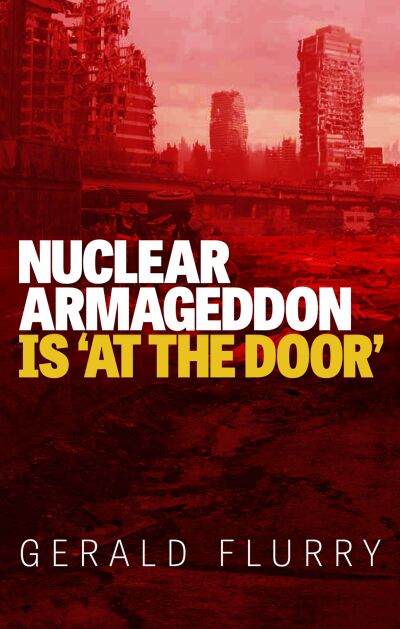
Wars and rumors of wars: Jesus Christ prophesied that the time preceding His return would be filled with war. The fact that a conflict of this magnitude is being overshadowed by yet another war points to the calamities He prophesied. Learn more in Nuclear Armageddon Is ‘At the Door.’
France Announces Nuclear ‘Joint Exercises’ With Germany
France and Germany announced a major step toward deeper nuclear deterrence cooperation on Monday, with Germany set to participate in French nuclear exercises and conduct joint visits to strategic sites as part of a new high-level steering group.
French President Emmanuel Macron, speaking at a submarine base in Brittany, outlined plans to expand France’s nuclear arsenal and extend “forward deterrence” to European allies—including through joint drills.
- “Those who want to be free must be feared. Those who want to be feared must be strong,” Macron said.
- He also announced “the temporary deployment of elements of our strategic air forces to allied countries,” but said that the use of the nuclear weapons will be solely France’s decision.
Details are deliberately kept vague. France is not part of nato’s nuclear planning group. Even the U.S. could be kept in the dark about the strategies and abilities France and Germany are coordinating until they are used.
According to a joint declaration yesterday, Germany’s participation in French nuclear exercises this year will be conventional in nature.
- The two partners will also establish a high-level nuclear steering group to optimize the combination of conventional, missile defense and French nuclear capabilities.
- The statement claims, “This Franco-German cooperation will add to, not substitute for, nato’s nuclear deterrence and nato’s nuclear sharing arrangements, to which Germany contributes and will continue to contribute.”
Germany consistently claims it is acting in agreement with nato interests, yet its actions undermine the strength of the alliance, which was originally established to keep its military down.
As Trumpet editor in chief Gerald Flurry warned in “France’s Deadly Ignorance About Germany”: “France under Macron is wholeheartedly supporting a European military with nuclear weapons. But little does France know to what end Germany plans to use this power!”
IN OTHER NEWS
Rheinmetall closes shipbuilding deal: Germany’s largest weapons manufacturer completed its purchase of shipbuilder nvl on Saturday. With this acquisition, Rheinmetall will create a “German systems house for the development and manufacture of state-of-the-art navy and coast guard vessels, as well as maritime autonomous surface systems,” according to its Monday press release. Rheinmetall is becoming a “one-stop shop” for weapons systems and platforms; it expects sales in its new shipbuilding division to rise by 30 percent annually. Rheinmetall’s ongoing expansion is concerning to those who remember the firm’s dark history.
Will Canada surrender Vancouver? The Canadian government signed three agreements with the Musqueam Indian Band recognizing “their aboriginal rights” on their “traditional territory,” which essentially consists of the Vancouver metropolitan area. The band was granted greater control over fisheries and a “nation-to-nation” relationship with Canada.
SCOTUS: Schools can’t hide ‘gender change’ from parents: Yesterday, the U.S. Supreme Court ruled that parents have the right to know if their child is pretending to be the opposite sex at school. In a 6-3 order, the court said that the student privacy policy enforced in California infringes on parents’ rights and the free exercise of religion. Lower court litigation is ongoing.