

Is Iran’s Regime Finished?
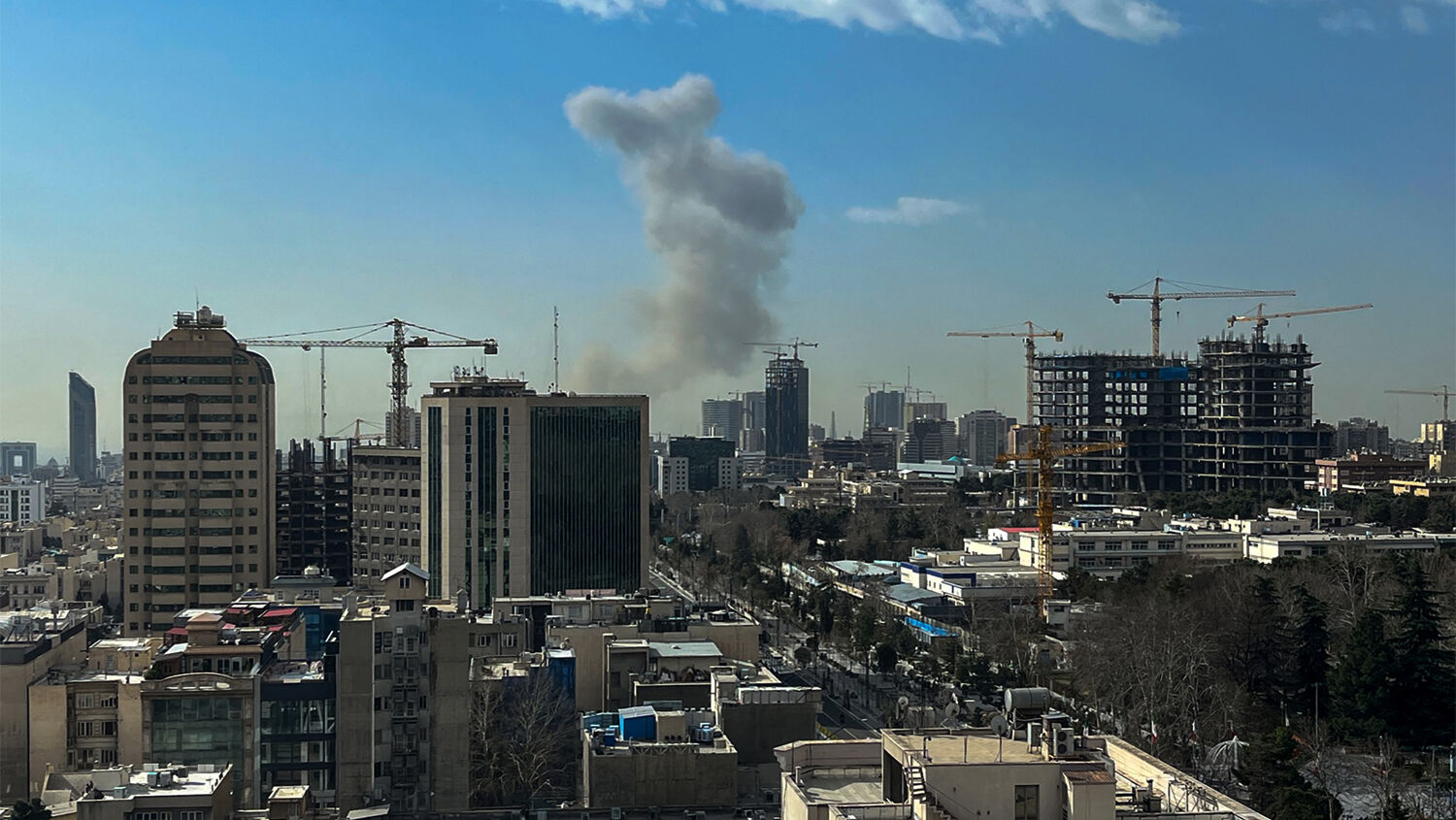
Operation Epic Fury began in the early hours of this morning with explosions across Iran. Some of the first strikes targeted the offices of Supreme Leader Ali Khamenei.
Israeli Prime Minister Benjamin Netanyahu says Khamenei is “gone,” his body found in the rubble of an Israeli attack. Iranian Revolutionary Guard Corps Commander Mohammed Pakpour and intelligence chief Esmaeil Khatib are also dead, according to the Israel Defense Forces.
Iran claims Khamenei is still alive. An Internet blackout makes it hard to accurately tell how the bombardment is going.
The major question hanging in the smoke-filled air is: What will happen next—not just to Iran’s regime but, most importantly, to Iran’s violent foreign policy?
For 46 years now, since the Islamic Revolution, Iran has been living in a fever-dream of repression, ideological extremism and violence. Is it about to wake up? Is Iran about to return to the era of the shah—its pre-revolution, pro-Western glory days?
Those who have followed the Trumpet for years know we have expected Iran to get more aggressive and more pushy. Were we wrong?
The Prophesied Conclusion
Biblical prophecy says much about Iran’s role in the end time. The Trumpet’s editor in chief has pointed to these prophecies for over three decades. Gerald Flurry wrote the booklet The King of the South in 1996—before Iran had any real power beyond the nation. Daniel 11:40-43, clarified and amplified by other prophetic passages, indicate that Iran will be a formidable power leading a confederation of nations. Its role as this end-time “king of the south” informs us of how we can expect recent dramatic events to unfold.
For years, the Islamic Republic has increasingly shown itself able to fill this prophesied role. The Islamofascist regime of Khamenei—with its fanatical ambition to spread its radicalism, its recruitment of proxies, its projection of power into other nations, its pursuit of weapons of mass destruction, its pushy belligerence—all fit the prophetic descriptions ideally.
Even Iran’s loss of influence in Gaza, Lebanon and Syria was anticipated—not by experts but by prophets. Mr. Flurry has foretold for decades, based on specific Bible prophecies, that each of these would be stripped from Iran’s control. Daniel 11 shows that Iran’s alliances would shift to include Egypt, Libya and “Ethiopia” (likely comprising the nations bordering the Red Sea).
However, a crippled Iran with a fallen regime would be far less likely to carry out the work of this “king.” A nation too weak to command respect from neighbors seeking to rally around a strong, ascendant power would not fulfill the prophecy. A regime lacking the weapons to push and provoke other nations into war would not. The return of a pre-revolutionary, pro-Western Iran certainly would not.
How, then, will a radical Iran emerge from its current tribulation with the power and aggression this prophecy describes?
Premature Victory
Last summer, United States President Donald Trump launched what appeared to be a devastating attack against Iran. B-2s dropped 30,000-pound munitions on the heavily fortified Fordow site and Natanz while cruise missiles from submarines targeted Natanz and Isfahan. Trump, in a televised speech from the White House, declared the strikes a complete success and warned that if Iran did not seek peace, “future attacks would be far greater and a lot easier.”
The cumulative firepower directed against Iran was awesome. And amid it all, talk went beyond simply degrading Iran’s nuclear capabilities and turned into fierce calls for the Israelis, the Americans or the Iranians to bring down the entire Islamist regime.
Benjamin Netanyahu openly advocated for this outcome, urging the Iranian people to throw off the oppression of the dictatorship and seize the moment for freedom. At one point, Israel had an opportunity to assassinate the supreme leader, but Trump vetoed the plan. Had he given Israel free rein then, it seems Khamenei would have been gone a while ago.
Yet within two days of America dropping bombs, Trump unilaterally announced a ceasefire. He labeled the conflict the “12-day war” and claimed that Iran’s nuclear program was “totally and completely obliterated.” He ignored Iran’s retaliatory measures and offered the nation a bright future. President Trump was eager to put the whole nasty business behind him as quickly as possible.
The damage to Iran’s nuclear program was significant. But while it delayed Iran’s nuclear program, it did not destroy it. The U.S. has estimated that it set Iran back about two years. Just over a week ago, President Trump’s envoy Steve Witkoff said Iran was “probably a week away from having industrial-grade bomb-making material.”
Trump has shown himself willing to use American force in short, sharp bursts. But it will take far more than that to reshape Iran’s role in the Middle East and worldwide. And the president has no intention of embroiling the U.S. in a protracted effort to do that. He has been fiercely critical of America’s failures in Afghanistan and Iraq, and he knows that Americans have no stomach for adding Iran to that list.
Even taking out Khamenei is not enough, of itself, to fundamentally change Iran’s role.
It is worth remembering how the wars in Iraq and Afghanistan started: with shocking, awesome displays of American firepower that rapidly deposed oppressive and unpopular regimes. Just three weeks into the Iraq war in 2003, “Baghdad had fallen … with much less resistance than most commentators had expected,” Greg Priddy wrote in the National Interest. “… A significant percentage of Iraq’s population was clearly glad to be rid of the Saddam regime. Less than a month later, President George W. Bush stood on an aircraft carrier deck before a banner reading ‘Mission Accomplished.’ Wars take time to play out, and it is seldomly clear early on how history will ultimately judge them. Now, we all know who won that war: Iran” (June 13, 2025).
Will we see another premature declaration of victory from President Trump? Israel wanted to finish the job, but the U.S. held it back. America ultimately did not augment Israel’s firepower—it restrained it. It’s likely President Trump will again compel Prime Minister Netanyahu to assert “mission accomplished” when the mission is not accomplished.
What Prophecy Says
It is unclear exactly how this situation will play out. Often events take turns very different from what we expect. But biblical prophecy is clear about the outcome. As impressive as Israel’s accomplishments have been, and as much as one may wish to see the demise of this violent, oppressive regime, somehow Iran is going to preserve its considerable power—as well as its extremist temperament and aspirations.
Watch what happens. In the end, the way America handles Iran will be a powerful lesson in the danger of failing to deal completely with evil.
Study the history of the Jewish state’s and America’s ancient forefathers in biblical Israel. They failed to obey God and eliminate the threats they faced in the Promised Land, and those threats led ultimately to their doom. You can read this tragic history in the book of Judges.
In our day, it may well end up being the fault of Donald Trump. When he took office last year, he prevented Israel from finishing the job against Hamas by initiating negotiations with them. (See Gerald Flurry’s article “President Trump Betrayed Israel”). Last summer he told Israel not to kill Ayatollah Khamenei and ordered it to cease fire. He delayed aiding Iran’s protesters in the heat of their resistance, continuing negotiations instead. Does Trump finally see that the solution is not negotiation?
Several details of “the king of the south” prophecy have already been fulfilled. As you can read in The King of the South, prophecy accurately told us to expect Iran to lose its influence over Gaza. Israel’s success over Hamas accomplished this. Prophecy foretold Lebanon slipping from Iran’s orbit. Israel’s neutering of Hezbollah paved the way for this to occur. Prophecy also said Iran would lose Syria. That was dramatically fulfilled when the Assad regime fell in December (“Syria’s Fall—Another Key Prophecy Fulfilled”).
Now prophecy tells us to expect Iran to build a new “axis of resistance” with Egypt, Libya and Ethiopia. This is no minor achievement. It will require strength, authority and strategic coherence from the Iranians.
True, the Israeli-American attack may have ended Khamenei’s leadership. He reportedly named three senior clerics as potential successors if he were killed. The notion that Khamenei’s deposition or death will bring about a moderate, West-friendly government in Tehran—as though the regime represents a mere fringe ideology—is wishful thinking.
One could actually see Iran rising from its cratered state with strengthened credibility. Historian Victor Davis Hanson said in a video message last summer, “If this war should end with the Iranian regime intact and the elements of its nuclear program recoverable, then, in some ways, it will be all for naught. And people will make the necessary adjustments in the Middle East. And it won’t be necessarily, Well, Iran is still very weak. They’ve lost all their terrorist surrogates. They have no air defenses. They’ve lost their media. … It will be more like, [Wow], Iran survived everything that Israel and, by association, the United States threw at it. It’s indestructible” (Daily Signal, June 18, 2025).
If the 86-year-old Khamenei is gone, we can expect his successor to walk in his footsteps. In fact, it may require a fresh face to redirect and advance Iran’s cause in the way prophecy outlines.
We may even see someone take power who seems more amenable to the West, someone willing to hold talks, to negotiate, to profess cooperation and to make ostensible concessions. This may provide a strategic window for him to construct that prophesied new coalition.
Prophecy also shows Iran will continue to attack Israel. Zechariah 14 describes the suffering Jerusalem will soon experience. It begins when “half of the city shall go forth into captivity.” This suggests violence, Mr. Flurry wrote. “The Palestinians, backed by Iran, will almost certainly do this violent deed” (“Jerusalem Is About to Be Cut in Half”).
“The fall of half of Jerusalem triggers a violent and massive chain reaction that leads to Christ’s Second Coming,” Mr. Flurry continued. God will allow that violence—and will use it to help mankind turn from the way of life causing all suffering and to humble man to the point that he is willing to let God teach him the way to peace.
Lack of that knowledge, and an unwillingness to go to God to learn will cause a lot of death and destruction in the time ahead. Trumpet executive editor Stephen Flurry called it “The Fatal Flaw in Trump’s Foreign Policy” (May-June 2025). “President Trump is a courageous fighter against those who attack him openly, but he is very susceptible to manipulation and flattery,” he wrote. “This is a dangerous weakness.” His handling of Iran, while demonstrating a certain courage and strength, also highlighted this dangerous weakness. This is leading to the most powerful demonstration in history of humanity’s need to look to God, not man, to solve its problems.
Prophecy shows that the recent offensive against Iran will fail to eliminate the threat. It also shows that this failure will serve as a potent example to another power on how to attack Iran and succeed.
The King of the North
Daniel’s prophecy describes the Iran-led coalition provoking “the king of the north,” a multinational European empire.
In the end, the Iran that emerges will be more than capable of embroiling the world in a devastating war. Iran will attack Europe with a violent and bloody push. Much violence and death is yet to come from this radical nation.
Even now, Iran still has weapons in its arsenal. It has closed the choke points in the Strait of Hormuz. It could use its proxies to do the same to the Bab el-Mandeb. It could mobilize Shiite militias in Iraq to attack U.S. bases, drawing America into another insurgency war. It still has foreign terrorist cells—many throughout the West—that it could activate. It may have a dirty bomb, or several bombs, in undisclosed locations.
Deploying any or all these options would raise the wrath of the world and bring it down on Iran’s head. But it is exactly this type of “push” that is emphasized in Daniel’s prophecy. This provocation could be an act of desperation, but it will certainly require power—and nuclear capacity could be involved. It will happen at some point precisely as Daniel foretells.
When the king of the north comes against Iran, it will not make the same mistake Israel and America did, deploying targeted strikes and strategic assassinations. No—“At the time of the end, the king of the south shall attack him, but the king of the north shall rush upon him like a whirlwind, with chariots and horsemen, and with many ships. And he shall come into countries and shall overflow and pass through. He shall come into the glorious land. And tens of thousands shall fall …. He shall stretch out his hand against the countries, and the land of Egypt shall not escape. He shall become ruler of the treasures of gold and of silver, and all the precious things of Egypt, and the Libyans and the Cushites shall follow in his train” (Daniel 11:40-43; English Standard Version).
These verses describe unimaginably violent warfare that is just ahead of us. It will lead, in fact, to “a time of trouble, such as never was since there was a nation even to that same time …” (Daniel 12:1). This is a nuclear World War iii!
God is warning us in advance! We must see His hand in these events as they unfold and use that as motivation to turn to Him. He is alive and active today. He is guiding world events to fulfill His prophecies, and soon He will intervene to effect regime change—not just in a single oppressed Middle Eastern nation—but in every country on Earth. He will replace the misguided, corrupt governments of this world with truly righteous rule.
Only then will the peace that America’s president yearns for truly be established.


