

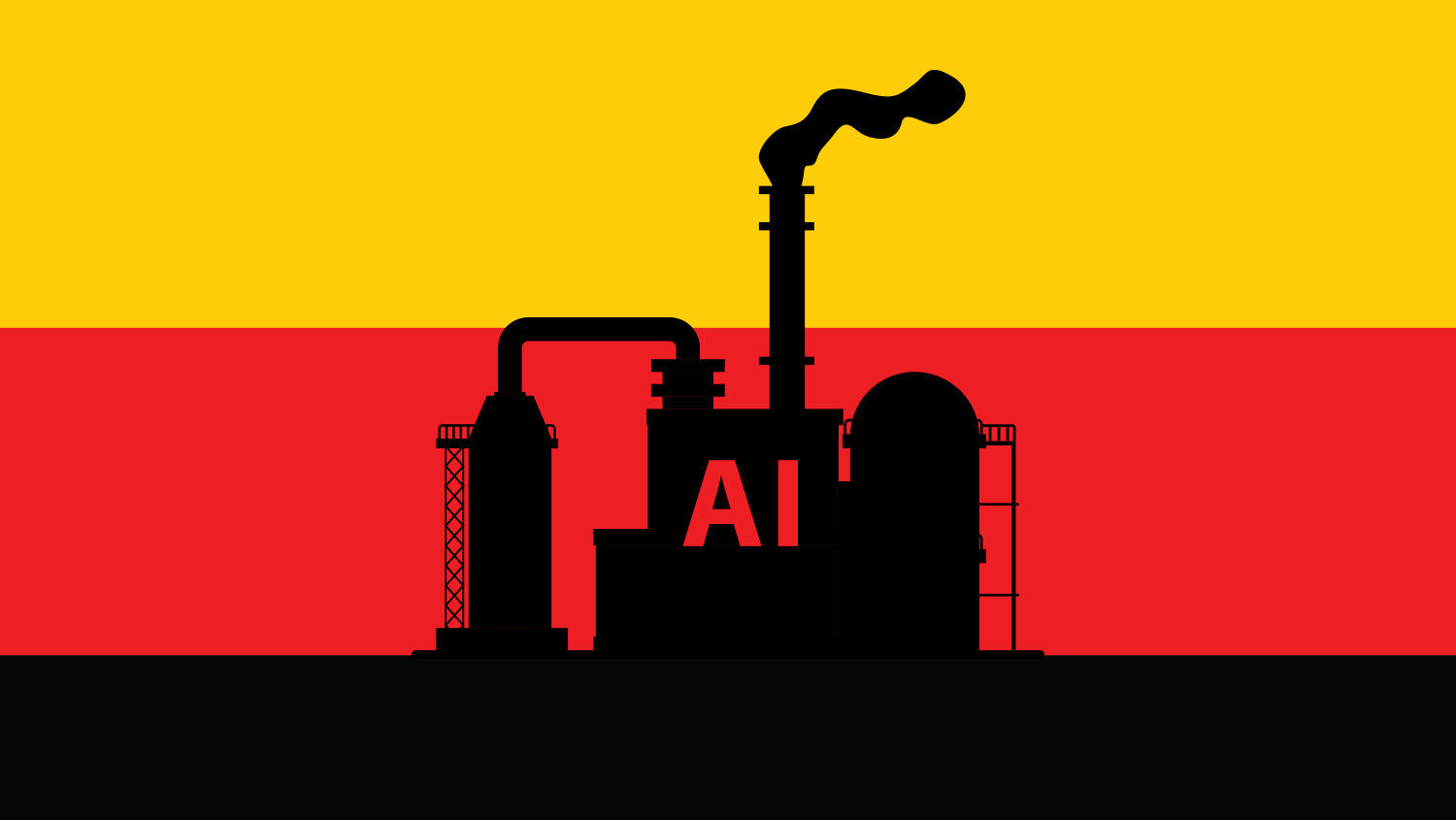
Industrial AI: Germany’s Strategy to Take the Lead
Germany is focusing on industrial artificial intelligence, and German engineers might be able to build it into more than just a regional AI power. In “Industrial AI: Germany’s Best Chance to Take on U.S., China?” Deutsche Welle wrote yesterday:
Germany launched a major artificial intelligence (AI) project this month to cut its reliance on U.S. providers of high-performance computing and data processing—a move seen as helping Europe to control its own AI future.
In AI investments, Germany is behind. But its well-established industry gives it an opportunity to take the lead in industrial AI.
On February 4, Germany’s Deutsche Telekom opened one of Europe’s largest AI factories in Munich with 14 high-density pods, each providing the performance of a 1,000-square-meter data center in just 80 square meters.
- The “Industrial AI Cloud” facility took only six months to plan, build and launch, compared to the usual 12 to 24 months, and increases Germany’s national computing capacity by a jaw-dropping 50 percent.
- The facility’s nearly 10,000 nvidia Blackwell gpus provide enough computing power for all 450 million EU citizens to use a Chatgpt-stye AI assistant simultaneously, Deutsche Telekom says. But “the Industrial AI Cloud isn’t aimed at individual consumers,” Deutsche Welle wrote. “Instead, it targets Germany’s industrial heavyweights, including automakers, machinery manufacturers and robotics companies.”
“We are investing in AI, in Germany as a business location and in Europe …. We are proving here that Europe can do AI,” Deutsche Telekom ceo Tim Höttges said.
This is exactly what former German Economics Minister and Defense Minister Karl-Theodor zu Guttenberg said Germany must do. In a television interview with Puls 4-Talk on July 28, 2019, he said:
Artificial intelligence is still something Europe could shape. We have a well-established industry, which still has to become far more connected to the new technologies. But once this happens, it will develop a totally different field of power than a purely technological or digitalization firm.
“Industrial AI allows Germany to play to its strengths: designing smaller, specialized AI models that utilize more than a decade of data from Germany’s small and medium enterprises, known as the Mittelstand,” Antonio Krüger, ceo of the German Research Center for Artificial Intelligence, told DW.
- “German firms often try to make their AI products perfect before rolling them out,” Ishansh Gupta, bmw’s AI and digitalization lead, told DW. “China and the U.S. roll out imperfect versions to help them improve, learning from user feedback.” This could mean that Germany already has the capacity to further expand—rapidly—its AI computing power, even as it watches the Chinese and the Americans and learns from their mistakes and successes.
Germany has a strategy to take the lead in this sector of AI use, and Guttenberg, who has advocated for it, may play a critical role in it as Trumpet editor in chief Gerald Flurry explained in “The Unknown Future of Artificial Intelligence.”


