

Meet Yahya Sinwar’s Trump-Appointed Successor
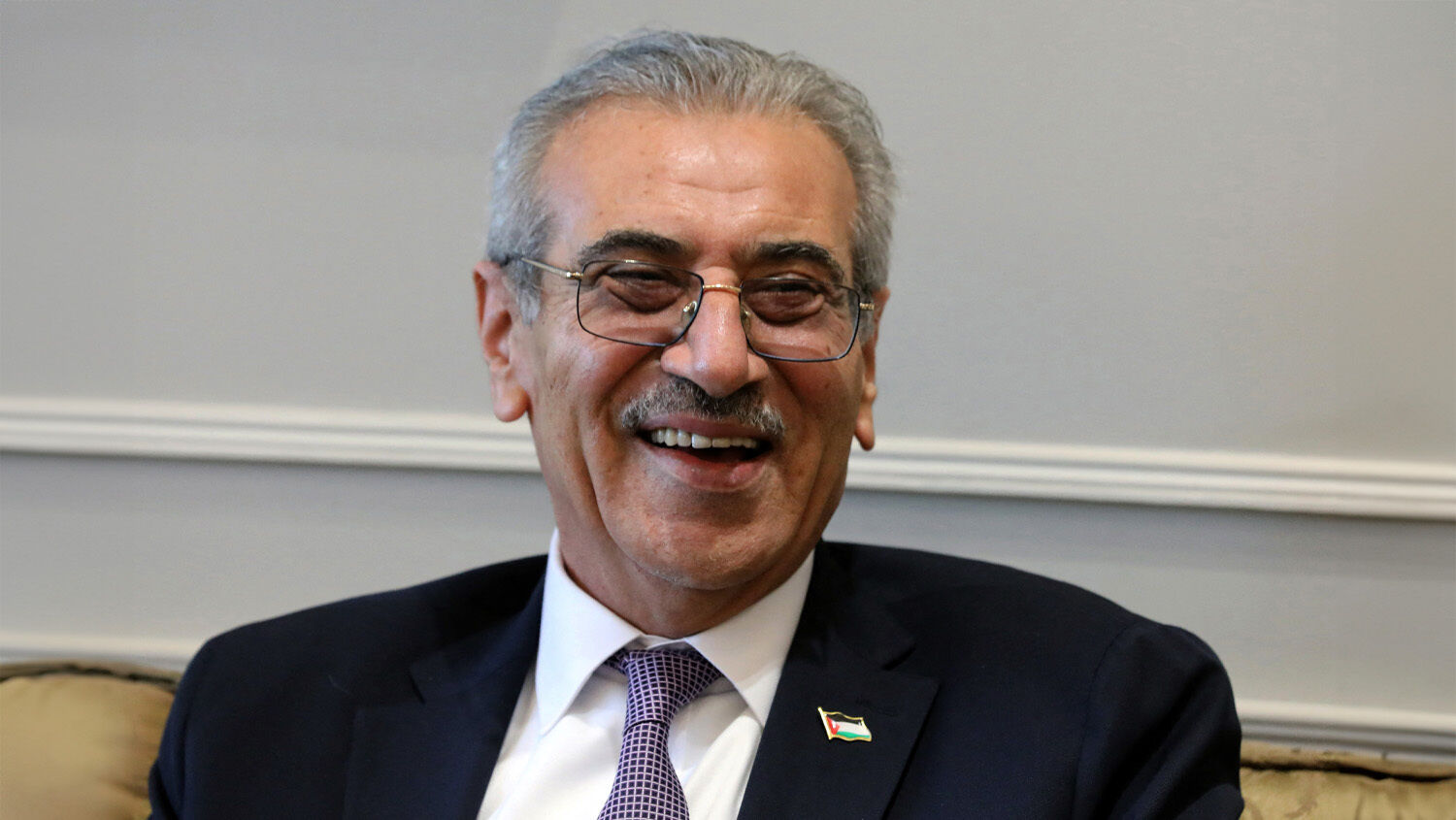
United States President Donald Trump got his pick for Gaza’s next ruler. His Board of Peace appointed Ali Shaath as chief commissioner of the National Committee for the Administration of Gaza.
Israel and Hamas still control different parts of Gaza, so the National Committee doesn’t govern anything yet. The U.S. and Israel are still arguing about which countries should be allowed to station peacekeepers in Gaza. But Shaath’s selection shows the type of leader President Trump is looking for.
Gaza’s last ruler, Hamas’s Yahya Sinwar, launched the largest massacre of Jews since the Holocaust in 2023. Will Shaath be better? That answer could affect the world.
Who Is Ali Shaath?
Shaath was born in 1958 in Khan Yunis, formerly Gaza’s second-largest city. He earned a civil engineering degree before becoming a professor in Scotland in the early 1990s. In 1995, he started a career within the Palestinian Authority, the quasi-government established by the Oslo Accords. That year, PA President Yasser Arafat appointed Shaath as assistant deputy minister in a minor ministry. From there through the 2000s, he worked in various PA departments relating to construction and land development.
This experience is probably why he got his current job. He wants to remove an estimated 75 million tons of debris and unexploded ordnance within three years, including repurposing rubble for land reclaimed from the sea. He claimed Gaza “can return to a better state than it was seven years ago.”
Is He a Radical?
Arafat led the Palestinian terror movement for decades. Shaath’s career in the PA began under Arafat, although apparently they had little more than a professional relationship.
Shaath was not a member of Arafat’s Fatah group or any other terrorist group, but his family has heavy connections to Fatah. Most members of the Shaath clan are or were members of Fatah.
In 2005, Shaath was a member of the PA’s Final Status Negotiations Committee working to implement a two-state solution. The PA would never have placed somebody on that committee who would compromise with Israel for peace.
In January 2025, Shaath spoke at the third annual Palestine Forum, which focused on “The Genocidal Israeli War on Gaza: Scenarios for the Day After.” He started his lecture by saying, “For red freedom there is a door, knocked upon by every bloodstained hand,” quoting a poem celebrating a revolt against French colonizers. He outlined different scenarios for postwar Gaza, and he said the U.S. plan was “dangerous talk.”
English-language media often brand Shaath as little more than a “technocrat.” He may not be a card-carrying member of a terrorist group or a raving cleric, but nor is he looking for neighborly peace and mutual recognition with Israel. He has advertised his opposition to a U.S.-managed Gaza, yet now the U.S. is trusting him to manage Gaza.
Gaza’s Future
Psalm 83 records the alliance of various Middle Eastern peoples so “that the name of Israel may be no more in remembrance” (verse 4). “Israel” includes not only the State of Israel but also the United States (request a free copy of Herbert W. Armstrong’s The United States and Britain in Prophecy to learn more). The alliance is comprised of “the tabernacles of Edom, and the Ishmaelites; of Moab, and the Hagarenes; Gebal, and Amon, and Amalek; the Philistines with the inhabitants of Tyre; Assur also is joined with them …” (verses 6-8).
Neither biblical nor secular history records such an alliance ever forming. This has led Trumpet editor in chief Gerald Flurry to label this a prophecy for today. Mr. Flurry writes in his free booklet The King of the South:
You must know who the modern descendants of these peoples are to understand just how timely and relevant this prophecy is. Here are the modern names of some of these nations, as taught at Ambassador College under Herbert W. Armstrong: The Ishmaelites are Saudi Arabia; Moab and Ammon both refer to Jordan; the Hagarenes anciently dwelled in the land known as Syria today; the Philistines represent the modern Palestinian Arabs; Gebal and Tyre are Lebanon. One people listed here that lies outside the region is Assur. At one time, this was the capital of Assyria, which is the term that biblical prophecy uses for modern-day Germany.
As his booklet elaborates, the book of Daniel prophesies that this alliance will form against a rival, Islamist alliance headed by Iran. Gaza under Hamas was an Iranian proxy for years. But this prophecy led Mr. Flurry to predict Iran would lose control of Gaza. He wrote in the previous edition of The King of the South: “The Philistines—the Palestinians of Gaza and even those in the West Bank—will shift their alliance to Germany as well. … There may soon be some significant power shifts in Gaza.”
“Right now,” he wrote in the booklet’s current edition, “Gaza’s immediate future is unclear. But whoever reconstructs the rubble that is the Gaza Strip, it is clear that the main obstacle to Gaza aligning with Germany—Hamas’s undisputed stranglehold on the territory—is now history. Gaza is no longer a part of Iran’s proxy empire.”
Germany has yet to play a prominent role in forming this alliance. But America is unintentionally laying the groundwork for that role. President Trump has done much to empower many of the Psalm 83 alliance members. He has spearheaded the integration of the new Islamist Syria into the international community. He has strong ties with Saudi Arabia and other Gulf Arab monarchies.
Gaza was one of the Philistines’ major cities. In this case, President Trump is literally trying to create a government in the Philistines’ ancient heartland. Through the National Committee for the Administration of Gaza, he may have an even greater say in what the future Gaza looks like than Israeli Prime Minister Benjamin Netanyahu. As a U.S. official told Axios on January 17, Gaza “is our show, not [Netanyahu’s] show. We managed to do things in Gaza in recent months nobody thought was possible, and we are going to continue moving.”
Psalm 83:3 says the alliance will take “crafty counsel,” or intimate backroom dealings, against the nations of Israel. Under Hamas, Gaza was ruled by raving madmen who made their bloody desires no secret. A government led by someone like Shaath wouldn’t be overtly radical like Yahya Sinwar’s, but it would be made up of people who would take “crafty counsel” with like-minded world leaders to wipe out the name of Israel.
Even if Shaath doesn’t become the Gazan head to join this betrayal, America’s sponsorship of this new Gaza is at its own peril.
To learn more, request a free copy of The King of the South.


