

‘Speak Softly and Carry a Big Stick’
After years of timid foreign policy under Barack Obama and Joe Biden, United States President Donald Trump is flexing geopolitical muscle and asserting American power against adversaries and even allies.
After U.S. Delta Force troops arrested Venezuelan dictator Nicolás Maduro on January 3, President Trump told reporters that the presidency would once again enforce the Monroe Doctrine of keeping Asian and European powers out of the Western Hemisphere. The Monroe Doctrine lasted from President James Monroe in 1823 to President Barack Obama in 2013. President Trump has redubbed it the “Donroe Doctrine” and called for the U.S. to reclaim the Panama Canal and formally annex Greenland.
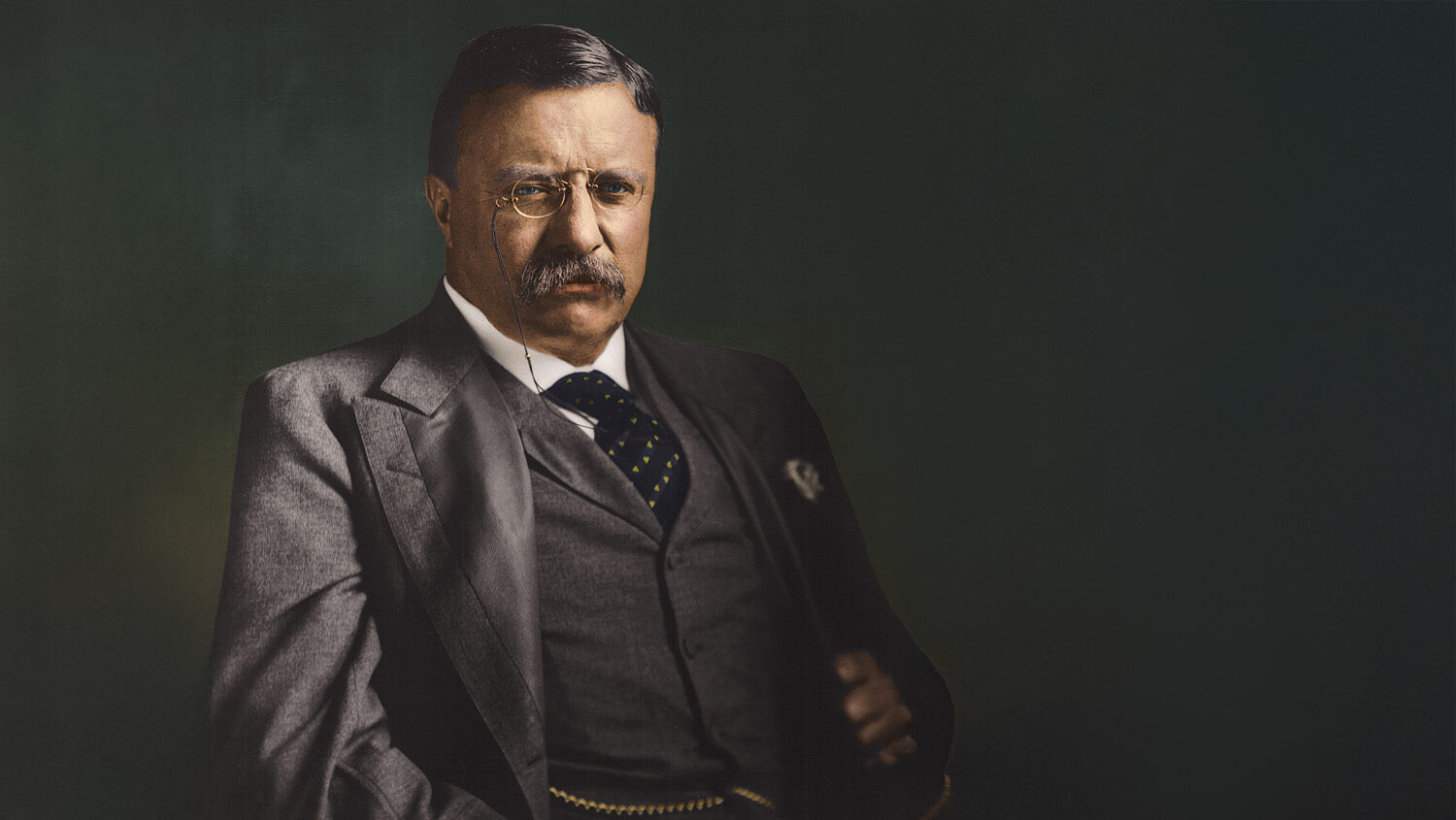
These statements prompted many news outlets to compare President Trump with President Theodore Roosevelt, who famously used “gunboat diplomacy” in Latin America. The two presidents, both larger-than-life personalities from New York, share important similarities: both loving the “bully pulpit,” opposing the political establishment, and intending to increase American power. Yet in one important way, President Trump differs from President Roosevelt and could learn a crucial lesson from his example.
On Sept. 2, 1901, weeks before an assassination unexpectedly elevated him into the presidency, Roosevelt explained an important truth about diplomacy. “A good many of you are probably acquainted with the old proverb, ‘Speak softly and carry a big stick—you will go far,’” he told his audience at the Minnesota State Fair. “If a man continually blusters, if he lacks civility, a big stick will not save him from trouble. And neither will speaking softly avail, if back of the softness there does not lie strength, power. In private life, there are few things more obnoxious than the man who is always loudly boasting; and if the boaster is not prepared to back up his words, his position becomes absolutely contemptible. So it is with the nation. It is both foolish and undignified to indulge in undue self-glorification, and above all, in loose-tongued denunciation of other peoples. Whenever on any point we come in contact with a foreign power, I hope that we shall always strive to speak courteously and respectfully of that foreign power.”
Just over a year later, Roosevelt was president, a crisis emerged, and this wisdom was put to the test.
From December 1902 to February 1903, Italy, Germany and Great Britain imposed a naval blockade on Venezuela after it refused to pay its debts to these countries. President Roosevelt did not oppose this, as long as these European powers didn’t seize Venezuelan territory or try to establish military bases.
When Roosevelt found out that Kaiser Wilhelm ii of Germany intended to seize a Venezuelan harbor and establish a permanent German military base, however, he privately threatened to send a U.S. fleet to Venezuelan waters to attack the German ships. Germany backed down and, alongside Great Britain, formally invited the U.S. to arbitrate their claims against Venezuela. In an effort to spare Kaiser Wilhelm’s pride, Roosevelt didn’t tell the public what happened until 14 years later, when he was calling for the United States to enter World War i as an Allied power to fight the German Empire.
President Roosevelt would have certainly looked more powerful if he internationally shamed Kaiser Wilhelm for trying to seize land in Venezuela and gloated about his diplomatic victory. But he knew that such bluster against a megalomaniac like Kaiser Wilhelm would hurt America’s relationship with Germany and possibly invite future retaliation. So Roosevelt spoke softly, carried a big stick, and allowed the kaiser to save face and take the easy way out. This strategy worked brilliantly.
President Trump could learn from this example. He is facing similar circumstances with both Russia and China trying to infiltrate Latin America and the Arctic. Yet rather than standing up as a protector, he has humiliated the Danes and others. He has demanded that Denmark sell him Greenland, slapped tariffs on the nations that said it was not for sale, and reminded the world that using the U.S. military was an option.
None of this was necessary. A 1951 treaty with Denmark grants the U.S. extensive rights to establish and operate military bases in Greenland, build infrastructure, and freely move military assets. So if President Trump wanted to speak softly and carry a big stick, he could have politely offered to protect the Arctic from Russia and China before proceeding to move U.S. military resources into Pituffik Space Base.
Instead, President Trump chose to spew forth continual bluster, self-glorification and loose-tongued denunciation of other peoples. When reporters asked him why he could not defend Greenland from Russia and China under the 1951 Defense of Greenland Agreement, he said, “You need the ownership to defend it. You can’t defend it on a lease. Who … wants to defend a license agreement, or a lease?”
Such comments prove to the world that America does not honor its treaties. Because the U.S. military is currently stronger than all the militaries of the European Union combined, President Trump may end up getting what he wants in Greenland. But the cost of his lack of civility will be European resentment.
Already, EU officials are talking about using the $8 trillion in U.S. bonds they hold as a weapon against the United States economy. So America’s big stick may not save it from trouble much longer.
“A soft answer turns away wrath, but a harsh word stirs up anger” (Proverbs 15:1; English Standard Version). President Trump is pouring forth “harsh words” and making enemies all over the world.
Time will prove this to be an ill-advised strategy.


