

Will the Board of Peace Fight Itself?
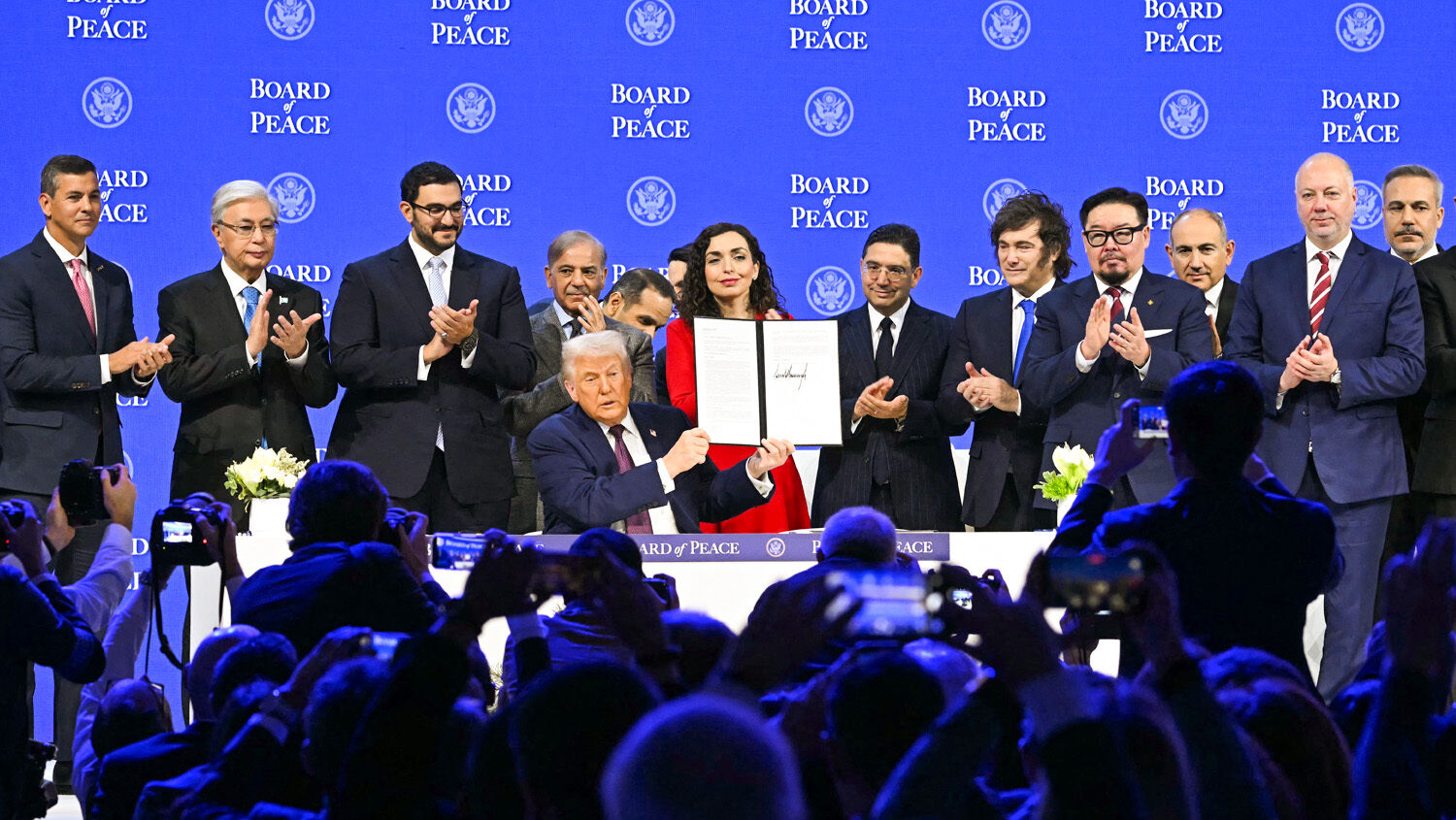
United States President Donald Trump hosted an inauguration ceremony yesterday for his Board of Peace in Davos, Switzerland, while attending the World Economic Forum. A look at the inaugural list of members indicates that conflict has been sown into the board from its founding.
- Originally formed as a governing body for Gaza after ousting the Hamas terrorist regime, the organization’s scope has been broadened to the entirety of the volatile Middle East and around the world in conjunction with the United Nations.
Signatories include Argentina, Armenia, Azerbaijan, Bahrain, Hungary, Israel, Kosovo, Pakistan, Qatar, Turkey, the United Arab Emirates and Vietnam. It’s a motley assemblage:
- The United Arab Emirates has a history of sponsoring wars throughout the Middle East, including the current civil war in Sudan.
- Qatar has used its cash and diplomatic leverage to sponsor terrorism, endanger Israel and simultaneously infiltrate high levels of the U.S. government—and it is considering deploying troops to Gaza.
- Turkey is a long-standing adversary of Israel that has repeatedly sponsored Palestinian terrorists and is pushing to deploy Turkish troops to Gaza after Hamas falls and Israel Defense Forces leave.
- Israel has insisted that some of Turkey’s and Qatar’s demands (like placing their soldiers in Gaza) are completely unacceptable.
Other potential board members are perhaps even more concerning. Trump said Russian President Vladimir Putin has accepted an invitation to join, although Putin has not yet confirmed this. Canadian Prime Minister Mark Carney said Canada would also join after scrutinizing some of the details, even as he lambasted President Trump during his speech at Davos and declared the U.S.-led world order to be over.
President Trump often boasts of having brought lasting peace to several conflicts. His actual record is spottier than advertised:
- He said he would end Russia’s war in Ukraine within 24 hours of his inauguration; it still rages 366 days later.
- He said he would bring peace to the Middle East, but nations there are still sponsoring terrorism, Hamas is still armed and controls territory in Gaza, Sudan is still mired in civil war, and Syria is still ethnically cleansing its minorities.
- Ceasefires that the U.S. helped broker between the Democratic Republic of the Congo and Rwanda, and between Thailand and Cambodia, fell apart almost immediately.
The Trumpet featured President Trump’s foreign-policy weakness as our May-June 2025 cover story, with executive editor Stephen Flurry writing, “His efforts to become a ‘peacemaker and unifier’ are hampered by a fatal flaw.” This failed approach to peacemaking will sink the grand ambitions of the Board of Peace.


