

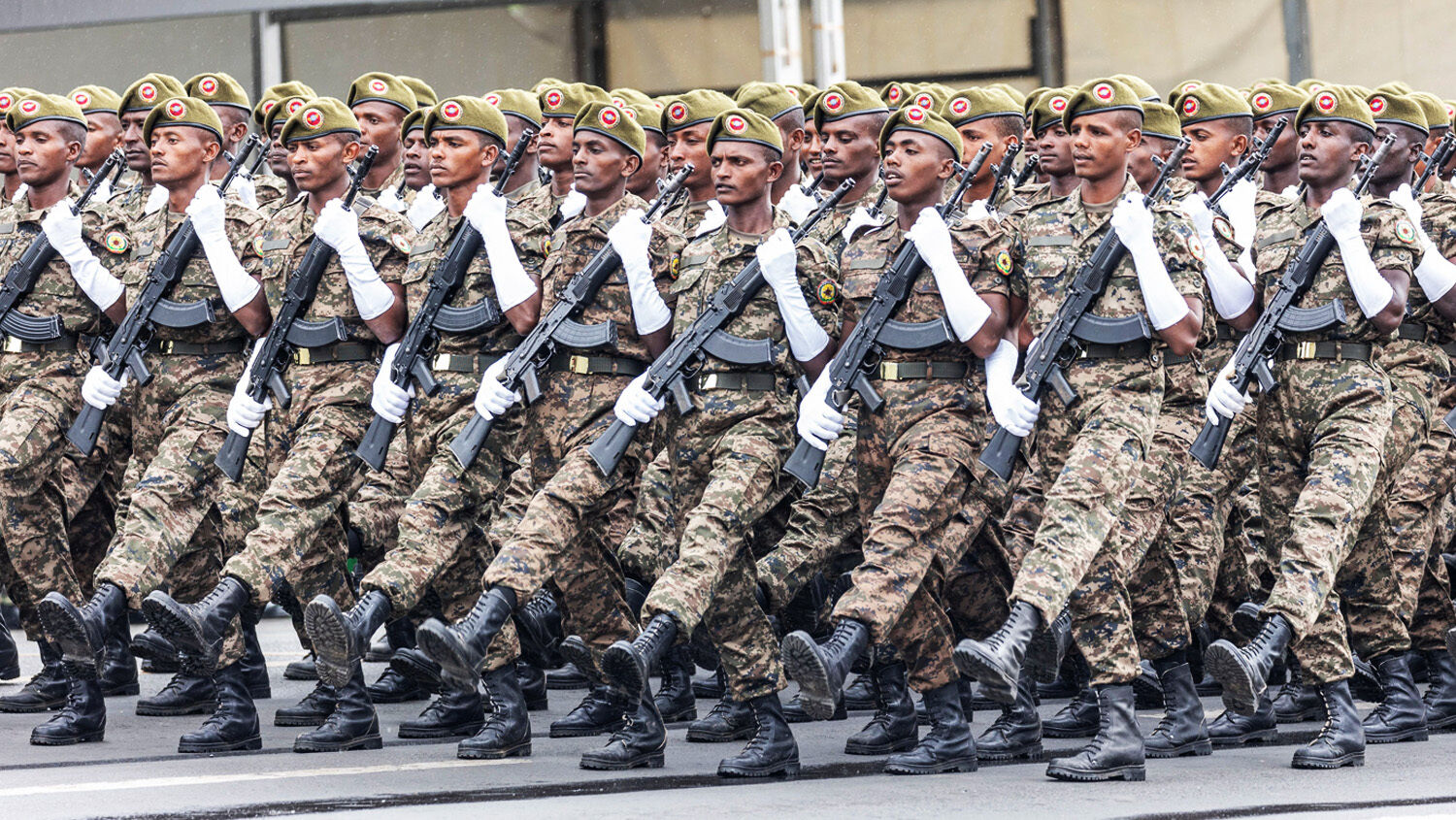
Ethiopia Is in Trouble
Ethiopian politics are about to change forever. The nation faces three crises, each of which may soon pull Ethiopia into the throes of war once again.
Eritrea
One of Ethiopia’s biggest problems comes from the fact that it is landlocked. When Eritrea broke away from Ethiopia in 1993, it took control of Assab, the port where 90 percent of Ethiopia’s trade entered. Eritrea gave Ethiopia access to Assab until the Eritrean-Ethiopian War in 1998. Now Ethiopia has to send at least 90 percent of its trade through Djibouti.
Sending trade through Djibouti costs Ethiopia about $1.6 billion in port fees per year, and Ethiopia’s economy is now vulnerably reliant on the single highway that connects Addis Ababa—Ethiopia’s capital—and Djibouti. Ethiopia has looked for more trade through Kenya and Somalia, but nothing has worked out. Ethiopia has seemingly ditched diplomacy as a way to gain sea access.
On September 1, Ethiopian Prime Minister Abiy Ahmed described the loss of Eritrea as a “mistake” that “will be corrected.” Twenty days later, Field Marshal Birhanu Jula told Ethiopian soldiers they would fight a nation that denies their country access to the sea:
Our population is now 130 million and will grow to 200 million in the next 25 years. How come the interests of 2 million people [in Eritrea] override those of 200 million people? … We will strengthen our defense forces, speed up our development, and secure a sea outlet.
On November 3, Ethiopia’s ambassador to Kenya described Assab as “Ethiopia’s wealth” and said it would be returned “by force.” He said, “The question now is not whether Assab is ours or not, but how do we get it back?” Days later, Ethiopia’s foreign minister also questioned Eritrea’s legitimacy.
Many Ethiopians demand freedom “from the dam to the sea,” referencing the Grand Ethiopian Reservoir Dam and the popular chant for Palestinian independence.
This would likely be a somewhat easy war for Ethiopia. Ethiopia’s $110 billion gross domestic product trounces Eritrea’s $2 billion. Likewise, though Eritrea has never had a formal census, Ethiopia’s population of 135.5 million far exceeds Eritrea’s estimated 2 million to 6 million.
However, there are more factors at play here. Violence is stirring in Ethiopia that could make war with Eritrea much more destructive.
Internal Conflict
Ethiopia may soon be in a full-scale war with two of its major ethnic groups. For decades, Ethiopia was ruled by the Ethiopian People’s Revolutionary Democratic Front (eprdf). This was a comprised of four ethnically-based political parties. These parties represented the Tigray, Oromo, Amhara and southern communities. The Tigrays were the most influential in the eprdf for most of its history, but that changed in 2018 when Amhara and Oromo voters united to elect Oromo leader Abiy Ahmed as prime minister.
In 2020, war broke out between the Oromo government and the Tigray People’s Liberation Front (tplf). Again, the Amhara and Oromo worked together to defeat the tplf.
This backfired on the Amhara. It became clear that the Oromo government had no interest in ruling alongside the Amhara. When Addis Ababa and the tplf made peace in 2022, the Amhara were kept out of the discussions. The peace deal even indicated that territory the Amhara won during the war would be given back to Tigray.
Things got worse when Addis Ababa announced plans to assimilate Ethiopia’s 11 ethnically-based regional defense forces into one federal army. Out of fear this would leave the Amhara defenseless against both the Tigrays and the government, most Amhara soldiers defected to join the Fano—a plethora of small militias loosely united by disdain for Addis Ababa.
The Fano plagued the federal government for years with minor attacks here and there. When the government focused on one Fano group, another would attack elsewhere. The government was left playing whack-a-mole.
But things got much worse for Addis Ababa this year. In May, four major Fano groups announced they would merge and form the Amhara Fano National Force (afnf). Not only has the afnf carried out much more coordinated and large-scale attacks (it’s currently conducting a major offensive), but Addis Ababa has to devote more of its army to fighting insurgencies—instead of preparing for war with Eritrea.
This comes at a terrible time for Addis Ababa. While preparing to fight Eritrea, Addis Ababa is working to crush insurgencies in its most populous region—Oromia—and dealing with spillover effects from three of its neighbors. It has a peacekeeping mission in neighboring Somalia and is bracing for the aftermath of the war in Sudan and looming war in South Sudan.
Worse yet, it seems Addis Ababa will soon find itself in another war with the Tigrays. If the 2022 peace treaty returns Amhara land to the Tigrays, the Amhara won’t accept it. But if it doesn’t, the Tigrays won’t accept it.
However, this Tigray war would likely be much different from the last—and much more difficult for Addis Ababa.
In the 2020 war, the Amhara and Eritrea were on the government’s side. Should another war break out, the afnf and Eritrea would be fighting alongside the Tigrays. Addis Ababa has accused all three groups of working with each other.
Ethiopia’s domestic tensions are a mess right now. But one more major geographic factor must be considered.
Egypt
Many fail to draw attention to this third factor—which is arguably the most important.
Ethiopia is the source of the Blue Nile, which comprises 85 percent of the Nile River’s water. The Nile is essential for Egypt’s survival. Around 97 percent of its water comes from this river.
However, Ethiopia recently dammed the river, giving Addis Ababa significant leverage over Egypt. Slowing the Nile’s flow would cut Egypt off from its most vital resource. Letting too much water pass through would cause flooding in Egypt. Egypt has already accused Ethiopia of “reckless” management of its new dam.
Because of this, Egypt wants leverage over Ethiopia or a favorable government in Ethiopia. During the Tigray war, Egypt was accused of supporting the insurgents. A September 5 article from Horn Review argues that Egypt is militarily encircling Ethiopia by allying with surrounding countries and militias.
On October 30, Egyptian President Abdel Fattah al-Sisi reaffirmed his support for “Eritrea’s sovereignty and territorial integrity.” Should war break out again, Egypt would likely be a major player—even if behind the scenes.
Egypt could unite all these different actors against Ethiopia. Warfronts reported that the only thing unifying the afnf, tplf, Eritrea and other players is a shared disdain for the Ethiopian government. It said: “If that common enemy were to be removed, the glue holding that group together would melt away ….” However, a dominant force funding and leading these separate players could keep them together.
Another factor to consider is that, should war break out, neither side seems able to deliver a decisive victory. But Egypt could make the difference.
The Future
Claims about Egypt’s involvement may seem farfetched, but they could align with Bible prophecy.
The biblical book of Daniel is for our time today. Daniel 12:4 and 9 speak of “the time of the end”—the time Jesus Christ referred to when He said “except those days should be shortened, there should no flesh be saved” (Matthew 24:22). This could only refer to the modern nuclear age.
Daniel 11:40-43 prophesy the destruction of “the king of the south.” Trumpet editor in chief Gerald Flurry has proven that this refers to an alliance of radical Islamist nations or groups led by Iran. Verses 42-43 foretell that Egypt, Libya and Ethiopia will be in this alliance.
But notice how Egypt is mentioned twice in these verses while Libya and Ethiopia are only mentioned once. In his free book The King of the South, Mr. Flurry explains:
The emphasis in Daniel 11:42-43 is on Egypt—then we have Libya and Ethiopia. This shows that Egypt is the big conquest! It is the real power behind Libya and Ethiopia, which suggests that it is going to have a heavy hand in swinging those two nations into the Iranian camp.
Ethiopia’s government is not aligned with Iran today, but Egypt—once it moves firmly into Iran’s camp—will change that.
We can’t know whether Ethiopia’s current troubles will directly lead to this shift, but the tension in the Horn of Africa could have massive prophetic implications. Notably, Eritrea is already moving toward the Iranian camp.
Iran’s growing influence in this region could soon be exploited. Ethiopia will soon be revolutionized.


