

Has Eritrea Joined Iran’s ‘Axis of Resistance’?
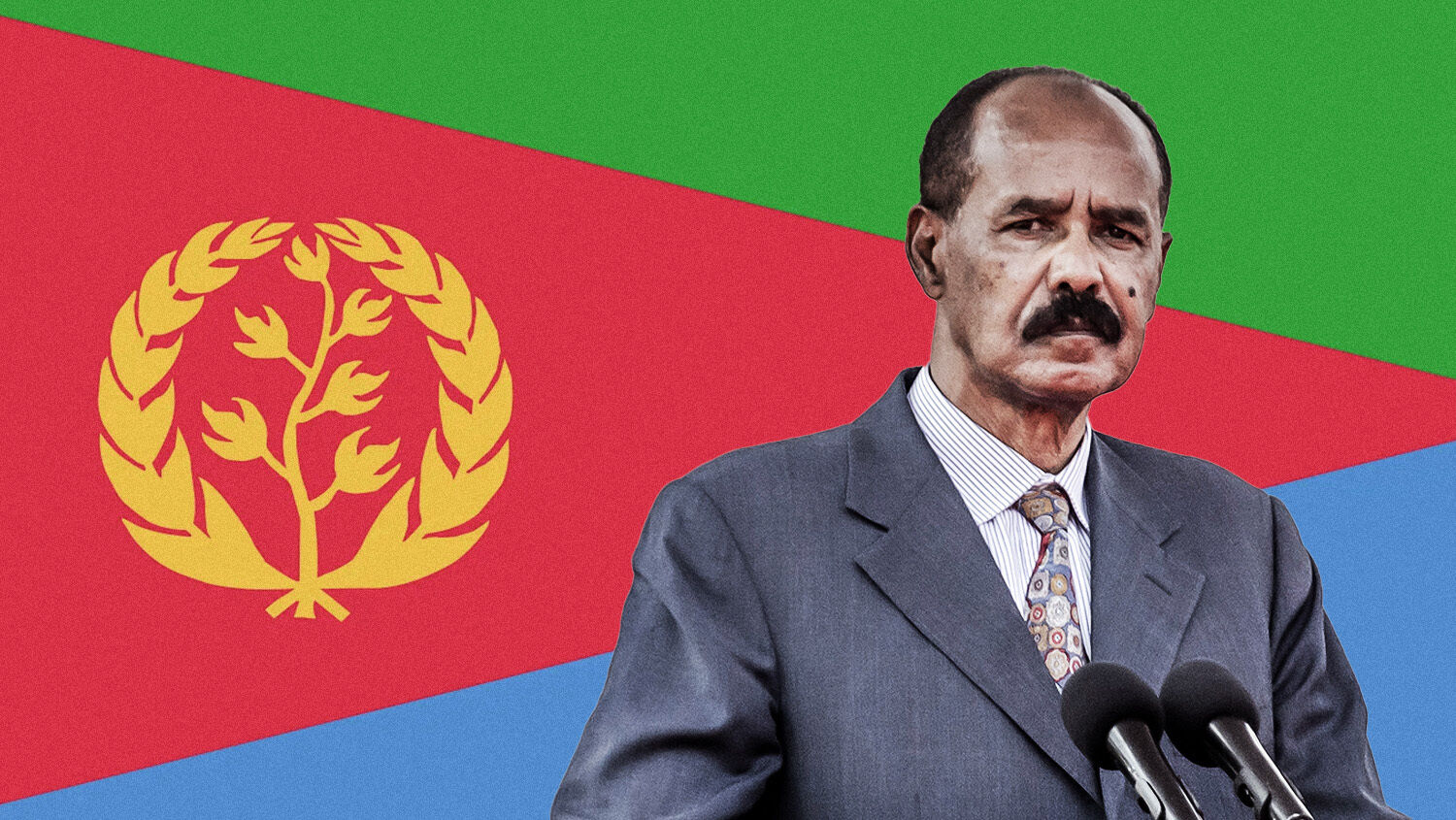
Many Westerners know nothing of the situation in the African country of Eritrea. Isaias Afwerki, Eritrea’s president since 1993, likes it that way. Often dubbed “Africa’s North Korea,” Eritrea is one of the world’s most secretive and dystopian nations. Eritrea has never even held a census, meaning the outside world doesn’t know its population. Reporters Without Borders ranks it at the bottom of its World Press Freedom Index.
But Eritrea’s secrecy doesn’t mean it’s unimportant. The country sits on Africa’s Red Sea coast, opposite Yemen and Saudi Arabia. It intervenes in civil wars in neighboring Ethiopia and Sudan. And one authority indicates Eritrea will soon be involved in events that will impact the entire world.
This hinges on Eritrea’s relationship with Iran. As with everything else in Eritrea, reliable and detailed information is hard to come by. But what is gleanable suggests Eritrea has become part of Iran’s proxy empire.
Looking for Friends
Most countries have an army; in Eritrea, the army has a country. Afwerki runs the country to revolve around its disproportionately formidable armed forces. Even though he regularly sends his army to fight across the border, Afwerki maintains his army for more than national defense. Eritrea has universal conscription for indefinite periods of time, which Afwerki uses to enslave his people. Conscripts are used for forced labor in ventures like Chinese-owned mines, where they experience torture, sexual assault and other degrading treatment. Families of draft dodgers risk incarceration and torture.
Because of this system, most Western governments shun cooperation with the nation. The United States has heavy economic and travel sanctions on Eritrea. This has led Eritrea to develop strong relationships with anti-Western countries—including Iran.
Afwerki has publicly supported Iran’s nuclear weapons program for years. In a 2007 conference with Iran’s ambassador, he said: “Iran’s nuclear achievement is a source of pride for us, and we support the country’s stand in this regard.” Around this time, Eritrea became a regular refueling area for Iranian ships on the Red Sea. Iran is suspected of selling weapons to Eritrea for use against Ethiopia. In 2008, Eritrea reportedly gave Iran a military base at the port of Assab.
Afwerki has also allowed countries like Israel and the United Arab Emirates to use his territory for similar purposes. Cash-strapped Eritrea has generally not been too picky with partners, as long as they send enough money. But in recent years, this has become an outdated policy. Amid current Middle Eastern tensions, Afwerki has chosen a side.
Looking to Iran
Eritrea harbored an Iranian spy ship from 2016 to 2020 before Israel destroyed it. Eritrea has refused to accept an Israeli ambassador to the country since 2020, prompting Israel to close its embassy in 2022. Eritrea’s foreign minister was in Tehran for Iranian President Masoud Pezeshkian’s inauguration last year. Eritrea condemned Israel’s assassination of Hamas leader Ismail Haniyeh. It has detained Azerbaijani cargo ships, apparently because of its support for Israel.
But the biggest sign of where Afwerki’s loyalty lies is his work with Iran’s proxy in Yemen, the Houthis.
In late 2023, the Houthis began attacking ships in the Red Sea to blockade trade with Israel. Eritrea, Yemen’s neighbor directly across the Red Sea, supports the Houthis. In a 2024 speech, Afwerki claimed the Houthis’ actions were legitimate “resistance” against Israel. He has allowed the Houthis to attack shipping in his territorial waters with impunity. According to reports, he has even given the Houthis territory for training camps and weapons smuggling routes.
With Eritrea’s secrecy, it is hard to ascertain many details, but the available evidence suggests Eritrea has joined Iran’s “axis of resistance.”
Afwerki is not an Islamist. The majority of Eritrea is Orthodox Christian, and Afwerki’s political movement has roots in Maoism. His decision may be more out of expediency than ideology. He needs a partner that doesn’t care about his human rights abuses.
Eritrea’s links with Iran, while strong and tangible, are currently limited. What happens if Iran decides to consolidate its influence in Eritrea? It already controls the Yemeni side of the Bab el-Mandeb, the southern exit of the Red Sea. What happens if Iran controls the African side as well? Would Afwerki care if Iran used his territory as it uses Yemen?
Looking for Answers
The Bible prophesies that Eritrea will be involved in events that will soon impact the world. Iran’s growing control of the Red Sea has everything to do with these events.
Daniel 11:40 states: “And at the time of the end shall the king of the south push at him: and the king of the north shall come against him like a whirlwind, with chariots, and with horsemen, and with many ships; and he shall enter into the countries, and shall overflow and pass over.”
This end-time prophecy discusses two power blocs: “the king of the north” and “the king of the south.” Biblical and secular history identify the king of the north as a united European power led by Germany. Since the 1990s, Trumpet editor in chief Gerald Flurry has used biblical prophecy and world events to identify the king of the south as an Islamist bloc led by Iran. Our relevant Trends article goes into more detail.
Iran will be this bloc’s leader, but it won’t be the only country involved. Verses 42-43 show which countries Europe will attack along with Iran, implying they will be allied: “He shall stretch forth his hand also upon the countries: and the land of Egypt shall not escape. But he shall have power over the treasures of gold and of silver, and over all the precious things of Egypt: and the Libyans and the Ethiopians shall be at his steps.”
Mr. Flurry writes in The King of the South:
So you need to watch Libya and Ethiopia. They are about to fall under the heavy influence or control of Iran, the king of the south. That is why they are subdued in the king of the north’s victory.
Why would Iran be so interested in gaining control over Libya and Ethiopia? To me, the answer is intriguing.
Get a good map of the Middle East, particularly of the Mediterranean Sea and the Red Sea. You can quickly see why the king of the south, or radical Islam, is so interested in an alliance with or control over these two countries (as well as Egypt and perhaps other countries in North Africa). They are on the two seas that comprise the most important trade route in the world!
Ethiopia is one of Africa’s most populous nations and a regional military power; it is also landlocked. “Whoever heavily influences or controls Ethiopia will undoubtedly also control the small areas of Eritrea and Djibouti on the Red Sea coastline,” Mr. Flurry writes. “These areas only recently became independent of Ethiopia. Also, I believe the biblical view is that these small areas are a part of Ethiopia” (emphasis added).
Ethiopia isn’t solidly in Iran’s camp yet, but we expect that to change. The limited evidence leaking out of Eritrea suggests Eritrea has already joined itself to Iran. Watch for Iran’s influence to grow stronger and more obvious, including in Ethiopia.
This won’t remain a local issue. The story flow of Daniel’s prophecy continues: “And at that time shall Michael stand up, the great prince which standeth for the children of thy people: and there shall be a time of trouble, such as never was since there was a nation even to that same time: and at thy time thy people shall be delivered, every one that shall be found written in the book” (Daniel 12:1). A companion prophecy in Matthew 24:21-22 states: “For then shall be great tribulation, such as was not since the beginning of the world to this time, no, nor ever shall be. And except those days should be shortened, there should no flesh be saved: but for the elect’s sake those days shall be shortened.”
Don’t brush aside developments like this as “just more unrest in Africa that will never impact me.” The Bible prophesies that events in East Africa will impact the entire world. God records these prophecies so people can respond to His warning and escape what is coming. Prophecies being fulfilled, such as Iran’s moves into Africa, should stir people to draw close to God as never before.
To learn more, request a free copy of The King of the South.


