

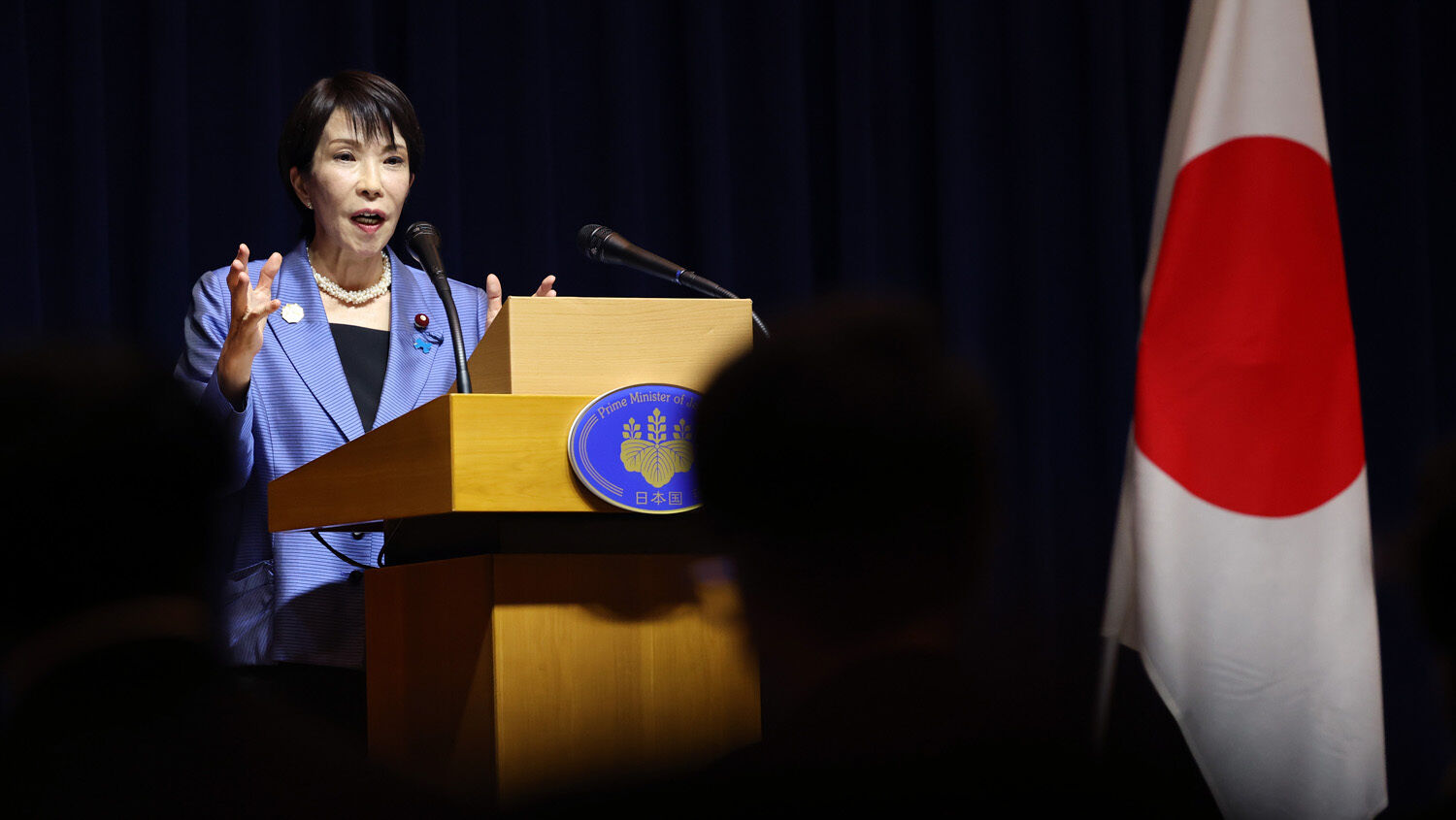
PM Office Source: Japan Needs Nuclear Weapons
Japan may be easing toward one of the most consequential decisions in its history: whether to develop an arsenal of nuclear weapons. The possibility moved deeper into the mainstream on December 17 when a source in Prime Minister Sanae Takaichi’s office told reporters that Japan “should possess nuclear weapons.”
The individual is involved in helping Takaichi shape Japan’s national security policy, signaling that the idea of going nuclear is no longer confined to fringe debate but is being discussed at the highest echelons of government.
This news comes amid years of a steady increase in Japan’s conventional military power, with its total defense-related spending now at an eye-watering $70 billion per year. The scale of that investment reflects a nation that is rapidly militarizing, transforming its Self-Defense Forces into one of the world’s most lethal militaries.
Japan’s leadership has several legitimate threats it can point to as justification for boosting the nation’s firepower: nuclear-armed China’s increasing aggression near Taiwan and in the South and East China seas, the looming threat from nuclear North Korea, and intensifying doubts about the willingness of the United States to help defend its allies.
Considering these factors, Japan’s military buildup and growing interest in nuclear weapons may appear rational. But history casts a long and troubling shadow over this debate—one shaped by episodes in which the Japanese descended into fanatical militarism.
The most notorious example came in the lead-up to and during World War ii. Imperial Japan’s efforts to conquer Asia were fueled largely by its belief that the Japanese people were racially superior to all others—a nation of demigods fated to rule the world. This rendered their invasions and conquests ruthless beyond description.
By 1945, Japan had been warring for 14 years. Nearly 3 million Japanese were dead; multiple millions were wounded or gravely ill. Most were starving, and much of the country lay in ruins. But even then, soldiers and civilians alike generally refused to surrender. It ultimately took the stunning devastation wreaked by two atomic bombs to end Japan’s perverse military fanaticism.
Nor was this the only instance of such radicalism. Earlier conflicts, such as the First Sino-Japanese War, the invasion of Taiwan and the Russo-Japanese War, further reveal this tendency toward unhinged belligerence.
It was exactly this history that prompted the U.S. and other Allied powers to force Japan to renounce war at the end of World War ii. Pacifism was enshrined in its Constitution as a safeguard against future militarism.
But now, eight decades on, the restraints are being severed, and modern Japan is rapidly marching back toward militarism today—including discussions about developing the most destructive weapons ever created. Given Japan’s wartime history, its current trajectory is deeply concerning.
Japan’s march toward militarism is also significant because it is setting the stage for the fulfillment of specific biblical prophecies. Scripture shows that in the final world war, one of the main powers will be a massive, multinational Asian bloc. The Scriptures show that this power will be led by Russia, but Ezekiel 38:6 also lists some ancient names for the peoples comprising modern Japan, showing that it will be part of this Asian confederation. Japan’s militarization today is helping set the stage for that prophesied Asian bloc to coalesce into a force of stunning military power.
To understand more about this Asian power bloc and Japan’s role in it, order our free booklet Russia and China in Prophecy.


