

Will a Run on Stablecoins Trigger a Financial Crisis?
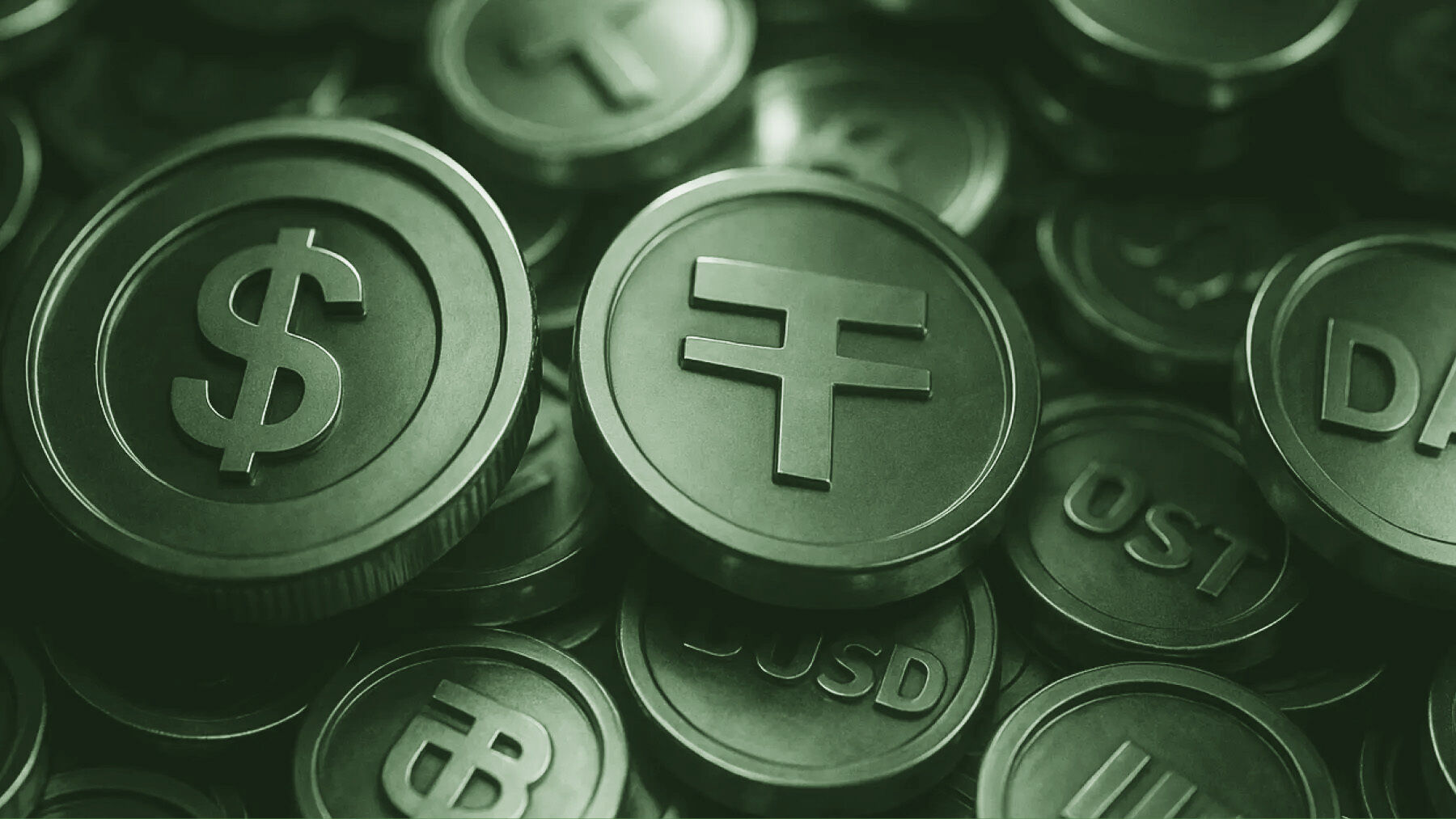
Stablecoins, unlike most cryptocurrencies, offer greater stability by being linked to the United States dollar or other national currencies. But they also carry a greater risk to the stability of our world’s financial system. So says New York Times bestselling author Jim Rickards, the European Central Bank (ecb), the International Monetary Fund and a few others.
If you put your savings in bitcoin, you might wake up to financial losses due to its price volatility. But stablecoins are designed to maintain a fixed value, giving you the ability to redeem them at a predictable rate. At the same time, you can use them for domestic and international transactions with merchants that accept them. They can also serve as a gateway to other cryptocurrencies.
Some think stablecoins could strengthen the dollar as the global reserve currency. But some fear that the rapid adoption of the coin could trigger a global crisis.
“Stablecoins have the potential to ensure American dollar dominance internationally to increase the usage of the U.S. dollar digitally as the world’s reserve currency, and in the process create potentially trillions of dollars of demand for U.S. treasuries, which could lower long-term interest rates,” said David Sacks, White House special adviser for artificial intelligence and crypto, at a February press conference.
In October, the total market capitalization of stablecoins surpassed $300 billion. U.S. dollar-denominated stablecoins account for roughly 99 percent of all stablecoins in circulation. While impressive, this figure is still small compared to the tens of trillions of U.S. dollars moving through the global financial system.
Rickards warned in a November 22 podcast with GoldRepublic Global: “I think one of the great dangers in the international monetary system today is actually stablecoins. To me, that’s a ticking time bomb waiting to explode. But it would only take one fraud to start a panic in the market. Basically, a run on the bank.”
A stablecoin is only worth, say $1, because someone promises to pay you $1. If they break their promise or run out of dollars, they may not pay you.
The ecb warned in November: “A run on these stablecoins could trigger a fire sale of their reserve assets, which could affect the functioning of U.S. Treasury markets.”
The International Monetary Fund warned in the October 2025 Global Financial Stability Report: “Possible runs on stablecoins may also generate forced sales of reserve assets, potentially disrupting market functioning.”
If people lose trust in stablecoins, holders may rush to redeem their tokens for cash. Rickards warned: “The time will come when people want their money back. The best definition of a financial crisis I’ve ever heard is everybody wants his money back.”
The most common issuers of stablecoins are private companies such as Tether and Circle. Customers purchase stablecoins most often with U.S. dollars, and the issuers typically invest those dollars in U.S. treasuries—which are considered the safest investments. Consequently, stablecoins add demand for treasuries, helping the U.S. government finance its debt.
However, stablecoin issuers may also hold their funds in various other reserve assets that are considered less safe but more lucrative. According to the ecb, the “liquidity of these reserves” is questionable: If many stablecoin holders want their money back at once, it may not be possible. If word gets out that someone can’t redeem his stablecoins, fear could trigger others to want their cash back. Rickards gave another example:
The sponsors make a lot of money and the user gets a valuable currency that they can use to buy bitcoin. So why do I say that this is the perhaps the greatest threat to the international monetary system? … There are no audits. There’s really no accountability. So could a sponsor take the money in my example and just steal the money? The answer is yes. Has that happened yet? No. But human nature being what it is, it will happen sooner or later. …
I want my dollar back because this guy over here was a fraud and I don’t know who else is a fraud. And there is no transparency. There are no audits and so forth. So what happens then? Well, the sponsor, if they want to live up to their promise, is in the position of having to sell treasury bills in my example to get the dollars to pay back the people redeeming their coins.
What if these issuers need to sell treasury bills worth hundreds of billions of dollars? This is impossible, as Rickards explained:
Everyone’s relying on this treasury bill market to keep the wheels in motion. And the minute there’s a problem, and I guarantee there will be a problem, … there’s a panic and everybody wants their money back. All of a sudden, you find that the treasury bill market is not big enough or not liquid enough to give everybody their money back, and then you get into catastrophic failure.
Stablecoins are a small part of the larger financial system; they can be seen as a single domino in a much bigger chain. If just one domino falls and someone intervenes, the rest might remain standing. But if multiple dominoes topple from different corners, a broader crisis could become inevitable.
The people who need cash for their projects must obtain it from somewhere. This demand for liquidity could trigger not only a run on stablecoins but also on other investments and put pressure on the bank, potentially causing a broader financial strain.
In a healthy financial system, this may not be a problem. But in a system already stretched beyond its limit, any more tension may cause it to burst.
Rickards is one of the few sounding the alarm. Europe is observing America’s financial woes with great concern—and so should we.
The late Herbert W. Armstrong prophesied for decades that the U.S. would suffer a cataclysmic financial crisis.
U.S. debt is nearing $40 trillion, and its ability to sustain that debt is decreasing—yet many still dismiss the warning. They believe the system is too big to fail.
Mr. Armstrong saw beyond the system’s complexity. He warned that the U.S. has lost its trust in God, despite what the dollar bill may claim. This, along with the prophesied rise of a united European empire, caused him to write in 1984 that a banking crisis in the U.S. “could suddenly result in triggering European nations to unite as a new world power, larger than either the Soviet Union or the U.S.”
Revelation 17 reveals that the leaders of Europe will unite right before the return of Jesus Christ (verses 12-14). This European empire is prophesied to besiege the U.S. economically (Deuteronomy 28:52). This means Europe will disconnect from the U.S. financial system and unite with other nations.
A financial crisis in the U.S. could trigger these events. For a detailed explanation, read Trumpet editor in chief Gerald Flurry’s article “A Financial Crisis Is Imminent.”


