

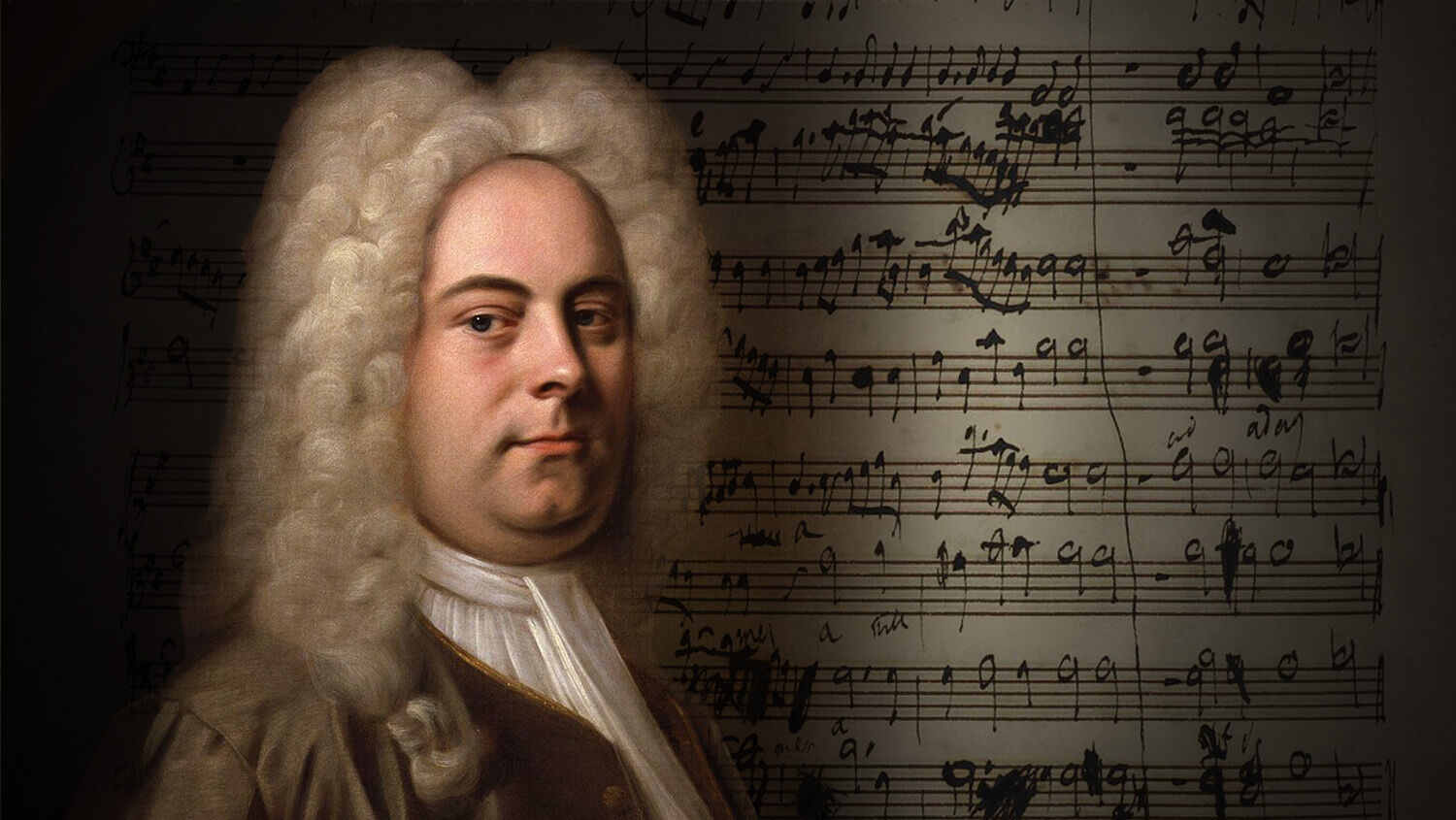
The Extraordinary Message of Handel’s Messiah
Recently, my wife and I attended a local choral group’s rendition of Handel’s Messiah. It had been many years since we saw the entire work, and it did not disappoint. It was impossible not to feel a swell of emotion as dozens of voices sang the choruses “Hallelujah!” and “Amen!” The performers’ faces filled with emotion, and the crowd was clearly moved.
Everyone stands during the “Hallelujah” chorus, a tradition that goes back hundreds of years to King George ii, connecting the concert experience to something royal.
It is not just the music that soars; it is the lyrics. All of the words come straight from the Bible and highlight prophecies of Jesus Christ’s coming, life, crucifixion and resurrection. The words are profound and timeless.
Messiah is one of the most popular oratorios in history. If you haven’t seen Messiah live, I encourage you to do so. And I encourage you to stop and think about what the lyrics mean.
Maybe you never read the Bible. Maybe you do but you’ve let its words become mere platitudes. You need to read, to understand—and to be moved.
There is only one way to understand the Bible. “Knowing this first, that no prophecy of the scripture is of any private interpretation. For the prophecy came not in old time by the will of man: but holy men of God spake as they were moved by the Holy [Spirit]” (2 Peter 1:20-21).
This is a two-step formula. First, God’s Holy Spirit must open your mind to the truth (John 6:44; 1 Corinthians 2:10). Second, God’s revelation comes only through the one servant He is using at any given time (Amos 3:7).
Messiah contains some of the most profound truths of the Bible. It brings to life scriptures about fulfilled prophecy and future prophecy. It gives us the most inspiring vision in the Bible.
The first number after the overture is “Comfort Ye My People,” a quotation from Isaiah 40. Verse 3 heralds “[t]he voice of him that crieth in the wilderness, Prepare ye the way of the Lord, make straight in the desert a highway for our God.”
Isaiah wrote this prophecy 600 years before Jesus was born. He declared that a servant of God would prepare the way for the Christ. This was fulfilled by John the Baptist, who prepared the way for Christ’s first coming and ministry (Matthew 3:3; 17:1-13; Mark 1:3; Luke 3:4).
It was also fulfilled in our day—in preparation for the Second Coming of Jesus Christ.
The fifth number, “Thus Saith the Lord of Hosts,” quotes Malachi 3:1: “Behold, I will send my messenger, and he shall prepare the way before me: and the Lord, whom ye seek, shall suddenly come to his temple, even the messenger of the covenant, whom ye delight in: behold, he shall come, saith the Lord of hosts.” God said He would send a messenger to prepare the way before Him—referring to the same prophecy as Isaiah 40:3.
At the opening of the oratorio, there are two references to John the Baptist and the servant of God who would prepare the way before Christ’s Second Coming. This man has come and gone. Who was he?
“That man was Herbert W. Armstrong,” writes Trumpet editor in chief Gerald Flurry in January 16: God’s Miracle Day. He continues:
God began to work with him in the 1920s by challenging his religious assumptions. Mr. Armstrong was provoked into undertaking an intensive study of the Bible. In doing so, he saw how so many commonly held “Christian” beliefs actually contradict Scripture.
Though Mr. Armstrong didn’t recognize it until much later, God was actually fulfilling Christ’s prophecy in Matthew 17:11: restoring “all things” through this man, doctrine by doctrine! You can read a wonderful, thorough biblical explanation of all these restored doctrines in Mr. Armstrong’s masterful book Mystery of the Ages.
Through this servant, God revealed the truths of the Bible. That means that if you want to truly understand the text of Handel’s Messiah, you must read Mystery of the Ages.
Mr. Armstrong built the Worldwide Church of God and was the most-watched televangelist of the 20th century. The circulation of his Plain Truth magazine reached 8 million by the time he died, and he was known as the unofficial ambassador for world peace, meeting with hundreds of world leaders. He fulfilled Matthew 24:14, bringing the gospel of the Kingdom of God to all nations. This man’s ministry was a major sign that Jesus Christ is about to return to Earth!
That work is continued by the Philadelphia Church of God, whose current work in Israel is mentioned in the ninth song, “O Thou That Tellest Good Tidings to Zion,” quoting Isaiah 40:9. As Mr. Flurry’s article “Behold Your God!” explains, this work in Jerusalem is another sign of Christ’s return.
Mr. Armstrong preached the true gospel from the Bible. That gospel, which Jesus preached during His human lifetime, is the good news of the coming Kingdom of God. This is not something that is merely an idea in people’s hearts; rather, it is the literal government of God that will rule the entire Earth.
Messiah covers this incredible future prophecy in “For Unto Us a Child Is Born,” where the choir sings Isaiah 9:6 about Christ ruling the world: “For unto us a child is born, unto us a son is given: and the government shall be upon his shoulder: and his name shall be called Wonderful, Counsellor, The mighty God, The everlasting Father, The Prince of Peace.”
Jesus Christ was the Lamb of God at His first coming (covered in Part 2 of Messiah), not the conquering King. During His human lifetime, He conquered Satan and qualified to rule from God’s throne. Isaiah 9:7 says: “Of the increase of his government and peace there shall be no end, upon the throne of David, and upon his kingdom, to order it, and to establish it with judgment and with justice from henceforth even for ever. The zeal of the Lord of hosts will perform this.”
This is captured in the highlight of the performance, the “Hallelujah” chorus:
“Hallelujah: for the Lord God omnipotent reigneth” (Revelation 19:6).
“The kingdom of this world is become the kingdom of our Lord, and of his Christ; and he shall reign for ever and ever” (Revelation 11:15).
“King of Kings, and Lord of Lords” (Revelation 19:16). “Hallelujah!”
Are you ready for Christ to return? Will you be found obeying the Ten Commandments and supporting His work? “Blessed is that servant, whom his lord when he cometh shall find so doing” (Matthew 24:46).
The last part of the oratorio presents an intriguing question in “Behold, I Tell You a Mystery.” This refers to the revelation from 1 Thessalonians 4 and 1 Corinthians 15 that human beings don’t go to heaven or hell when they die but rather await resurrection: “For as in Adam all die, even so in Christ shall all be made alive. But every man in his own order: Christ the firstfruits; afterward they that are Christ’s at his coming” (verses 22-23).
If you use the truths in Mystery of the Ages as your guide to the text of Messiah and the Bible, you can listen to God’s master plan set to music. Performers and audiences don’t realize it, but it is an oratorio about Bible prophecy. I urge you to see Handel’s Messiah live, to stop and think about the lyrics, and to use Mystery of the Ages as your program guide.


