

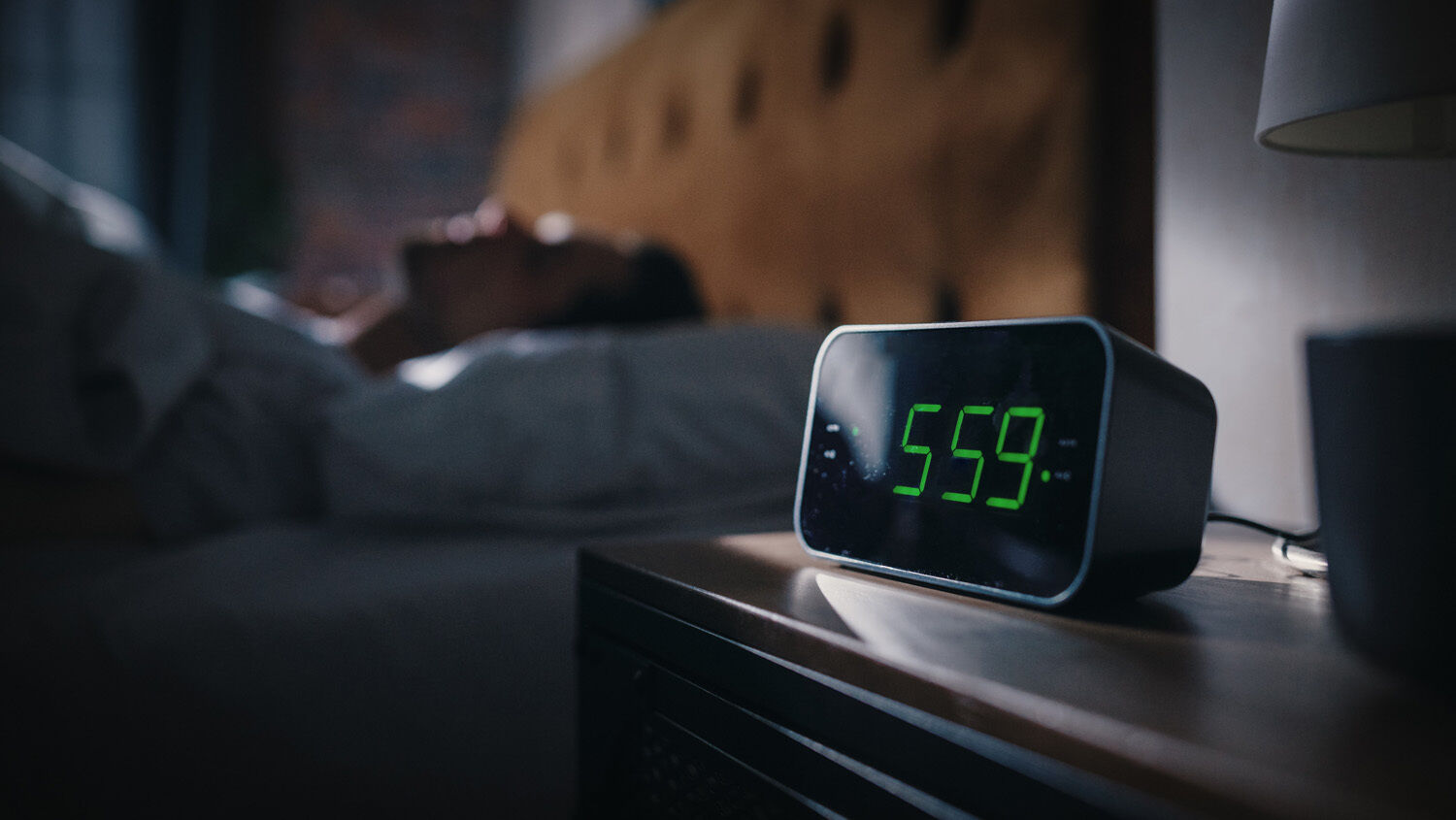
Chronic Sleep Loss: Tempting but Destructive
Do you get enough sleep? Many don’t, staying up too late, hypnotized by screens that promise entertainment but deliver exhaustion. Americans now spend three to six hours a day watching television or streaming shows online.
This isn’t just competition for leisure: It’s an invasion of the private realm. And that’s the tragedy. The time that once belonged to family, reflection and the quiet intimacy of home has been invaded by endless intrusions.
Netflix, a giant in digital entertainment, once admitted what most companies only imply: There are only so many waking hours in a day, and it wants as many of your waking hours as possible.
“You get a show or a movie you’re really dying to watch, and you end up staying up late at night, so we actually compete with sleep,” Netflix ceo Reed Hastings said in 2017.
That’s a problem because sleep isn’t just the absence of consciousness: It’s a repair process. The Sleep Foundation notes that we move through four stages each night, from light sleep to the deepest phase, rapid eye movement (where brain activity increases and the body becomes temporarily paralyzed). This stage is where the body performs repairs such as mending tissue, organizing memory, and resetting mood.
There’s no exact number of hours that guarantees perfect rest, but sleep needs to fall within clear ranges by age. Children need the most (up to 14 hours), while teens, adults and older people should get between seven and 10 hours. The key is consistency. A steady rhythm keeps the body balanced and the mind clear.
When that process is cut short, the system starts to break down. We know this, yet knowledge rarely changes behavior. For most people, long days and late nights aren’t anomalies but habits. What’s striking is how quickly the body keeps score. At first, the effects are subtle, says Harvard Health, and can include a shorter fuse, dulled memory or scrambled judgment.
Over time, this pattern begins to change how the brain functions. After roughly 16 to 18 hours awake, parts of the brain begin slipping into short “micro-naps,” momentary blackouts in which neural circuits literally switch off. You can be awake, even speaking, while parts of your brain are going offline.
Push past 24 hours, and the effects resemble neurological failure: Coordination, memory and decision-making all break down to the level of someone legally drunk, according to Healthline.
Long-term sleeplessness worsens health issues in a striking way. Sleep loss raises your risk for heart disease, diabetes, obesity and early mortality. The pattern is clear: We’re wearing ourselves down, night by night.
Sleeping in on weekends feels like a reasonable compromise, a way to “catch up.” But a 2019 Current Biology study found that those who do this actually sleep worse once the week begins again. The body remembers its losses, and what seems like a slow recovery is really the continuation of exhaustion, a problem that can seep into mental health.
Students know the illusion well. Staying up all night before an exam feels like extra effort, but it’s really trading time for memory. Researchers at University of California–Berkeley found that the brain “files and stores” what it learns when you sleep. Skip sleep, and that information slips away. You get the work done, but it doesn’t stick. It’s like working on a document and closing it without clicking “save.”
The tradeoff between fatigue and productivity also plays out on a national scale. rand Corporation puts a price on it: more than $400 billion a year drained from the U.S. economy.
Experts have long noted that sleep problems are deeply linked with depression and anxiety, each feeding the other in a destructive loop. The less you rest, the harder it becomes to cope, the harder it is to rest again, and the closer you are to more serious negative consequences.
The fix is challenging but obvious: Go to bed earlier. When you prioritize sleep, life stops feeling like a bad slow-motion reel. Things line up again, your brain stops misfiring, and the day actually moves along. We’ve been duped into thinking rest is a waste of time, when it’s the only thing that gives time back. Sleep sharpens you, clears the static, and reminds you that being awake isn’t the same as being alive.
Ecclesiastes 5:12 gives us one part of the solution: “The sleep of a laboring man is sweet ….” Work hard, and rest takes care of itself. The body is built for that rhythm: Expend effort, which helps you sleep and recover, which helps you expend effort.
The other parts of the solution are not revolutionary, but they work. Stop compromising, and do them purposefully. Turn off your devices at least half an hour before bed. That blue light convinces your brain it’s daytime. Get real daylight in the morning, skip the late coffee, and keep your bedroom dark, cool and quiet. You’re telling your nervous system that the day is over and it’s time for peaceful, deep, health-building sleep.


