
What Will You Do With the Truth?
What Will You Do With the Truth?

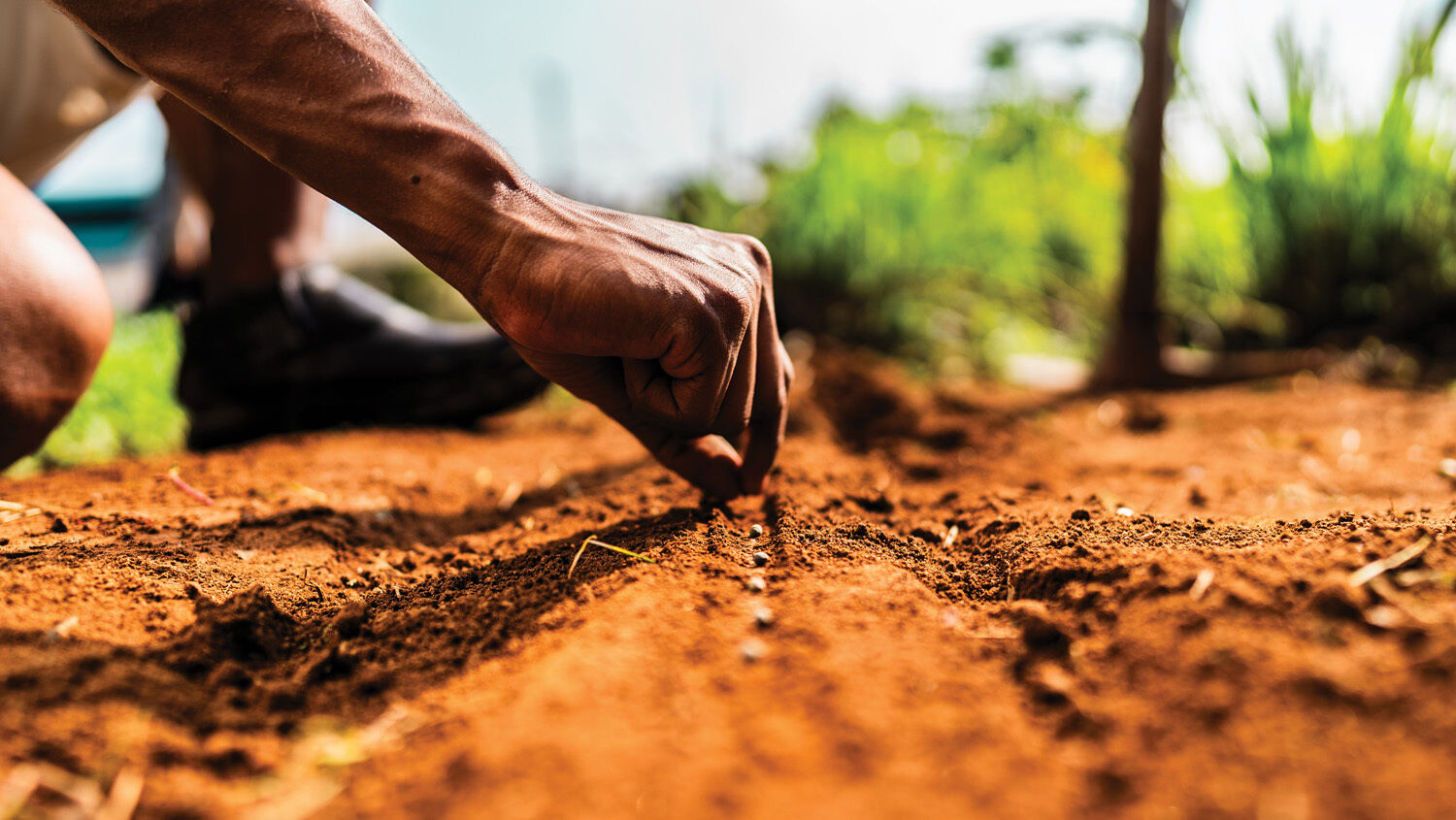
God’s work is a seed drill that never rests. It continuously grinds along the field, sowing seeds of God’s truth. Every day, we publish articles and videos online, we advertise, we promote a vast library of spiritual materials. Nearly every day we mail books, booklets, reprints, magazines and Bible lessons; we record and broadcast hours of tv and radio programs; we answer questions from readers; we send e-mails—all containing grains of spiritual knowledge. Each week we spend thousands of dollars broadcasting on television and online. Every moment, seeds are scattering on phones and computers, in offices and homes, throughout counties, states, provinces and countries across Earth.
You may be encountering your first seed of truth—or you may have been growing spiritually for decades. Either way, Jesus Christ spoke about you in the story of the sower (Matthew 13; Mark 4; Luke 8). If you want the seeds God has sown to take root, bud, blossom and bear fruit in your life, heed this parable.
The first seeds fall by the wayside and are devoured by birds. This represents the great majority, maybe millions, who come across the message from God’s work. They hear but fail to understand or believe (Matthew 13:19). The devil takes the word from them before roots can form (Luke 8:12).
The other seeds take root, but their outcomes vary. Some land on rocks, briefly sprout, then die for lack of moisture. These are hearers whose initial excitement proves fleeting. Trials expose their shallowness, and they wither. To avoid this fate, we must be “grounded and settled” in God’s truth, “rooted and built up” in Christ (Colossians 1:23; 2:7). Draw on the living water of God’s Spirit, and you will grow despite trials, adversity and persecution.
Another group sprouts but gets choked by thorns. What do these represent? Christ lists three “thorns” of worldliness: “the cares of this world, and the deceitfulness of riches, and the lusts of other things entering in” (Mark 4:19). “When they heard the message, they were baptized. But the cares and interests of the world choked them,” Herbert W. Armstrong wrote. “They still wanted to be like the world. They were liberals. They brought forth ‘no fruit to perfection’” (Worldwide News, June 24, 1985). Setting your heart on physical things will draw you away from God and stunt your growth. Stay focused on the things of God (Colossians 3:1-2).
Christ shows that bearing fruit requires avoiding these errors. Sadly, Church history shows that a great many who respond to God’s message and begin growing toward maturity do not grow deep roots and do not resist worldliness. They yield no fruit.
Then Christ gave a practical, three-part formula for fertile soil that makes those seeds yield a 30-, 60- and even 100-fold increase. “But that on the good ground are they, which in an honest and good heart, having heard the word, keep it, and bring forth fruit with patience” (Luke 8:15).
First, you must hear God’s Word with “an honest and good heart.” Naturally your heart is the opposite: deceitful and wicked (Jeremiah 17:9). James says we must “put away all filthiness and rank growth of wickedness and receive with meekness the implanted word, which is able to save your souls” (James 1:21; Revised Standard Version). Rid yourself of whatever stifles God’s Word in your life. Be meek and humble (from the Latin humus, meaning earth or soil) so God can implant His Word in you. “You could study the Bible intellectually for 10 billion years and never understand it,” Gerald Flurry writes. “The only way God can implant His Word in our lives is if we receive it ‘with meekness’—if we have soft, fertile soil—a childlike, teachable mind. We must approach our Bible study with a meek attitude” (The Epistle of James).
Second, keep that word. Hold it fast. It is easy to agree with a truth and then forget it. The human mind is fickle and distractible. God demands that we not only “prove all things” but also “hold fast that which is good” (1 Thessalonians 5:21). If you don’t cling to the truth, Satan will snatch it from you. You make yourself a prey to deception. You accept subtle deviations from truth, incremental errors that lead to greater errors. This is why Peter was diligent to always put God’s people “in remembrance of [God’s doctrines], though ye know them” (2 Peter 1:12). Mr. Armstrong unashamedly returned to the basics time and again. Mr. Flurry began Malachi’s Message with “A Call to Remembrance” and has made holding fast that which is good a pillar practice in this remnant work. We must individually cling to the basics and review trunk-of-the-tree doctrines. Be sure, after “having heard the word,” to “keep it.”
Third, bring forth fruit with patience. Crops don’t spring up overnight. Spiritual growth takes time, under steady, persevering stewardship. “And let us not be weary in well doing: for in due season we shall reap, if we faint not” (Galatians 6:9). Grow day by day in grace (referring to God’s character, which He supplies via His Spirit) and in biblical knowledge through study (2 Peter 3:18). Have confidence that nourishing, beautiful spiritual fruit—love, joy, peace, power, sound mindedness, wisdom, understanding and so on—will appear more and more (Galatians 5:22-23; 2 Timothy 1:7; Isaiah 11:2).
This parable holds a bushelful of practical wisdom. Christ yearns to see a hundredfold growth in you! As you bear abundant fruit, you show yourself to be His disciple and glorify your Father in heaven (John 15:8).


