

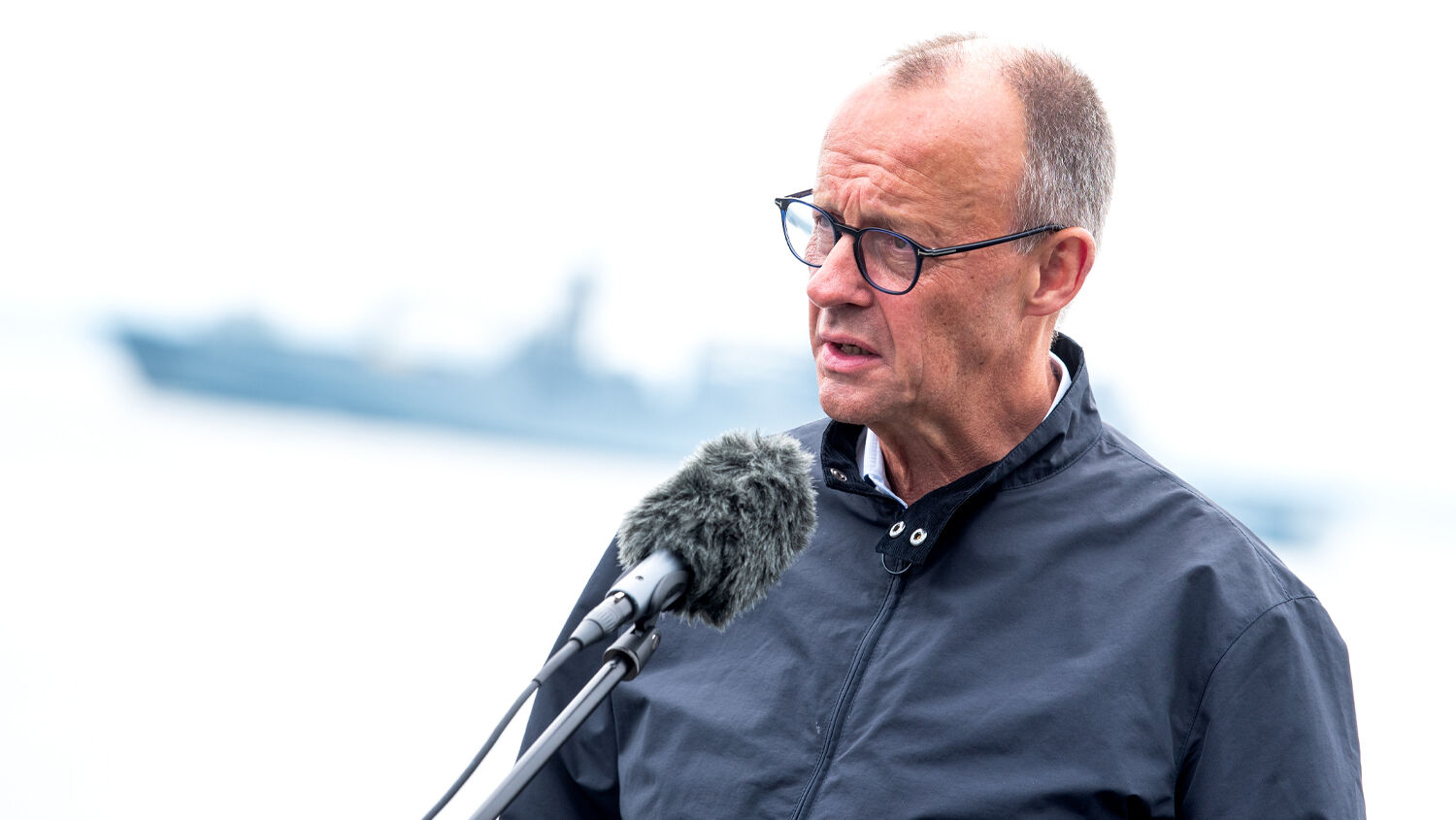
Germany: From Social Welfare State to Military Heavyweight
“The welfare state as we have it today can no longer be financed with what we can economically afford,” German Chancellor Friedrich Merz warned on August 23. “This will mean painful decisions; it will mean cuts.”
Merz is preparing the country for tough times. Times when Germans no longer live off the state but work for it until old age—and if necessary, fight for it. Instead of financing leisure, Germany is moving toward reintroducing conscription. Rather than increasing pensions, it is channeling funds into the weaponry of the future. Bit by bit, Germany is transforming from a welfare state into a military heavyweight.
Over the past two years, the German economy has been contracting while social welfare spending has been increasing. With an aging population that lives longer and has fewer children, rising unemployment, and the arrival of large numbers of refugees from the Middle East and Ukraine in need of housing and food, the system is increasingly under strain—and is unsustainable.
In July, Economics Minister Katharina Reiche stated: “In any case, it cannot work in the long term if we only work for two-third of our adult lives and spend one third in retirement. … We have to work more and longer.”
Germany’s legal retirement age is currently 65 and is scheduled to rise to 67 by 2031. For many workers, depending on their profession, continuing beyond that age may not be feasible. The younger generations face the prospect of working more than the typical 40-hour workweek to sustain the system.
Merz and Reiche, both from the Christian Democratic Union, are currently governing in a coalition with the Social Democrats, who have traditionally resisted cuts to social spending. Yet across party lines, there is broad agreement that Germany must increase its military investment. Inevitably, higher defense spending requires cutbacks in other areas and a greater workforce dedicated to the arms industry. As a result, more citizens will not only work longer but also increasingly find their labor tied to armaments production.
According to new data from the European Defense Agency, defense spending by the 27 European Union member states rose by 19 percent in 2024, reaching a record €343 billion (us$400 billion). Germany was the bloc’s largest military spender. Already the world’s fourth-largest in absolute terms, Germany allocated about 2 percent of its gross domestic product to defense last year. By 2029, it plans to increase that share to 3.5 percent, or roughly €153 billion ($177 billion), in core military spending.
Germany also approved €12.8 billion in arms exports in 2024—the highest annual figure in its history.
As the nation’s leadership is thinking increasingly militaristic, the people will have to follow suit.
On July 23, the federal cabinet approved a draft law aimed at accelerating the country’s armament efforts. “We need more weapons, and we need them faster. This can only be achieved by expanding production,” Reiche noted. Defense Minister Boris Pistorius, from the Social Democrats, hailed the measure as a “groundbreaking law” and a “quantum leap” for Germany’ s defense capabilities. According to Reuters, Merz’s government “views AI and start-up technology as key to its defense plans and is slashing bureaucracy to connect start-ups directly to the upper echelons of its military.”
Last week, the German cabinet approved a new military service bill aimed to help quickly expand the number serving in the military. In the first phase of the proposed legislation, Germans will receive a questionnaire (mandatory for men, voluntary for women) after they turn 18 to assess their ability to serve in the Army. If not enough volunteers are found through increased incentives, mandatory conscription will follow. The government wants to increase the number of soldiers from 180,000 to 260,000 by the early 2030s.
The cabinet also approved a new National Security Council to be chaired by Merz and joined by key ministers and officials from allied countries. The council is designed to plan for emergencies and help Germany move more quickly when those emergencies hit.
Germany’s new government views Europe’s military buildup as a potential lifeline for its battered economy, turning Economic Minister Reiche into an “armaments minister,” as Welt wrote on July 28.
“Germany’s great industrial power is being rapidly transformed for military purposes,” Trumpet editor in chief Gerald Flurry wrote in the latest Trumpet issue. “Germany is already Europe’s largest military spender, but it is only at the beginning of a frightening military transformation.”
In that article, Mr. Flurry discussed prophesies in Isaiah, Daniel and Revelation that prophesy of Germany’s military reemergence. He wrote:
Revelation 17 prophesies of the rise of a military alliance of 10 kings leading 10 nations or groups of nations in Europe. This alliance will be dominated and led by Germany, biblical Assyria. Assyria had a history of starting many wars, over and over again. Isaiah 10 shows that it will soon start another war, the most destructive in history! It says God will allow this—because He is going to use the modern-day Assyrians to punish the modern descendants of biblical Israel. Our book The United States and Britain in Prophecy explains this and gives you the history to understand it.
Read that prophecy in Isaiah 10:5-7: “O Assyrian, the rod of mine anger, and the staff in their hand is mine indignation. I will send him against an hypocritical nation, and against the people of my wrath will I give him a charge, to take the spoil, and to take the prey, and to tread them down like the mire of the streets. Howbeit he meaneth not so, neither doth his heart think so; but it is in his heart to destroy and cut off nations not a few.” This is a prophecy that Germany will destroy many nations!
Right now, we are witnessing Germany begin its final preparations to start this war!
For a detailed explanation of where Germany’s new militaristic focus is leading, read “Germany Is Arming for World War III.”


