

China: We Can’t Afford for Russia to Lose War on Ukraine
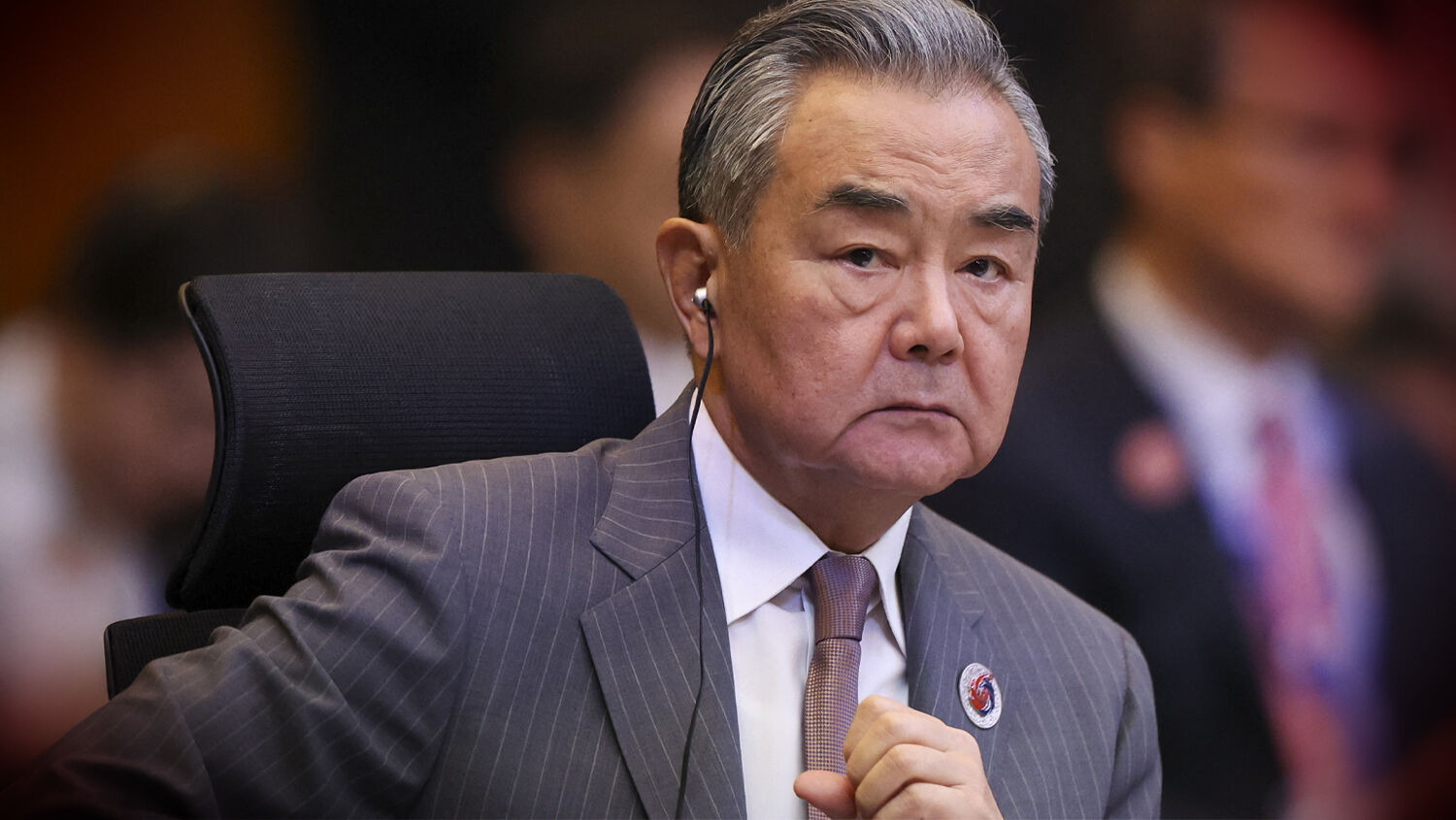
China cannot afford for Russia to lose its war on Ukraine because the United States could then fully focus on China, Chinese Foreign Minister Wang Yi reportedly told European officials on July 2.
The remarks, made during a four-hour meeting with European Commission Vice President Kaja Kallas, surprised many analysts due to their frankness. Chinese officials usually speak with little or no candor, even in closed-door meetings such as this one. The comment also contradicts the Chinese Communist Party’s (ccp) official stance of being neutral in Russia’s war against Ukraine.
The claims of neutrality are ludicrous. China has given Russia invaluable support throughout the war, financing the military by purchasing Russian energy, selling vast quantities of nonlethal supplies, and even helping Russia build the drones that have become such an effective means of slaughtering Ukrainian soldiers and civilians. China is far from neutral and has actually drawn significantly closer to Russia since the war went full-scale 40 months ago.
So why would one of China’s highest-ranking officials openly say Beijing is deeply invested and cannot allow a Russian defeat?
Some China watchers have speculated Mr. Wang accidentally let the truth slip or perhaps went rogue with a statement that doesn’t reflect the views of the ccp.
But Wang is well-seasoned diplomat who has held prominent ccp offices since 2004. Decades of silver-tongued rhetoric, championing China’s agenda with artful guile, have earned him a reputation as the nation’s leading “wolf warrior” diplomat. The likelihood that he spoke amiss is minimal.
So his statement deserves consideration.
It is true that U.S. President Donald Trump seeks an end to Russia’s war and has pushed for one that would normalize ties with Russia and let it keep the Ukrainian territories it has conquered, and likely more. Mr. Trump thought this would be acceptable to Russian President Vladimir Putin, as he could brand it a victory for Moscow.
But it turns out this is not enough for Putin. It is increasingly apparent that Putin rejects an “untidy compromise” and will only end the war on his own terms—unless overwhelming force compels him to back down.
Mr. Trump, for his part, appears uninterested in increasing the force against Russia. His administration has pressured Ukraine not to strike vital Russian energy infrastructure and has paused weapons transfers to Ukraine three times since January. And despite threats to walk away from the situation altogether, he appears agreeable to letting the war grind on at its current tempo.
Were these the only players involved, such a scenario would almost certainly lead to a slow but persistent Russian victory over Ukraine. And since U.S. attention would remain bifurcated, still partly focused on slowing Ukraine’s bleed, it would be a win for Russia’s Chinese ally.
But these are not the only players involved.
“Europeans will never abandon Ukraine—never,” French President Emmanuel Macron said on July 8. The speech was partly in response to the Trump administration’s most recent decision to pause some weapons transfers to Ukraine.
And Macron is not alone.
German Chancellor Friedrich Merz said in February: “After Donald Trump’s statement in the last week, it is clear that the Americans are largely indifferent to the fate of Europe. For me, the absolute priority will be to strengthen Europe as quickly as possible so that, step by step, we can really achieve independence from the usa.”
European Commission President Ursula von der Leyen echoed these sentiments in March, saying, “A new era is upon us. Europe faces a clear and present danger on a scale that none of us has seen in our adult lifetime.”
These were bombshell statements, revealing Europe’s alarm over Russia’s aggression and the growing recognition that it may need to respond without U.S. help. Far more important, these words have been backed by substantive actions.
As Europeans come to terms with the scope of Russia’s ambition and America’s broken leadership, they are greatly expanding defense budgets, enlarging bases, inking new military mobility deals with each other, spending record amounts on new weapons, and Germany has just inaugurated its first permanent foreign brigade since World War ii—a mortar’s arc away from Russia.
Europe is waking up.
It’s plain for the world to see, and that certainly includes the Chinese. So it seems that Mr. Wang’s words were meant as a warning to the Europeans: We see you awakening and arming. We see you giving Ukraine more weaponry and possibly preparing to jump into the conflict. But know this: China can’t afford for Russia to lose.
If China truly can’t afford to see a Russian loss, the extension of that is that China would enter the conflict to prevent such a loss.
Also significant is that during the same meeting, Wang told the Europeans that China has not been helping Russia’s war effort, and assured them that if China were assisting at scale, Russia would have long ago won. Alongside his statement about China not being able to watch Russia lose, these words take on a threatening tone.
China analyst Sari Arho Havrén wrote: “Wang Yi targeted his message to Western policy makers: ‘China cannot afford for Russia to lose. If China had helped ….’” She argues that it means we should “buckle up” because China is signaling that it is “ready to help more.”
Such a possibility would surely force Europe to reconsider direct involvement and even increasing aid.
A whisper of conspiratorial coaxing is also present in Wang’s words to the Europeans: Don’t increase your help to Ukraine because that would free the U.S. from this expensive and draining quagmire. Let’s keep America’s attention divided—not just to prevent it from turning all guns toward China—but also just to weaken the U.S. and hasten its decline. Then it will be time for China and Europe to dominate.
Also notable is that while Wang said China can’t afford for Russia to lose the war, his reasoning suggests China also doesn’t wish for Russia to win. Instead, a prolonged conflict that saps American attention, resources and will for years would be the most beneficial to China.
Whether China’s next move is to directly join Russia’s war, or perhaps to increasingly work toward prying Europe away from America, Wang’s statement should serve as a wake-up call. The world has fundamentally changed since 2022, with no return to the comparatively stable era of the past. China’s might is profound, far-reaching and intimately bonded to that of Russia. And unlike the U.S., both China and Russia have a resolve to wield their power that is growing stronger by the day.
To understand the dark days that lie ahead for China, Russia, Europe, the U.S. and the whole world, and the radiant future that lies beyond that dark time, order your free copy of Russia and China in Prophecy.


