What’s in a Name? Pope Leo XIV
What’s in a Name? Pope Leo XIV
Our feature story this morning, “This V-E Day, See the Power of Prayer,” by Richard Palmer, details the many accounts of prayer and God-given miracles throughout World War ii. It’s important history to remember, because as nations hurtle toward another, even more catastrophic world war, sincerely turning to God truly is the world’s only hope.

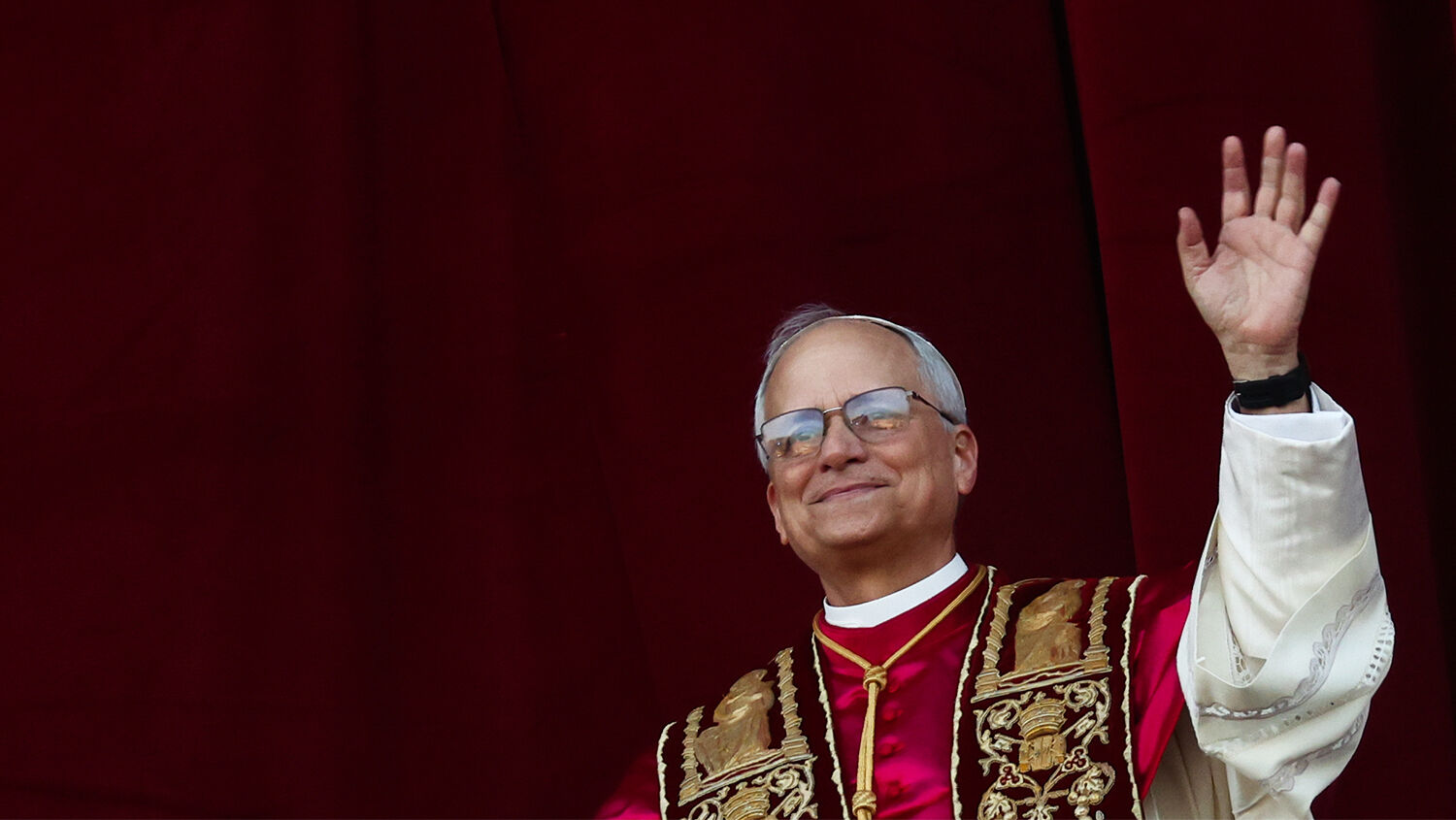
What do we know about Pope Leo XIV? Bible prophecy says a lot about the role the pope will play in end-time events. How does the world’s first American pope fit that picture? It is a bit of a puzzle. It appears this man will essentially continue the progressive policies of Pope Francis, perhaps less confrontationally. But he has mostly stayed mum on the more controversial issues facing the Roman Catholic Church. It is hard to see how he could be “the last pope” described in prophecy. That is not to say his papacy won’t be consequential, however.
Andrew Miiller’s Trumpet Brief from last night discussed the significance of Cardinal Robert Prevost choosing the name Leo, considering the legacy of Pope Leo xiii. The Plain Truth and the Trumpet have written a lot about Leo xiii.
He authored the book updating Catholic teaching on government, labor and economics for the modern era. Rerum Novarum (On the Condition of Labor) lays out Catholic teaching on Marxism, labor relations and economic management. In a nutshell, it teaches that God gave secular rulers broad authority over the economy—endorsing a socialist-like system—but then also gave the church to guide the state and ensure it doesn’t become tyrannical.
Past Pope Leos have been integral in building the Vatican’s relationship with Germany.
- It was Pope Leo iii who crowned Charlemagne emperor on Christmas Day, a.d. 800, forever changing European history. Because we are expecting a modern-day Charlemagne to lead Europe, we had speculated that the new pope might call himself Leo. (But we weren’t expecting an American!)
- Pope Leo xiii ended the Kulturkampf (or “culture war”) between the Catholic Church and German Chancellor Otto von Bismark. By initially compromising with the iron chancellor, he restored good relations between the papacy and Germany.
Leo xiii also strove for religious unity by drawing Protestants back into Catholicism. His first encyclical stated that “no small share of our thoughts and of our care is devoted to our endeavor to bring back to the fold, placed under the guardianship of Jesus Christ, the Chief Pastor of souls, sheep that have strayed.” An American pope may be well placed to continue this mission of regathering in Rome’s protesting daughters.
Leo xiii also denounced the “heresy” of “Americanism”—an ironic legacy for America’s first pope to draw on through his name choice. Crux called Cardinal Prevost “the least American of the Americans.” In his first address yesterday, you’d never have even known he was American, as he spoke in perfect Italian and Spanish and said not a word in English. As Mr. Miiller brought out in his article “What Does Leo XIV Mean for America?”, this papacy doesn’t bode well for improving Vatican relations with the pope’s home country.
We watch closely to see how Pope Leo xiv’s reign unfolds and how it will drive prophecy forward in these urgent times.
Russia celebrating Victory Day big time—especially with China: The V-E Day bash in Moscow today was a grand spectacle, marking the 80th anniversary of the Soviet Union’s defeat of Nazi Germany in 1945. The massive parade on Red Square was steeped in military pomp and national pride, showcasing Russia’s military might even as war in Ukraine grinds on. Around 14,000 troops marched alongside historical vehicles and modern hardware, while aircraft soared overhead. Beyond the parade, Moscow buzzed with fireworks, concerts and wreath-laying at war memorials.
The parade was attended by 29 world leaders, including Brazil’s Lula da Silva and India’s Narendra Modi. But with only one of them did Vladimir Putin hold a nearly four-hour discussion beforehand: Chinese General Secretary Xi Jinping. It was a robust demonstration of solidarity with Russia’s closest ally.
Putin and Xi’s talk at the Kremlin was described as “in-depth, friendly and fruitful.” Xi called their nations “friends of steel” and touted their willingness to stand up to “bullying on the international stage.” They vowed to strengthen economic, military and cultural cooperation. They voiced their shared vision for a new world order, with trade booming in rubles and yuan.
In “Putin and Xi’s Meeting Marks the Start of a Dangerous New World Order,” the Telegraph’s Iain Duncan Smith details just how tight these two nations have become since the Ukraine war began over three years ago:
- When Russia invaded Ukraine, the West froze Russian assets and cut off its banks from swift, blocking international financial transactions. China stepped in with its cips system, which averted a Russian cash flow crisis.
- China helped arrange the rapprochement between North Korea and Russia, opening the door to huge levels of military support.
- China now buys a huge proportion of Russia’s oil and gas.
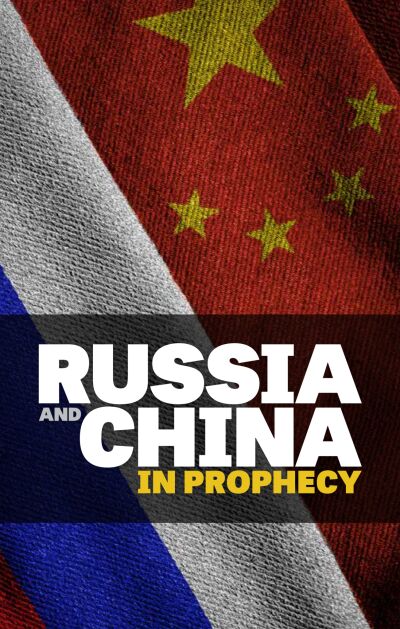
It is remarkable how the past three years have driven Russia and China into each other’s arms. It has dramatically accelerated the fulfillment of a crucial end-time prophecy, detailed in our free booklet Russia and China in Prophecy.
IN OTHER NEWS
Friedrich Merz is tearing around Europe in a very leader-like way. Immediately after becoming Germany’s new chancellor, he was off to Paris to reinforce what has often been called the European Union’s “Franco-German motor.” He then shuttled over to Poland, emphasizing the Weimar Triangle (Germany, France, Poland) as a key alliance, and signaling his commitment to diplomacy with Eastern Europe. Today it was Brussels to engage with EU and nato leaders, underscoring his pro-European stance and commitment to advancing the EU as a unified project. Visits to London and Kyiv are planned for the coming weeks. Merz clearly wants to put the embarrassment of a failed first vote behind him and to quickly reassert Germany’s leadership in Europe.
The U.S.-UK trade deal was announced yesterday, and it doesn’t look great for Britain. America’s 10 percent baseline tariff on UK goods remains in place (though it eliminates steel and aluminum tariffs). So the “special relationship” between the two English-speaking nations grants the UK no special favors and doesn’t bode well for other nations. Axios quoted Sarah Bianchi saying, “If the UK isn’t getting down to zero, it is very unlikely that anyone is.”
AfD not extremist after all? Just a week ago, Germany’s domestic intelligence agency classified the Alternative für Deutschland party as a “confirmed right-wing extremist” organization. This enabled enhanced surveillance measures like wiretapping. But after the AfD launched an urgent legal challenge, yesterday the government announced it would temporarily suspend this classification pending a court ruling, without revising its assessment. Apparently it was not ready for the intense public blowback. AfD called this a “partial victory.”
Ditching the dollar: Ukraine is considering changing its reference currency from the dollar to the euro, Ezekiel Malone reports, aligning it closer to Europe.
The empire prepares to strike back: The EU has prepared a list of 4,800 U.S. goods to raise tariffs on if it can’t negotiate a solution with President Trump, Peter van Halteren reports.
EU targets Israel … again: The Netherlands has called for the EU to review its trade deal with Israel in light of it cutting off humanitarian aid to Gaza, our In Brief reports.