

Mankind on the Edge of the Solar System
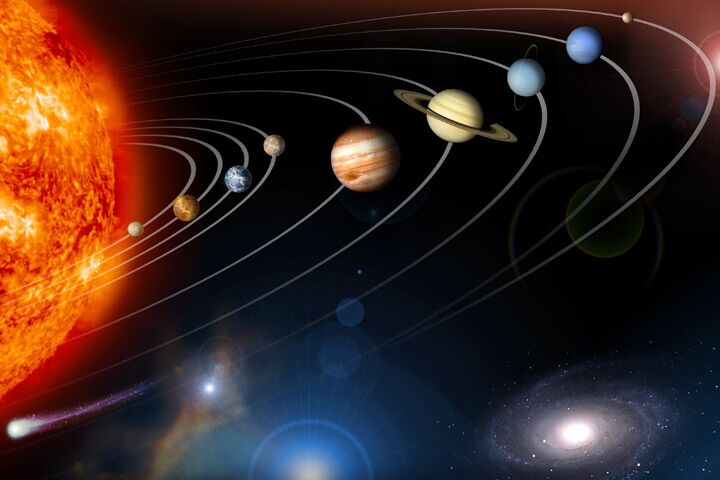
Mankind is on the brink of sending a probe beyond our solar system. This is an awesome achievement. The Voyager 1 spacecraft reached a new region between the solar system and interstellar space over the last year, scientists behind the project announced last week.
Voyager 1 is over 11 billion miles away from Earth. At its current speed, it covers a billion miles every three years. That’s over 38,000 miles a day—more than one and a half times around the equator.
The sun sends out a solar wind—a stream of fast-moving charged particles. Voyager 1 has passed into a region where streams of particles from outside the solar system—a type of wind—is pushing back.
“Voyager tells us now that we’re in a stagnation region in the outermost layer of the bubble around our solar system,” said Voyager project scientist at the California Institute of Technology in Pasadena, Ed Stone. “Voyager is showing that what is outside is pushing back. We shouldn’t have long to wait to find out what the space between stars is really like.”
“We’ve found that the wind speeds are low in this region and gust erratically,” said Rob Decker, a scientist at the Johns Hopkins University Applied Physics Laboratory working on the project. “For the first time, the wind even blows back at us. We are evidently traveling in completely new territory. Scientists had suggested previously that there might be a stagnation layer, but we weren’t sure it existed until now.”
In a matter of months, or maybe a few years, Voyager will cross into interstellar space.
nasa estimates that one third of the effort that went into building the Great Pyramid has gone into the Voyager project. Like the moon landing, the project is an inspiring testament to what mankind is capable of.
But it also shows how insignificant man’s efforts are, in comparison to the vastness of the universe.
Voyager’s batteries will run out around 2025. But it will keep moving. In 40,000 years, it will pass “close”—a mere 1.6 light years, or 9.3 trillion miles—to what will then be one of our nearest stars, AC+79 3888. By then, AC+79 3888 will be closer to the sun than today’s closest star—at a distance of only around 3.5 light years.
So after 40,000 years, one of the fastest objects man has ever produced will come kind-of close to a very close star. That’s the best we can do at interstellar travel.
The vastness of the universe staggers the mind. So, far we can’t even claim to have scratched its surface.
But God designed the extraordinary inventiveness of man—the inventiveness that can build a probe and send it 11 billion miles into space. God intends man to make a difference in the universe. With man that is impossible. But the Bible reveals that man’s destiny will affect the whole universe. To find out more about man’s role in the universe, watch last week’s Trumpet Daily program: “Our Awesome Universe Potential.”


