

The Evidence of Faith
Living faith is a spiritual matter because it has to do with relying on God, who is a spiritual, invisible Being. You cannot see faith. It doesn’t come by exercising the five senses. Faith is evidence that you cannot see, as Paul wrote in Hebrews 11:1.
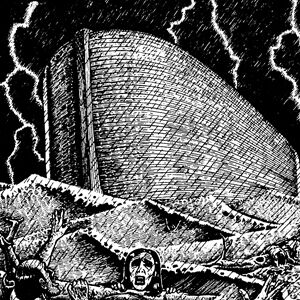
There are several outstanding models of living faith recorded in the Holy Bible. Noah, for example, was “moved with fear” after being warned by God “of things not seen as yet” (Hebrews 11:7). There was no physical evidence to suggest a flood would eventually come and destroy all of mankind. Yet Noah subjected himself to cruel mockings and ridicule for 100 years while building a massive ark on dry land! God said a flood would come, and Noah simply believed Him in faith.
Abraham was 75 years old when God told him to leave all that he had and to travel to an unfamiliar, faraway place. God told him to go, and Abraham left in faith, not even knowing where he was going! (verse 8).
Fifty-five years later, when God told Abraham to sacrifice his son Isaac, the Bible says he rose early in the morning and left for the place God had told him to go (Genesis 22:1-3). No human reasoning. No arguing with his Creator. Abraham just obeyed God.
After God intervened to prevent Abraham from killing his son, He said, “[N]ow I know that thou fearest God, seeing thou hast not withheld thy son, thine only son from me” (verse 12). By this point, God knew that the only evidence Abraham would ever need to carry out His command was faith!
In all these examples, notice how faith does not require understanding. Noah was warned of things not seen. Abraham didn’t know where he was going. Yet their obedience didn’t depend on God answering their every little question.
It is not important to know why God says to do something—only that God says “do it”! That is what makes it a test of faith: because faith depends on evidence not seen.
What Is Faith?
“Now faith is the substance of things hoped for, the evidence of things not seen” (Hebrews 11:1). So faith is a substance—or assurance, as most Bible margins say. It’s something you have, but it is the substance of things hoped for.
In his booklet What Is Faith?, Herbert W. Armstrong wrote, “Once you have received the possession, you no longer hope for it. But even before you receive it, you have it in substance; and that substance—that assurance that you shall possess it—is faith.”
Faith is simply believing God. It is trusting God to do what He hasn’t yet done.
In order to believe God, we must really know what God says in His inspired Word—to understand His will (Ephesians 5:17). Faith comes by hearing, Paul said, “and hearing by the word of God” (Romans 10:17). If we know it is God’s will, then we can ask for it in faith.
But that’s not all. 1 John 3:22 says we receive what we ask for because we obey God’s commandments. This, too, is an essential ingredient to developing living faith.
It all sounds so simple—know God’s will, obey His commands and then, as Christ said, “According to your faith be it unto you.” But as Mr. Armstrong wrote in the April 1980 Good News, “At least 99 out of every 100 earnest, surrendered Christians have not fully realized just what faith is or how to exercise it.”
One reason people lack faith is because God does not promise how or when He will fulfill our request. What many people typically do is ask God for something He has promised and then figure out for themselves how and when they would like God to fulfill that request! When that happens, faith immediately breaks down because we generally base the how and when on all available physical “evidence.”
Waiting on God
“It is impossible for God to lie. Impossible for God to break His promise. Do you believe that?” Mr. Armstrong asked (ibid, emphasis added throughout). It’s easy to say that God keeps His promises. But when things don’t work out the way we want them to, it’s also very easy to become disillusioned about God and His Word.
God will often test our patience by making us wait on Him because He wants to see if our faith will waver. It must not! It must remain constant. It must be immoveable!
Abraham developed that kind of faith. He didn’t stagger at the seemingly unbelievable promises of God (Romans 4:19-20). He was “fully persuaded that, what [God] had promised, he was able also to perform” (verse 21). That’s faith. It’s believing that what God has promised, He will do—no matter what!
Through the examples of Abraham and many others in the Bible, God is trying to teach us that He considers faith to be much more important than the actual possession—whatever that may be. That is why God hasn’t promised how or when He will answer. He wants our faith to develop most of all because, ultimately, we are saved by grace—through faith! (Ephesians 2:8).
Another reason God doesn’t promise how He will answer our request is because when He does answer, He wants us to know that He did it—not us! This is why God often answers our prayers in a way we would least expect.
Furthermore, He doesn’t promise when He will answer, as noted earlier, because He wants us to develop patience (James 1:3). God tests our faith so that we might grow to the point, like Abraham, where we will not waver (verse 6).
The single greatest reason people lose faith in God is that He does not necessarily answer immediately. Yet if we can focus on the faith being developed, look at how positive a trial can be! God will often try our patience. But He will never fail us.
The Resurrection
Sometimes it is easy to read certain Bible stories that cover only brief highlights and assume these great men and women had some sort of superhuman faith and that God answered their prayers almost before they finished asking. Not so! The men and women of Hebrews 11 were people of faith—but they were also people of patience. They waited on God. Noah built the ark for 100 years. Abraham did not have a son until 25 years after God told him to leave his homeland. By patiently waiting on God, these men and women developed lasting faith.
Read Hebrews 11:33-34 to see what many of these men and women accomplished by faith. They trusted in God and He delivered them! But many others were tortured, mocked, scourged and thrown into prison (verse 37). Why weren’t these individuals protected? Didn’t God promise it? Did God lie?
Verse 13 gives the answer: “These all died in faith, not having received the promises, but having seen them afar off ….” Receiving the promises in this physical life is not what matters most to God. Faith is! These men and women died in faith, not yet having received the promises. But they saw them afar off, by faith! Faith is the substance of things hoped for. How insignificant physical possessions are when compared to the spiritual inheritance God is offering His saints!
Is it worth it to have our faith tried and tested a little now? Is it worth it to patiently endure through a trial, sickness or test, until God eventually answers? He will never fail you!
Mr. Armstrong wrote, “There is not one thing I have had to rely upon God for and ask Him for in prayer, for myself and family or this wonderful Work of His, which He has committed to me, that has not been answered.” Imagine that! Not one thing. God was always there for Mr. Armstrong. The fruits of his life prove that. Like Abraham and Noah, he died in faith.
If God has made a promise to you, that is all you need to know! If He delays answering your prayer, that is all it is—a delay. It doesn’t mean God has refused to answer or fulfill His promise.
Don’t rely on physical evidence. Look to God in faith. Trust Him. Never give up. Just forge ahead with living faith and see God come alive in your life!


