

Tech Regulation: Germany Steps Up
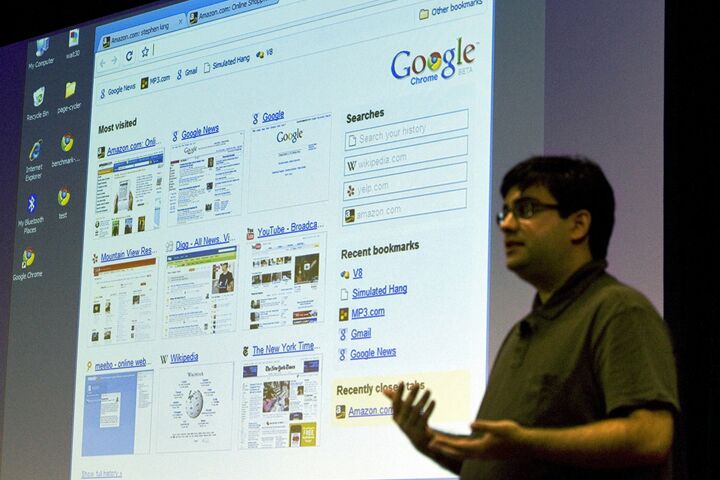
In its most proactive stance against an American tech company to date, the German government has issued a warning via national TV for its citizenry not to use Google’s new Internet browser, Chrome. The warning was delivered through the news program Tagesschau, which announced:
The Federal Office for Information Security warned Internet users of the new browser, Chrome. The application by the company Google should not be used for surfing the Internet, as a spokesperson for the office told the Berliner Zeitung. It was said to be problematic that Chrome was distributed as an unfinished advance version. Furthermore it was said to be risky that user data is hoarded with a single vendor. With its search engine, e-mail program and the new browser, Google now covers all important areas on the Internet.
There are several reasons we should sit up and take notice of this. The European Union is now routinely exerting its authority as a regulator on technology companies. However, previous attempts at regulating foreign companies—Microsoft, Apple, Sony, Intel, Toshiba, etc.—have always been issued by an arm of the European Union. This time, though, the objection is coming straight from the German government. Germany is increasingly at the center of the EU.
Specifically targeting an American company is nothing new, although the reasoning behind this particular round is especially weak. Judging by its press release, the German government is apparently taking a stance against software distributed for testing purposes, even when it is given away freely. This model is used by companies—big and small, American and European—throughout the tech industry.
So far, the German government has simply issued a warning far and wide, but warnings from Europe directed at technology companies have typically led to some sort of action. For more information on Europe’s growing role as a regulator, read “Regulatory Imperialism” and “The Long Arm of European Law.”


