

Winds of Change

Dominique Faget/AFP/Getty Images

Winds of Change

As Zimbabwe takes another step toward oblivion, here’s a look at how a once-proud nation fell so far.

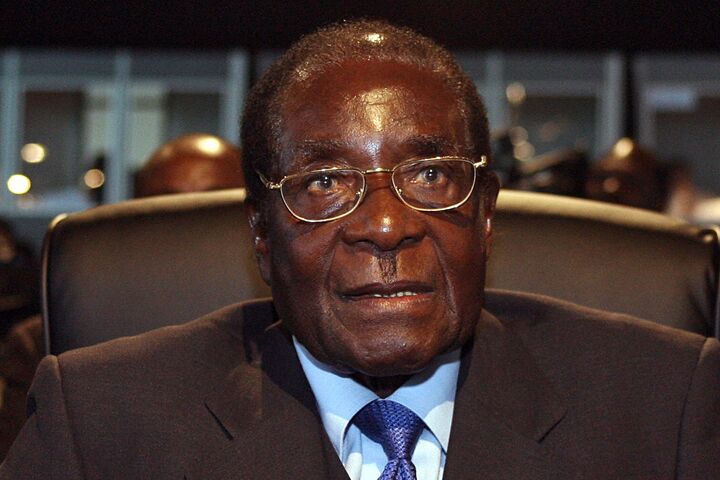
Zimbabwean President Robert Mugabe has signed a new law that gives “indigenous” Zimbabweans majority ownership of all businesses. This new law will make matters even worse for an already impoverished country.

It is hard to see how conditions could get worse for this once prosperous nation. While few official figures are available, estimates put unemployment at 80 percent. Official figures also put the inflation rate at 24,000 percent, though in reality inflation in Zimbabwe is very hard to measure. When there is no food on the shelves, it is hard to tell how much the price has risen.

This new law is not going to fix that. It states that “indigenous Zimbabweans shall own at least 51 percent of the shares of every public company and other businesses.” The term “indigenous” refers to “any person who, before the 18th April, 1980, was disadvantaged by unfair discrimination on the grounds of his or her race, and any descendant of such person.”

This new legislation brings back memories of the tragic land reforms that took place several years ago. According to Harare-based economist Godfrey Kanyenze, “It will entail the destruction of the economy. We should have learned from the blunders of the land reforms where people who were not properly equipped rushed to grab farms. The result was a disaster in the agricultural sector and we are now importing maize from the countries where the former farmers have migrated to.”

The land now known as Zimbabwe was once the breadbasket of Africa. Today it is a den of tyranny, starvation and squalor. In 1960, British Prime Minister Howard Macmillan forecast that “the wind of change” would soon blow over the continent. This is where those winds of change brought Zimbabwe.

The British colony of Southern Rhodesia (the former name of Zimbabwe) was wary of these winds of change. It was easy to see that British withdrawal from Africa would lead to a “one man, one vote, one time” system, where the newly independent colony would end up under the thumb of a dictator, or in the grip of civil war.

The Rhodesian leader at the time, Ian Smith, with majority support from the white segment of the electorate, decided that this would not happen to his country. On Nov. 11, 1965, Rhodesia unilaterally declared independence from Britain. It was the only way to keep the country from the tyrants that Communist guerrillas would bring to power. Ian Smith had seen the sad results of decolonization elsewhere and was only too aware of the rapid penetration of Soviet and Chinese Communist influence into Africa in the wake of the colonial powers’ flight.

The date of the declaration was significant. In the British Commonwealth, November 11 is a day of remembrance for all those who have given their lives in battle for the cause of freedom. The timing reminded the world that Rhodesians had voluntarily fought and died for the freedom of other nations. Now they were asking the rest of the world to support theirs.

The rest of the world did not. At least, no governments did. Though there was obvious sympathy from the Portuguese colonies and South Africa, the rapid collapse of Portugal’s colonial possessions and South Africa’s own national interests mitigated against any combined southern African resistance to the march of Marxist terror sweeping Africa at the time. Officers in the British armed forces, however, remembered and respected their old ally. They made it clear to the government they would not comply with any orders to attack Rhodesia. Both times when Ian Smith held talks with the socialist British Prime Minister Harold Wilson aboard British wars ships, it was the Rhodesian prime minister that the officers invited to dinner, while Wilson was ignored.

The rest of the world chose to side with the Marxist terrorists. Armed with Soviet- and Chinese-made weapons, the Communists committed horrible atrocities against black and white alike. Meanwhile, Rhodesia was under UN sanctions from the rest of the world, pushed by Britain. Britain could not use its military to force the country to surrender, so it tried other means such as trade sanctions instead.

The terrorists often attacked women and children, missionaries and Red Cross workers—anyone unable to fight back. Here’s one example from June 23, 1978, as documented by the Memorial Institute for the Prevention of Terrorism (mipt): “Black nationalist guerrillas bayoneted, axed and clubbed to death eight British missionaries and four of their children at an Elim Mission School in the Vumba Mountains. Among the victims was a 3-week-old child. Several other Britons were wounded in the attack; one was raped.”

Two of these guerrillas were later killed. Notebooks that they carried showed they were members of the Zimbabwe Africa Nationalist Union (zanu). Their leader is now quite infamous. His name is Robert Mugabe.

Perhaps one of the cruelest attacks came on Sept. 3, 1978. The Hunyani, a Vickers Viscount passenger plane carrying 52 passengers and 4 crew men, was shot down. The plane crashed, but due to the pilot’s skill, there were 18 survivors. Promising them help, the guerrillas rounded up 10 of them and then shot them.

A group run by Joshua Nkomo organized the massacre. Nkomo chuckled about his “triumph” in an interview with the bbc.

Joshua Nkomo served as Mugabe’s vice president from 1987 to 1999.

In February 1979, a second plane was shot down. There were no survivors.

Under this kind of pressure, betrayed and abandoned by the rest of the world, Rhodesia caved in and compromised. At one point, Smith appealed to Henry Kissinger for help. “What about loyalty and honor?” he asked. “I am afraid those things have no place in the modern world,” was Kissinger’s tragic reply.

In 1979, majority elections were held. Mugabe did not win. Bishop Abel Muzorewa became president, despite threats and intimidation from Mugabe and Nkomo.

Muzorewa’s free and fair election was not good enough for the Marxists though. The terrorists didn’t stop their “war,” and the West didn’t lift its sanctions.

The West got its way. Mugabe became president on April 18, 1980, after an election campaign marred by fraud, intimidation and violence.

President Jimmy Carter’s ambassador to the UN Andrew Young was asked what he thought of Mugabe. “Does Mr. Mugabe strike you as a violent man?” said a reporter from the Times. “Not at all, he’s a very gentle man,” Young replied. “In fact, one of the ironies of the whole struggle is that I can’t imagine Joshua Nkomo, or Robert Mugabe, ever pulling the trigger on a gun to kill anyone. I doubt that they ever have.” Later he said: “I find that I am fascinated by his intelligence, by his dedication. The only thing that frustrates me about Robert Mugabe is that he is so … incorruptible.”

Young knew better than that. The Western world deliberately ignored the facts so that the peaceniks wouldn’t have to awake from their never-never land of political correctness.

Zimbabwe is dominated by two main tribes, the Mashona (or Shona for short), and the Matabele. Mugabe was Mashona. After becoming president, Mugabe turned on the Matabele. It is impossible to tell how many he killed, but the Timesestimates about 20,000. Other estimates are much higher.

Opponents of Ian Smith and the white Rhodesians accused them of being racist. The man they replaced him with went on to commit genocide.

Is it any wonder Zimbabwe is in the state it is today? The West put a murdering Marxist Mugabe into power. It should not then be surprised when he turns out to be a terrorist. There is a long list of such murderers being endorsed by Western leaders as a matter of expedience in their drastically flawed foreign policies.

Mugabe now seems set to lead his nation into even more misery. Elections are scheduled for March 29. Will they be free and fair? Never.

180124-South China Fisherman-GettyImages-832447360.jpg

China’s Fishing Fleets Are Fighting a Shadowy War to Expand the Country

We should not mistake them for ragtag fishermen acting on their own.

Read More

Kick Your Kids Outdoors

Index Open

Kick Your Kids Outdoors

Spring is here. The weather’s warming up. If your children just want to sit on their cans, consider this.

Recently I was talking with someone working a construction job on a large lake in Oklahoma. Next door to his job site is a grandfather who has tried to make his home as inviting as possible for his grandkids: He bought a couple of boats for them to fish and ski with; he has beautiful acreage on which they can run around and play to their hearts’ content. But, the grandfather lamented, whenever they visit, his grandchildren just want to sit inside and watch movies or play video games.

More and more young people don’t even know what to do with themselves outside.

I remember spending a lot of my youth outdoors. It happened that my family lived within a short walk or bike ride away from seemingly endless acres of woods, in which my sister and I would climb trees, build forts, and indulge our imaginations in countless ways. We had miles of roads to bike, fields to explore, sand piles to jump off. I also grew up a half-mile from a beach filled with myriad interesting things—crabs, clams, kelp, skipping stones, driftwood and other surprises that would wash ashore.

Today, urbanization has turned yesterday’s open woods into housing developments and strip malls. Sending kids out to roam the neighborhood is more dangerous. As a result, it seems that for most young people, the real world has shrunk.

At the same time—thanks to television, movies, video games and the Internet—the virtual world for young people has dramatically expanded: a noisy, hyper world that requires no imagination and which they can experience while sitting comfortably on their cans.

I have to wonder, though, how much of the problem lies in our own laziness as parents.

These thoughts have rattled around in my head the last few months as my daughters and I have been reading the Little House on the Prairie books by Laura Ingalls Wilder, which vividly describe the joys, labors and trials of a homesteading family in the mid-1800s. Each page verifies in extraordinary detail the truth that our lives today are, by historical standards, undeniably easy. The result is, we are far less capable, and far less filled with wonder.

Is it possible to reverse the trend?

I picked up a couple of books filled with crafts for young people, one for girls and one for boys, written in the 1880s—about the same time that events in the Little House books took place. I am amazed at how intensive and involved these activities are. These books describe how to make knives, how to rear wild birds, how to build boats. The American Boy’s Handy Book includes these chapter headings: “Home-Made Hunting Apparatus, Etc.,” “Practical Taxidermy for Boys,” “Snowball Warfare.” The American Girl’s Handy Book includes instruction on how to make plaster casts, how to reseat a chair, how to paint china, how to transform old furniture into new. A chapter on “How to Make a Hammock” reads, “It is not difficult to make a hammock; anyone can soon knit one that is strong and comfortable, and it should not cost more than 50 cents. The materials required will be one hammock-needle about 9 inches long (this can be whittled out of hickory or ash, or purchased for 10 cents); two iron rings 2½ inches in diameter, which will cost about 5 cents each; two mesh-sticks or fids, one 20 inches long and 8 inches wide beveled on both sides: the other 9 inches long and 2½ inches wide, beveled on the long edge; these you can easily make yourself from any kind of wood.”

You get the idea. Children in the 1880s must have been a different breed.

An activity book telling girls today how to make a hammock would, I’m sure, begin: “Step one: Buy a hammock.”

Today we are simply less capable because we are used to having everything handed to us. Frankly, as a 35-year-old man, I would burst with pride if I successfully made the hammock described in this book. (And as I proudly invited guests to try it out, I would remain utterly tight-lipped about the fact that I found the instructions in a girls’ crafts book.)

Pondering these points has made me more determined to provide my children regular stimulating challenges. I want to hunt down opportunities to keep them active, to engage their imaginations, to work their hands, to show them what they can do if they only make the effort. It is so much easier to keep a child indoors, to plop him in front of a screen of some kind. In some ways it is even safer. But I’m convinced that, in the long run, it comes at a high cost.

I’ve spent many summers volunteering at church-sponsored youth camps. It always makes me smile to see teens biking, canoeing, shooting arrows, running and playing outside. Over the years, I have noticed that, generally, the stamina, physical coordination and skill level among teens has dipped somewhat. (The military has noticed this trend in its new recruits as well. One recruiter said while their overall physical capabilities have dropped, “They do have strong thumbs.”) Still, at a good summer camp they push themselves physically, often past what they feel capable of, and have a rigorous outdoor experience. It exposes them to realms of possibility they probably would never discover on their own, and contributes to happy, shining faces and a visibly healthier outlook on life.

Young people have strong, youthful bodies for a reason. We need to encourage them and teach them how to engage themselves vigorously in real-world activity—to do, as Ecclesiastes says, whatever their hand finds to do with their might.

GettyImages-489513994b.jpg

‘Iran Is Targeting All of Us’

Iran is threatening enemies both near and far—and dramatically fulfilling Bible prophecy.

Read More

Report: A Quarter of Teenage Girls Have Sexually Transmitted Diseases

Dreamstime

Report: A Quarter of Teenage Girls Have Sexually Transmitted Diseases

One in four American teenage girls have at least one STD. Is there any solution to this tragic epidemic?

In the first national study of common sexually transmitted diseases infecting teenage girls, researchers found that one out of every four American teenage girls is harboring at least one std. Bloomberg reports,

About 3.2 million women between ages 14 and 19 had human papillomavirus, chlamydia, genital herpes or trichomoniasis. That number would be even higher if less-common diseases such as hiv/aids, syphilis and gonorrhea were included in the analysis, according to the report released [March 11] by the U.S. Centers for Disease Control and Prevention [cdc].Sexually transmitted diseases cost almost $15 billion to treat annually in the U.S., and more than half of those infected are under 24 years old, according to the Atlanta-based cdc. About half the young women in [the] study reported having sex, and 40 percent of sexually active women had stds. hpv, a virus that causes cervical cancer, was the most common infection, prevalent among 18 percent of the teen girls in the study.”What we found is alarming,” said Sara Forhan, author of the study and a researcher at the cdc’s division of std prevention. “One of the things that we think is particularly important is how fast the stds appear. In those young women who report sex with just one sexual partner in their lifetime, the prevalence of stds is 20 percent.”The study analyzed data from 838 teenagers who participated in a national health study in 2003 and 2004. Researchers used the nationally representative sample to project rates across the U.S.

In an effort to downplay the fact that a full 18 percent of America’s teenage girls are infected with the carcinogenic human papillomavirus (hpv), cdc officials stressed that many people who contract hpv never know it because most hpv infections “clear on their own” without causing any major health problems.

The American Social Health Organization’s Internet homepage states that the symptoms caused by many varieties of stds are not really serious enough for them to be labeled actual diseases. The organization is recommending that the designation “disease” should be scaled back to “infection” for several varieties of stds. Candidates for this treatment would include stds such as gonorrhea, herpes and hpv.

The fact is that American teens are being deliberately fed false information by those who are more concerned about being politically correct and promoting “sexual freedom” than they are about protecting people’s sexual health. Unscrupulous educators are downplaying the true dangers of stds in an effort to hammer home their political agenda.

The infection of 26 percent of American teenage girls with stds—to say nothing of the infection rate in adults and teenage boys—is a serious epidemic that should not be downplayed or taken lightly.

Screenings, vaccinations, and so-called safe-sex practices are only futile attempts to treat the effects of the problem while ignoring the root cause. The root cause of this epidemic is sexual immorality. Information about stds that implies that everybody is at risk is wrong. If a person abstains from sex until married, marries someone who has done the same, and the two stay faithful to each other, their chances of contacting an std are approximately 0 percent.

There is an alternative to the half-truths and outright lies being promulgated in our “anything goes” society. Anyone who avoids unmarried sex will avoid the curse of stds and experience wonderful, long-term benefits.

For more information on how to preserve your sexual health and on the God-ordained uses of sex, read “Sexual Health: What Every High School and College Student Needs to Know” by Joel Hilliker and The Missing Dimension in Sex by Herbert W. Armstrong.

iStock-641286420b.jpg

Transgender Indoctrination Rising

Parents—be aware of transgender indoctrination!

Read More

The Need for Fathers

iStockphoto

The Need for Fathers

Why God designed human beings with this need

Jesus Christ demonstrated throughout His earthly ministry that there is a clear line of command in place within the God Family—which our families are to emulate. The family government was very much alive between His Father and Him. He was very clear on who was in charge. He did exactly what the Father asked Him to do.

Coming to better understand fatherhood as God does gives us incredible insight into the way He thinks. God commands us to see this from His perspective, and make this a habitual way of thinking that ingrains this spiritual lesson in our minds.

What makes a dedicated study into this subject so critical is how decidedly different God’s view is from the common view in society. Satan has inspired a general conspiracy against fatherhood. The role of the father is his biggest target in bringing down family life.

It is common to recognize the mother’s role as nurturer, carer and emotional support. She provides the meals, does the housework and in many cases earns a good portion of the family income. But what is Dad supposed to do? In the minds of many, this is far hazier. Maybe he is the provider, although in more and more homes Mom works, and often makes more money than Dad.

In the minds of most people, the God-ordained role for the father in the family has been obscured completely. Society in general paints that leadership position as being unnecessary.

As the first four verses of Isaiah 3 prophesy, God has removed the strong men as a curse on the disobedient nations of modern Israel, which has created a tremendous leadership vacuum. And what has filled the gap? “As for my people, children are their oppressors, and women rule over them …” (verse 12). Families are upside-down: Women and children are at the top—and the men aren’t even mentioned!

This is a tremendous problem. And families are devastated when that role of the father is neglected. Studies prove that when the father fails, everyone suffers. Why? Because the whole structure of the family falls apart.

God designed human beings—physically, emotionally, spiritually—to need fathers.

One author states this need thus: “If children fail to receive enough love from their fathers, they carry the painful effects for a long time to come—usually for the rest of their lives” (Robert S. McGee, Father Hunger). They experience a variety of problems in their lives “including depression, lack of self-esteem, an inability to express genuine love toward a spouse. But in interviewing these people, one common element keeps coming up in almost every case: an unfulfilled desire, a gnawing deep in their spirits, a continual craving to experience love from their fathers. The longer this need goes unfulfilled, the more the person suffers.”

In the book Fatherless America: Confronting Our Most Urgent Social Problem is this assessment: “There are exceptions, of course, but here is the rule: Boys raised by traditionally masculine fathers do not commit crimes. Fatherless boys commit crimes.” In fact, fatherlessness has been proven to be the number-one factor predisposing someone to criminal activity—more than poverty, iq, race, culture or education.

Girls who lack the strong influence of a father are much more prone to get involved sexually before they should. They are looking for a male to fulfill that need in their life that their father failed to fulfill. “Many studies confirm that girls who grow up without fathers are at much greater risk for early sexual activity, adolescent childbearing, divorce and lack of sexual confidence” (ibid.).

The vast majority of fatherless children are prone to emotional imbalances, motivation problems (especially boys), anger, instability, vulnerability, insecurity and feelings of rejection—a sense of being unloved and unlovable. These same problems tend to crop up where a father is present, but is perhaps abusive, a workaholic, passive and unmasculine, sickly, manipulative or a perfectionist. Sadly, the children of such men can be just as much “fatherless” as those whose father completely abandoned the family, or died!

If you want to know how important the father’s role is, just look at what happens when it is neglected.

God created humans to be born into the God Family. The way He made us, it is absolutely imperative that we have a family, and that we have a father!

As the book Father Hunger brings out, you can compare this to our need for good nutrition. For example, you could completely eliminate vegetables from your diet and substitute chocolate milk instead. While that wouldn’t kill you right away, your health would go bad quickly.

Given the God-designed need for a father, it is interesting how protective God is of two groups of people in particular: the fatherless, and the widows. The Bible contains over 40 references to these two groups! It doesn’t specifically mention the motherless and widowers, but rather those who have been deprived of that male influence of a father and a husband—those for whom that family role isn’t being filled.

One of God’s major condemnations of today’s society is that we neglect the fatherless and widows. “Thy princes are rebellious, and companions of thieves: every one loveth gifts, and followeth after rewards: they judge [defend or vindicate] not the fatherless, neither doth the cause of the widow come unto them” (Isaiah 1:23). God instructs these rebels, “Wash you, make you clean; put away the evil of your doings from before mine eyes; cease to do evil; Learn to do well; seek judgment, relieve the oppressed, judge the fatherless, plead for the widow” (verses 16-17). This is how to become right with God! These people need help—there is a void that God intended be filled in their lives. “Pure religion and undefiled before God and the Father is this, To visit the fatherless and widows in their affliction, and to keep himself unspotted from the world” (James 1:27).

It is true that, because Satan has worked so hard to attack the role of the father, probably a majority of people have had poor relationships with their fathers. But the inspiring and hope-filled truth is, for those lacking a strong physical father and physical family, God seeks to step in and fill that role—both personally, and through strong males who are practicing the pure religion James spoke of.

GettyImages-630076038_a.jpg

Shinzō Abe: Media Muzzler

Read More

Mortgage Crisis Drives Consumers to Credit Cards

Dreamstime

Mortgage Crisis Drives Consumers to Credit Cards

Although consumer credit increased by $3.7 billion over the course of the December Christmas season, January’s consumer credit increase was almost double that at $6.9 billion. This increase included the second-biggest January revolving credit surge in the past decade.

“People once dependent on home-equity financing are turning to other forms of short-term financing after the collapse in subprime mortgages made it harder to qualify for loans,” Bloomberg reports.

January is normally when people are working hard to pay off the credit card debt they accrued from their Christmas shopping. Now that the effects of America’s subprime mortgage crisis are in full swing, however, those who are usually dependent on home-equity loans are finding it increasingly difficult to continue qualifying for these loans. The natural consequence is that these individuals are driven to their credit cards.

“In the early stage of a recession, consumers tend to rely on credit cards to see them through the hard times,” said Chris Rupkey, chief financial economist at Bank of Tokyo-Mitsubishi ufj in New York.

Yet, a surge of high-risk candidates from the home-equity sector to the consumer credit sector will only drive up credit card rates and spread the subprime mortgage crisis to other areas of the economy.

As consumers plunge deeper into debt, they are desperately looking for other sources of money.

GettyImages-532641710_a.jpg

Recep Tayyip Erdoğan: Self-Serving Sultan

Read More

U.S. Military Outsourcing: Shooting America in the Foot

U.S. Military Outsourcing: Shooting America in the Foot

The U.S. Air Force’s decision to award a huge military contract to EADS highlights a disturbing trend: exalting free-market ideology over military self-sufficiency and national security.

In a stunning decision, the U.S. Air Force has just awarded its biggest-ever military order to a foreign supplier. The $40 billion deal, conferred to a partnership including the European Aeronautic Defense and Space Co. (eads), was a blow to U.S.-based rival Boeing, which was the odds-on favorite to win. More importantly, this contract to supply the military with new airborne refueling tankers confirms what analysts have called a “major shift” in U.S. procurement policy.

The contract, currently one of the largest at the Pentagon, has the potential to ratchet up to a massive $100 billion. It breaks a multi-decade relationship with Boeing, the company that built the bulk of America’s existing fleet. The 179 planes on order will be based on the European Airbus 330 design, and although the final assembly of the craft will take place in Alabama, components will be engineered and manufactured around the globe.

“This isn’t an upset,” Loren Thompson, a military analyst at Washington’s Lexington Institute, said. “It’s an earthquake.”

In fact, the earthquake victory for eads caught just about everybody by surprise. Since Boeing is an American company, many erroneously assumed that Boeing would be awarded the contract. A Bloomberg News analyst survey in February showed Boeing as the unanimous pick to win. Oddo Securities had the odds of an eads victory at “less than 5 percent.” It was also a complete surprise to Boeing. Reportedly, company officials were attending a victory celebration when the eads surprise upset was announced and suddenly the mood changed.

But Boeing could be forgiven for thinking it was the shoo-in recipient of the contract. Until the past few years, U.S. national policy has been to promote and foster development of domestic industries supporting a self-sustaining military complex. It makes sense. Awarding military contracts to domestic producers not only facilitated development of U.S.-based manufacturing and technology, but also kept the money, the jobs and the future parts supply chain in the United States as well. Now, although eads is partnering with Los Angeles-based Northrop Grumman and jobs will be created in the U.S., approximately 40 percent of the new tankers will be manufactured overseas, supporting foreign competitors to U.S. industry. (Although, even Boeing obtains many of its components from international sources.)

National policy, it seems, is changing. Now “free market” economics—awarding contracts based solely on who offers the product at the cheapest price—overrides ensuring the viability of domestic industry.

According to the Financial Times, “Such a landmark victory for eads would have been almost inconceivable three years ago, but U.S. relations with Paris and Berlin have sharply improved since the election of the more pro-U.S. Nicolas Sarkozy as president of France and Angela Merkel as German chancellor” (emphasis mine throughout).

Relying on other nations for military needs is foolhardy in the extreme, even if those nations are currently friends of the U.S.

As the Financial Times pointed out, just three years ago there would have been no way the U.S. would have bought the planes from Europe. Yet, free-market proponents argue that by opening up military contracts to foreign suppliers, the military can take advantage of greater foreign efficiencies and avoid wasting resources supporting domestic industries that otherwise might not be profitable. By purchasing certain slightly cheaper and/or arguably sometimes superior foreign-made military equipment—the theory goes—the Air Force gets more bang for its buck and therefore can spend more on other military needs, thus actually making the national militarily stronger.

This short-term thinking is a dangerous trap. Paying less now means paying more later—and probably when the nation can least afford it.

Promoting military equipment purchases based on free-market cost analysis alone, or on political convenience (another factor likely in this case), while sacrificing national self-sufficiency in matters of defense, neglects greater long-term dangers associated with relying on off-shore producers to supply the essential needs of the nation in times of crisis. In the extreme, it could open up the nation to geopolitical blackmail.

For example, as columnist Diane Grassi pointed out in 2006, there is now only one company left in the U.S. that manufactures roller cutters for heavy steel or armored plate. Because of this limited existing domestic manufacturing capability, when the call came in for more armor for American humvees in Iraq, it took almost a year to produce that armor plate.

Has America forgotten the War of Independence? In that war, the United States learned the costly lesson of depending on foreign nations. Then, because of a lack of manufacturing power, the U.S. had to rely on other nations to supply all sorts of military equipment, and Britain routinely cut America’s supply lines. To correct this weakness, America’s founders implemented a national strategy promoting industrial and military self-sufficiency in order to enhance the nation’s security.

Unfortunately, this latest military contract with eads and the humvee armor debacle are just the tip of a broad trend that is seeing the return of U.S. dependence on foreign nations.

Back in June 2006, the United States Army awarded a $3 billion contract to Eurocopter (a subsidiary of eads) to purchase up to 352 uh-145 helicopters. That was the first timeeads made a major break-in into the U.S. military market. That was also the start of what the Financial Timescalled a “major shift in Pentagon procurement policies.”

Less than two years later, that shift has led from outsourcing military procurement contracts worth a couple billion to a whopper that could total $100 billion. And since the new tankers will be used for decades, that deal will make America reliant on France and Germany for critical equipment and parts for the next 40 to 60 years or more.

But outsourcing military procurement goes even further. Many formerly “American” military supply companies themselves are now owned by foreign nations. The New York Times highlighted this trend back in the late 1980s, noting the sharp rise in foreign takeovers of military suppliers between 1983 and 1988. The trend continues today.

The most recent major foreign takeover took place last July when GE Plastics was purchased by Saudi Arabian state-owned Saudi Basic Industries Corp. for $11.6 billion. That transaction, which saw 11,000 U.S. citizens become employees of the government of Saudi Arabia, was the largest takeover ever completed by a Middle Eastern State. GE Plastics manufactures and develops plastic polymers, composites and other chemicals used in many military platforms including fighter jets, submarines and engines. It supplies products to not only the U.S. Defense Department, but also to the Homeland Security Department and nasa.

A little over a year earlier, it was the United Arab Emirates that purchased Doncasters Group Ltd. for $1.24 billion. Doncasters was a British firm that operated nine production facilities in the U.S. producing engine components for the U.S. military. One of the plants is the sole producer for components for the Abrams Main Battle Tank.

America’s leaders have allowed the nation’s manufacturing base to erode. Many manufacturers—including several that are strategically important for the military—have gone bankrupt or been bought out; others have moved overseas where manufacturing costs are cheaper. Click here to see the decaying state of militarily strategic manufacturing, ranging from metal castings for weapons systems and armor plate roller cutters, to ball bearings and aircraft chemical bonding agents—industries once found in America, but now almost exclusively found overseas. Click here to see the decaying state of mining and strategic mineral production in the U.S.

The full consequences of this short-term, free-market-inspired thinking may not be felt in times of peace and prosperity, but inevitably, when crises arise—and they always do—such neglect may prove fatal. As America’s economy continues to deteriorate, watch for more short-term economic policies to hollow out American industry as the weak dollar inspires more foreign takeovers.

The failure to learn from history is sapping America’s self-sufficiency and draining the country’s industrial life-blood. Eventually, it will threaten America itself.

For information pertaining to America’s escalating fall from superpower status, read The United States and Britain in Prophecy.

Editors note: An error in this article as originally published has been corrected.