

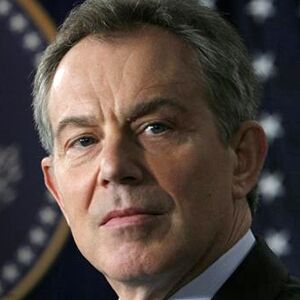
Why Britain Booted Blair
Eight months ago, Tony Blair promised to resign as Britain’s prime minister. Now, that promise has a due date: June 27. Succeeding Blair will be the current chancellor of the Exchequer, Gordon Brown. The British are unenthused.
Why is Blair leaving? He has given the British people much of what they wanted from him. Economic growth has made the people wealthier; poorer families now have higher wages and lower taxes; schools and hospitals have risen in quality. The steps toward the dismantlement of Great Britain have pleased the majority of Brits: Scotland, Wales and—just recently—Northern Ireland moved toward greater self-governance under Blair’s leadership. The Labor leader helped focus international attention on global warming more than any other Western leader—another issue that plays well to the increasingly liberal British public. The flow of immigrants into Britain has grown much swifter as Blair has pushed for greater openness. The pm has also made good on his pledge to “modernize” his country, passing social reforms such as the recognition of civil partnerships for homosexuals.
Conservatives balk at some of these changes, but the average Brit sees only positives in them. It isn’t for any of these reasons that Blair has become increasingly unpopular among his fellow countrymen, and in which his political opponents saw an opportunity to muscle him out of office. What really irritates them—to the point that he became vulnerable to pressure to step down in the midst of his weak third term as prime minister—is almost exclusively one thing: his support for the war in Iraq.
The majority view is that Blair rides around in the hip pocket of the widely hated U.S. President George W. Bush. Polls reveal that Britons believe by a 2 to 1 margin that Britain’s alliance with the United States is too close. The prime minister is referred to as “Bush’s poodle” and pummeled for committing British troops to the Iraq war. He lost tremendous public trust over the question of wmd in Iraq. In addition, Blair has also been roundly criticized for his too-firm backing of the State of Israel. A majority of Britons hunger for a leader with more inward-looking tendencies, one who will pull out of Iraq and Afghanistan and, in effect, turn his back on the U.S.
Gordon Brown is probably not that leader.
He is stepping into office not by public vote, but by virtue of the ruling Labor Party elevating him to its chief position—and the fact is, he is widely viewed as being not terribly different from Tony Blair.
As ready for change as the British people are, they can muster no great enthusiasm for Brown—or, at this stage, particularly anyone else. Brown will assume office with public approval ratings almost identical to those of his predecessor. Some polls suggest that Brown’s leadership of the Labor Party will actually drive some voters over to the Conservative side.
Think tank Stratfor sees Brown’s upcoming term as being mostly inconsequential. In a May 9 report, Stratfor wrote, “Brown is entering office already paralyzed—not that he would want to make sweeping changes before the next election, in early 2009. Brown’s term will begin with Iraq still on his plate, a vast shift beginning in Europe, a housing crisis looming and his party divided. Brown will not be able to do much in the international arena; the United Kingdom is already starting to pull out of Iraq. … Brown will simply keep the country together in front of the camera.”
On balance, and barring unforeseen catastrophes, the Trumpet doesn’t expect the direction Britain has been moving to change very drastically under Brown’s leadership. However, there are two areas we feel worthy of watching based on what we know of Gordon Brown.
Though Brown has publicly expressed a desire to maintain the U.S.-British alliance and continue Britain’s support of the “war on terror,” strong public pressure seems to be adversely affecting whatever resolve on these issues he may have possessed. His enigmatic statements on the war reflect the bind in which he finds himself: They are political, measured, lacking substance—eschewing firm policy statements for more whispery platitudes about the difficulty of the situation and promises to look into it.
Though some reports say the White House is convinced Brown won’t push for a precipitous withdrawal of British support from the Iraq and Afghanistan missions, other sources say precisely the opposite. The Sunday Telegraph reported Monday that White House officials have told President Bush to expect an announcement from Brown of a British pullout within 100 days of his taking office. The paper reported that senior officials are worried, quoting one as saying, “There is a sense of foreboding.”
Among the antiwar British press and public, of course, that foreboding is more like optimism. Labor Party official Trevor Owen says, “I think we may well see a more rapid removal of troops (from Iraq) than we would have seen before.” Like Blair before him, Brown has pledged to reduce troop numbers when possible—but he may well shift the timetable forward.
Whatever the specifics, we can be sure that a Brown-led Britain will by no means become more determined to wage war on terrorism. It far likelier that we have already seen the strongest days of the U.S.-British anti-terror alliance and British support for fighting Islamist extremism.
Don’t expect Brown to participate in the British public’s surging anti-Americanism, even while President Bush remains in office. Still, the negative public climate is strong enough that we would expect him to maintain a bit more distance between himself and Washington than Blair did. However, he has closer friendships among the Democrats in the capital than he does among the Republicans. With the Democrats surging in power, Brown may actually take the opportunity to build a parallel transatlantic bridge to what looks like, in the words of the New York Post, “America’s new governing elite” (May 16).
Another issue on which we may see a departure from Blair’s position is that of Europe.
Tony Blair was a committed Europhile—actually more so than most of his countrymen. Gordon Brown has been less excited about the European Union project than was his predecessor, in line with the somewhat more Euroskeptical majority opinion in Britain. As chancellor of the Exchequer, he resisted Blair’s push to move Britain to the euro, Europe’s single currency. This position has remained policy, and clearly to Britain’s economic benefit—though at the cost of no small amount of friction with the Eurocrats across the channel.
The Post makes the point that Brown may move the British economy away from the big government welfare state that has ballooned somewhat under Blair’s watch, and that, should that happen, “that will have the incidental effect of moving him further away from Europe and toward America” (ibid.).
Even the popular candidate for the Conservative Party, David Cameron—the primary candidate that Brown will most likely face off against in the next election—is far more cautious about the federalizing tendency of the European Union than Blair has been.
In other words, Britain is likely about witness the departure of the most pro-Europe prime minister in its history—and future. Brown’s election could well presage an increase in tensions between his nation and the Continent. TheTrumpet.com has good reason to expect this outcome, based on the outline of biblical prophecy regarding the future of that relationship.
These trends—the drawdown of British involvement in the war on terror and the widening of the gulf between Britain and Europe—are likely effects of this transition of power. For more on the longer term prospects facing Britain, read The United States and Britain in Prophecy.


