Hegseth Stays, but the War Is Over
Hegseth Stays, but the War Is Over
Good morning,
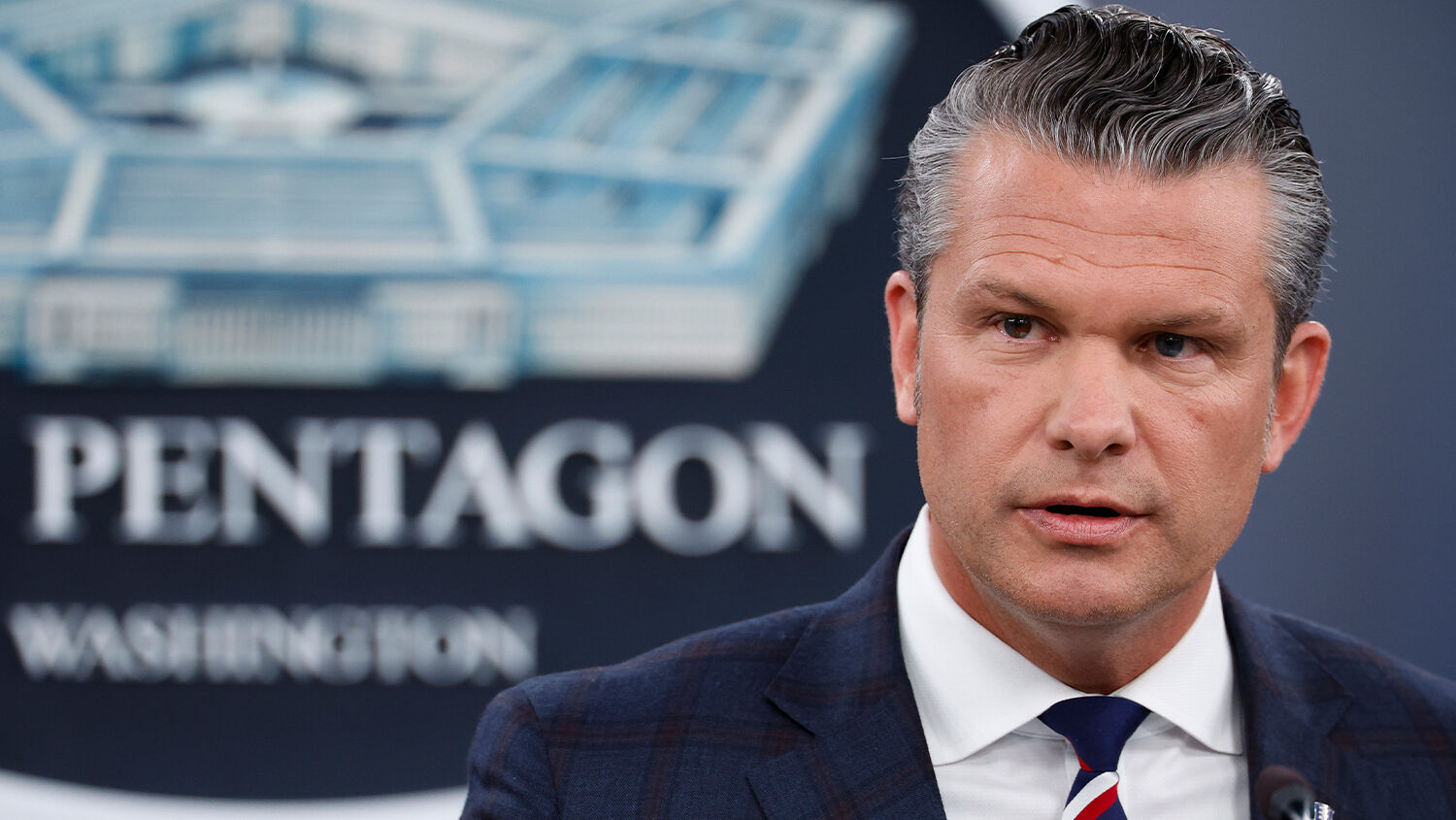
Yesterday, House Republicans closed ranks to protect Secretary of War Pete Hegseth from impeachment. But don’t mistake that vote for unity. The Iran war has divided the Republican Party and soured Americans on the government.

The war was right. Iran has been warring with America since 1979. It took our diplomats hostage, bombed our marines in Beirut, and killed and maimed our soldiers in Iraq. It has spent decades working toward a nuclear bomb. Striking that regime was the right decision.
- The failure was in not finishing it. After eight months, the regime still rules, the Strait of Hormuz is still choked, and international inspectors can’t account for Iran’s enriched uranium.
- Still, yesterday, Secretary of State Marco Rubio said there is “no need for major combat operations.” The administration says it can achieve its goals with sanctions. That is obviously false.
The government had the power to end Iran’s radical regime but lacked popular support.
- Days after the first strikes in February, 59 percent of Americans disapproved of them, according to cnn. By April 1, two thirds wanted the war ended quickly, even if its goals went unmet, according to Reuters/Ipsos. Days later, President Trump announced a ceasefire.
- By mid-June, only a quarter of Americans said the war had been worth it, according to Ipsos. That month, Washington signed an agreement promising Iran reconstruction money.
- In early October, the White House had the Pentagon prepare options for new strikes. Then the president announced there would be no attacks on Iran before the midterms. He wasn’t waiting on Iran, but on the voters.
America’s will is eroding at every level. In Congress, efforts to rein in the war failed by seven votes in March and by one in April, then tied in May. After that, Republican leaders stopped holding votes.
- Among voters, 71 percent now want Congress to pass a law ending the war, including 51 percent of all Republicans, a Reuters/Ipsos poll found this week. Democrats opposed this war from day one. The people changing their minds are Republicans.
- The reason is not hard to find: By Election Day, gasoline averaged $4.14 a gallon, up 38 percent since the war began, and 9 in 10 Americans now say the cost of living should be the new Congress’s top priority.
Tehran is celebrating. After last week’s election, the speaker of Iran’s parliament wrote, “Americans said no to war, and we endorse this message.”
Echoes of 2006: When Democrats swept Congress in 2006, showing voter fatigue over the war in Iraq, Iran’s supreme leader called it “an obvious victory for the Iranian nation.” Gerald Flurry wrote at the time:
In these elections, the United States surrendered to Iran and the terrorists. … President Bush has not been successful in Iraq, but at least he used some measure of force. He could have achieved more if our people had supported him.
Twenty years later, the same is true of President Trump—who actually confronted Iran directly, showing courage no president has had in nearly 50 years. Yet this time, Republicans too have lost their nerve. As Richard Palmer wrote the morning after the election, America has waged its last war.
God warned that this would happen to a disobedient Israel: “I will break the pride of your power” (Leviticus 26:19). This has been true for decades. President Trump briefly showed something of a reversal, but the nation has made clear it vehemently disagrees. It is clearer than ever that America has lost its will to fight, and our enemies know it.
Will Syria Attack the Houthis?
Syria is reportedly preparing to send thousands of troops to Saudi Arabia and Yemen to fight the Houthi terrorist group. This comes after Syria’s foreign minister said late last month that his country might join Saudi Arabia’s Mecca Pact with Turkey and Pakistan.
- Agence France-Presse, citing Yemeni officials, reported on November 7 that “hundreds” of Syrian troops have entered Saudi Arabia and Yemen, and up to 3,000 may be deployed.
- The New York Times reported November 10 that Syria sent 150 personnel to Yemen’s Thamud district near the Saudi border last month to “familiarize themselves with the geography.” The Times’s sources claimed Syria could send “thousands” against the Houthis.
- The Syrian government previously had publicly denied that it would send troops to either Saudi Arabia or Yemen.
What is the Mecca Pact? Signed August 7 by Pakistan, Saudi Arabia and Turkey, the Mecca Joint Defense Agreement obligates each nation to regard an attack on one member as an attack on all members. On October 5, the three countries activated the alliance to defend the Saudis from the Houthis.
- The Houthis have conquered additional territory from the Yemeni government since September, consolidating their stranglehold on the southern Red Sea and enabling them to further attack Saudi Arabia and shipping heading to the kingdom’s Red Sea ports.
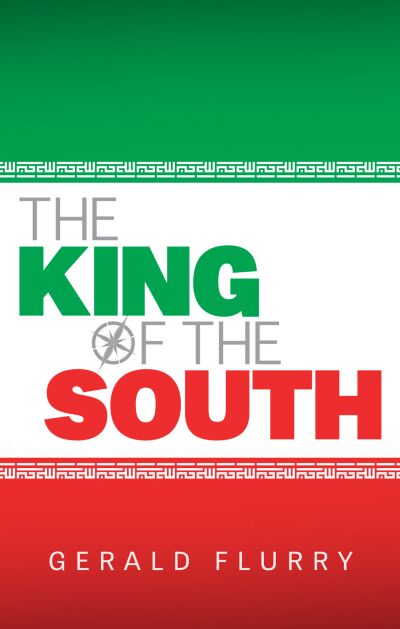
Psalm 83 prophesies that an alliance of Middle Eastern peoples will form so “that the name of Israel may be no more in remembrance” (verse 4). As Trumpet editor in chief Gerald Flurry writes in Chapter 4 of his booklet The King of the South, this is an end-time prophecy. Verse 6 names Edom, the Ishmaelites and the Hagarenes as part of this alliance. These are the ancestral peoples of modern Turkey, Saudi Arabia and Syria, respectively.
- The Mecca Pact may become the literal alliance prophesied in Psalm 83.
At the very least, the fact that it includes the same nations described in this Bible prophecy means it should be watched closely. As The King of the South explains, the alliance’s ultimate aim won’t be to protect the Arab world from the Houthis; it will be to attack America and Israel.
Putin’s War Vets Are Becoming a ‘Deep State’
Russian President Vladimir Putin launched a third phase of his Time of Heroes program on Monday, expanding efforts to fast-track veterans from the war on Ukraine into government and civilian leadership positions by removing the university-degree requirement for applicants.
- Putin announced the Time of Heroes program in February 2024 to give war veterans priority for positions in government, state-owned companies and other major institutions.
The initiative is designed to: 1) entice more ambitious Russians to enlist by dangling the prospect of lucrative postwar careers; and 2) create a new governing class in Russia whose status and advancement are tied to service in Putin’s war.
The first two intakes required applicants to have experience in the war, a university degree and management experience.
- The program quickly began to reshape Russia’s political establishment: In September’s national elections, 46 war veterans won seats in the State Duma, equating to more than 10 percent of the lower chamber.
The latest phase significantly broadens eligibility:
- Applicants no longer need a university degree; a high-school education is sufficient.
- Those selected will receive three years of instruction, including 18 months at Russia’s Presidential Academy.
- Graduates will receive state-recognized diplomas, giving them the credentials needed for government positions and management jobs.
Battlefield to bureaucracy: The Kremlin is also bending rules to make it easier for veterans to advance within local governments. Last month, lawmakers introduced legislation that would count military service toward the experience requirements for municipal government positions, allowing veterans to qualify more quickly for salary increases and senior posts.
These measures are helping transform the war from a military campaign into a foundation of Russia’s political system. Veterans are being positioned not merely as heroes to be celebrated but as officials who will shape Russia’s future. Their rise binds a new generation of decision-makers to Putin’s rule, further consolidating the power of the biblically prophesied “prince of Russia” as he prepares to lead Russia in future conflicts.
IN OTHER NEWS
The German Armed Forces have banned all Chinese drones inside barracks and training sites due to fears of potential spying, Der Spiegel reported yesterday. Made-in-China commercial drones previously used for training or target practice will be replaced by made-in-Europe models. Certain passenger vehicles with cameras, sensors, radar, microphones and transmitters have also been barred from entering secure areas.